A village pradhan is accused of using funds meant for a public well to renovate his own house. The villagers use a specific law to demand copies of the government record and expenditure details. Which act are they using?
Answer & explanation
Correct answer: option 4
The correct answer is Option (4) → Right to Information Act
Option (1) Panchayati Raj Act — Incorrect. The Panchayati Raj law, through the 73rd Amendment, set up elected local government in villages and gave panchayats their powers. It creates the body the pradhan heads; it does not give a citizen the right to demand copies of government records.
Option (2) Consumer Protection Act — Incorrect. A consumer protection law protects buyers of goods and services against defective goods and unfair trade. The villagers are not buyers complaining about a product; they want to see how public money was spent.
Option (3) Indian Penal Code Act — Incorrect. The Indian Penal Code is the criminal law that defines offences and their punishments. It could be used to punish misuse of funds once proved, but it gives no right to obtain copies of records.
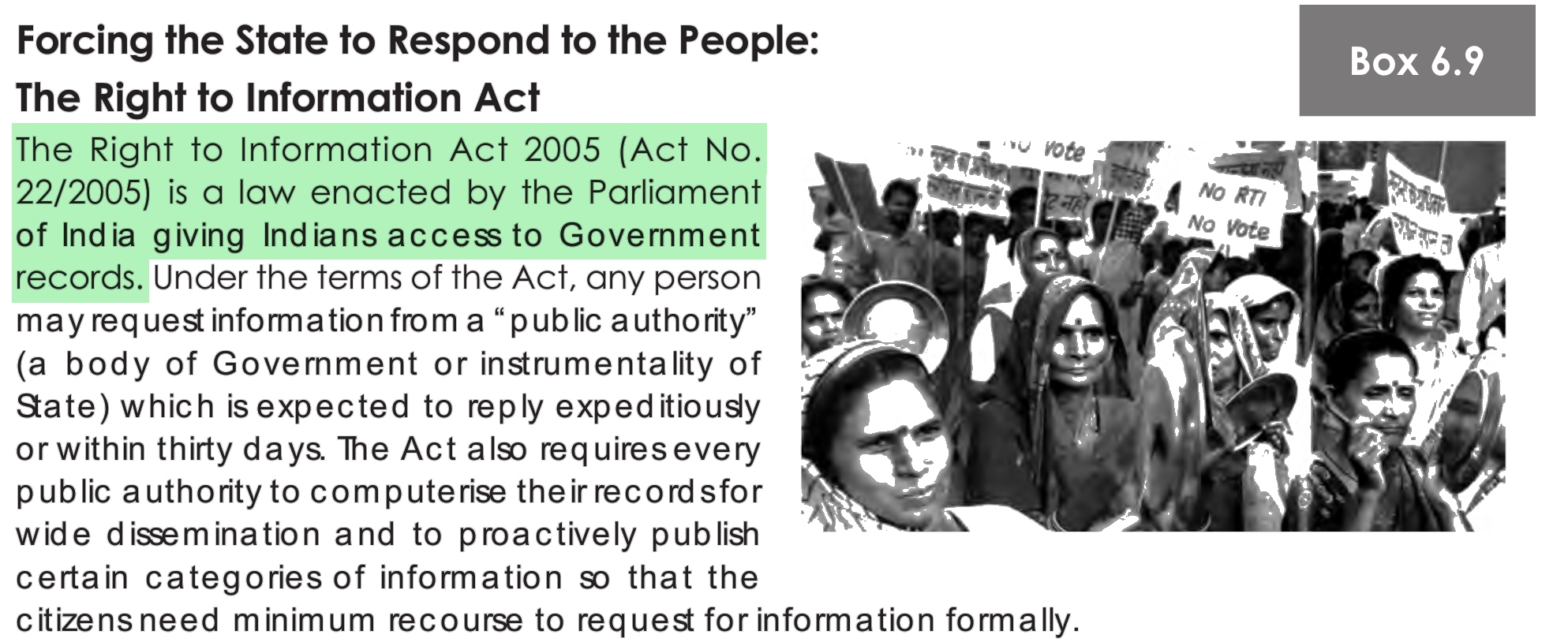
Option (4) Right to Information Act — Correct. The Right to Information Act 2005 gives Indians access to Government records. Any person may request information from a public authority, which must reply within thirty days – the very records of expenditure the villagers want.
Note: The concepts in Option (2) and Option (3), the ‘Consumer Protection Act’ and the ‘Indian Penal Code’, are not in NCERT (2025-26); explained here for the benefit of the students.
NCERT: Indian Society — Chapter 6: The Challenges of Cultural Diversity (2025-26)
|