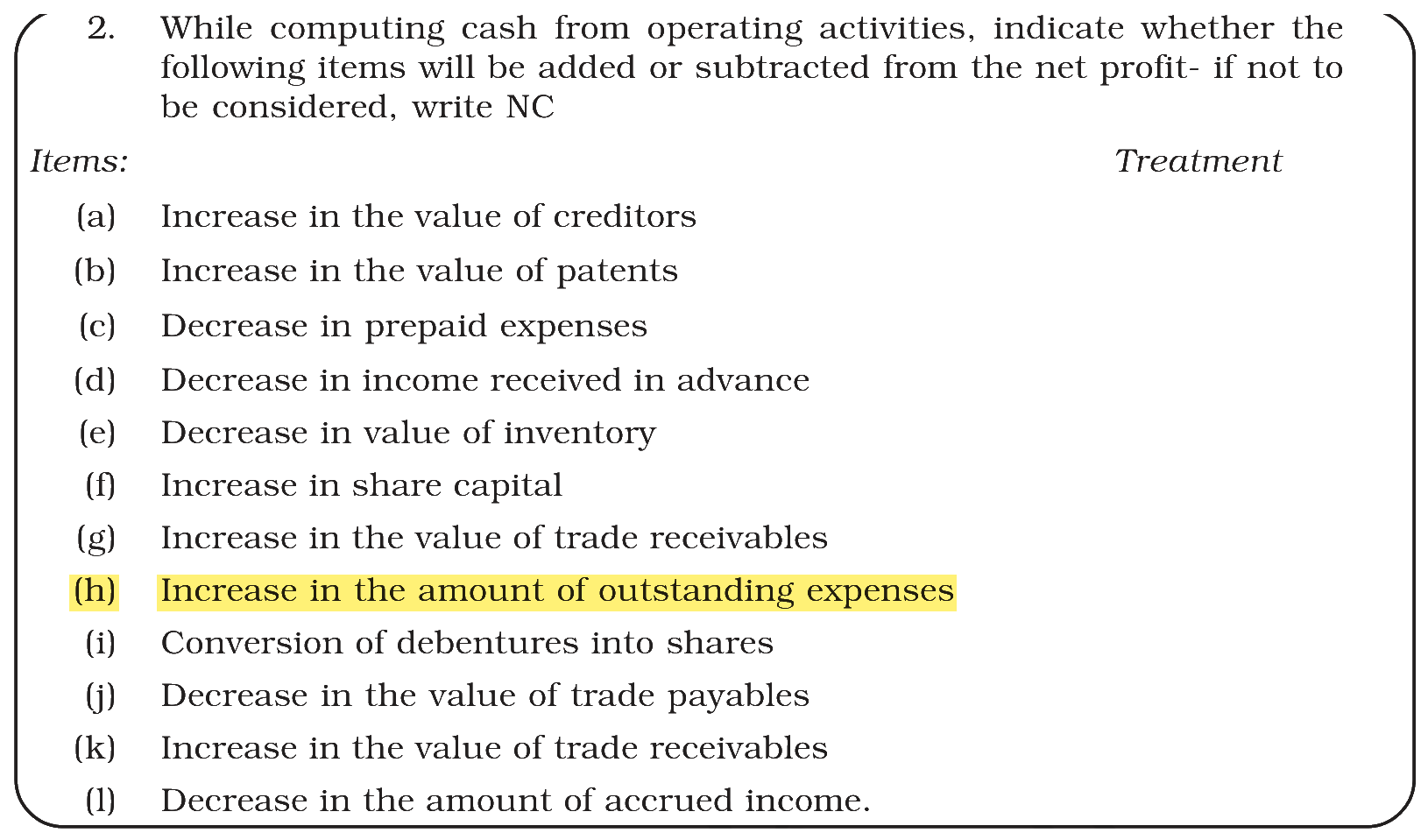
Which one of the following is not a 'Cash Outflow'?
Answer & explanation
Correct answer: option 3
The correct answer is Option (3) → Increase in outstanding expenses
When cash from operations is worked out, an increase in a current asset means cash has been locked up in it (an outflow), while an increase in a current liability means cash that would have been paid out has been kept in the business. Outstanding expenses are a current liability: expenses charged in the profit and loss but not yet paid. An increase in them is therefore added to the profit; it is not a cash outflow.
Option (1) Increase in stock — A cash outflow. More cash is tied up in inventory, so the increase is deducted.
Option (2) Increase in prepaid expenses — A cash outflow. Cash has been paid in advance for a later period, so the increase is deducted.
Option (3) Increase in outstanding expenses — Correct. An unpaid expense keeps cash in the business; it is added back.
Option (4) Increase in bills receivable — A cash outflow. Sales not yet collected in cash, so the increase is deducted.
NCERT (2026-27 edition):
NCERT (2026-27 edition):
NCERT (2026-27 edition): |