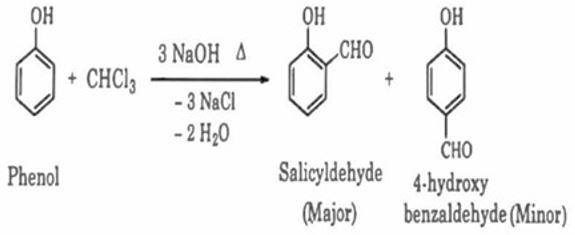
Reaction of phenol with chloroform in the presence of sodium hydroxide gives salicylaldehyde. The reaction is known as
Answer & explanation
Correct answer: option 1
The correct answer is Option (1) → Reimer-Tiemann reaction
Reimer-Tiemann reaction introduces an aldehyde group (-CHO) into the benzene ring of phenol using chloroform and alkali.
Explanation
Option 1: Reimer-Tiemann reaction
When phenol is treated with chloroform in the presence of sodium hydroxide, dichlorocarbene is generated. This intermediate reacts with phenoxide ion leading to the formation of salicylaldehyde after hydrolysis. Hence, correct.
Option 2: Kolbe's reaction
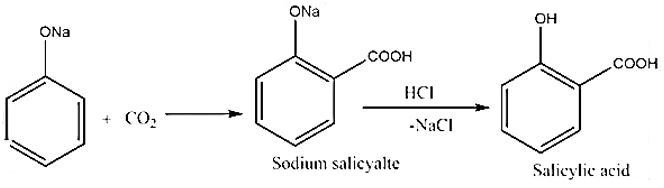
Kolbe reaction involves reaction of sodium phenoxide with carbon dioxide to form salicylic acid, not salicylaldehyde.
Salicylic acid Option 3: Williamson synthesis
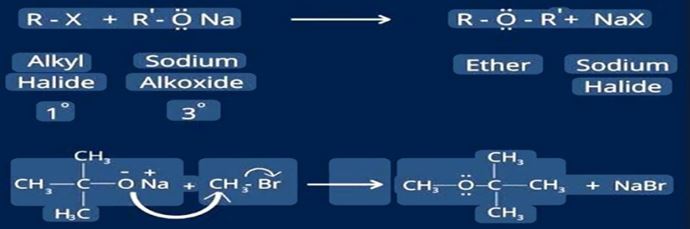
Williamson synthesis is used to prepare ethers from alkyl halides and alkoxides. It does not produce aldehydes.
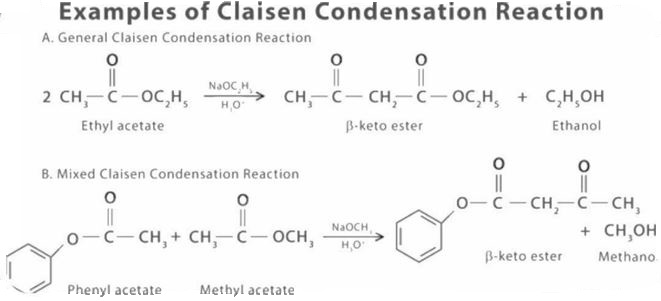
Option 4: Claisen Smith Condensation reaction
This reaction involves condensation of esters with compounds containing a-hydrogen to form $β$-keto esters, unrelated to phenol and chloroform reaction.