Match the LIST-I with LIST-II
| LIST-I (Characteristic) | LIST-II (Thought) | ||
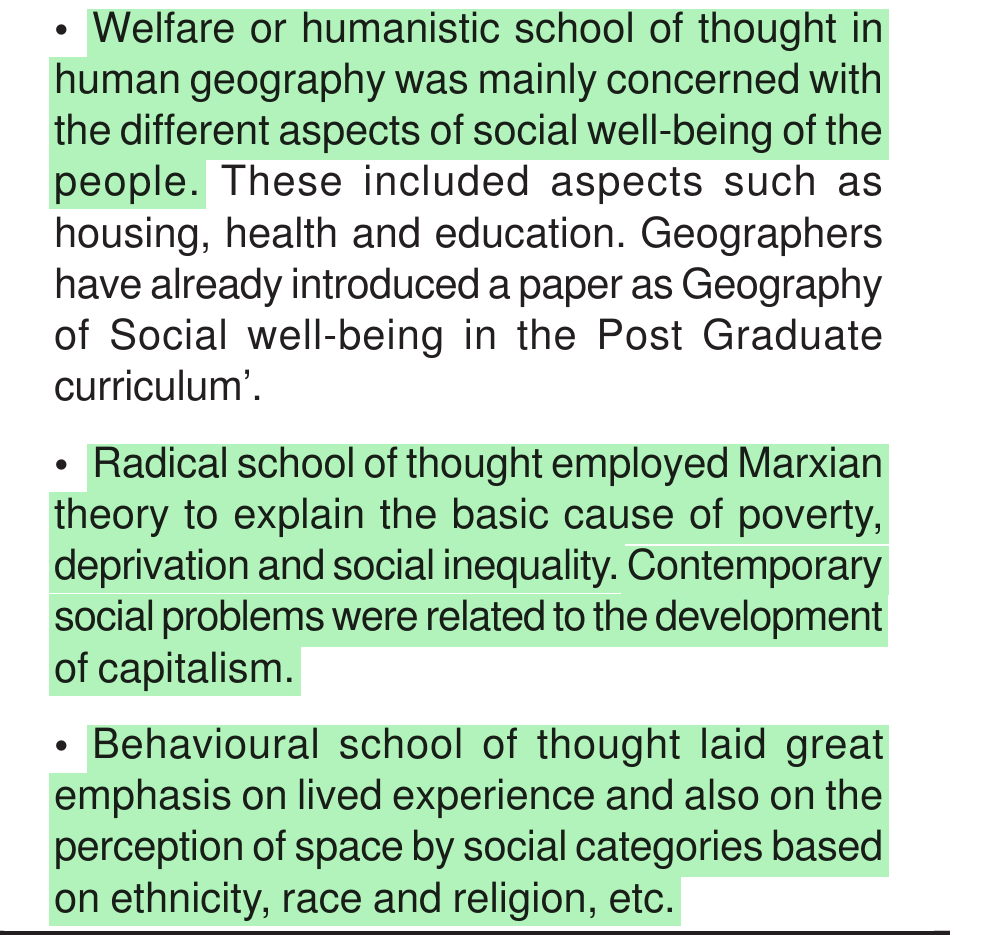
| (A) | Perspective that contemporary social problems are related to the development of capitalism | (I) | Welfare Geography |
| (B) | Study of social well-being of people like housing, health and education | (II) | Radical School of thought |
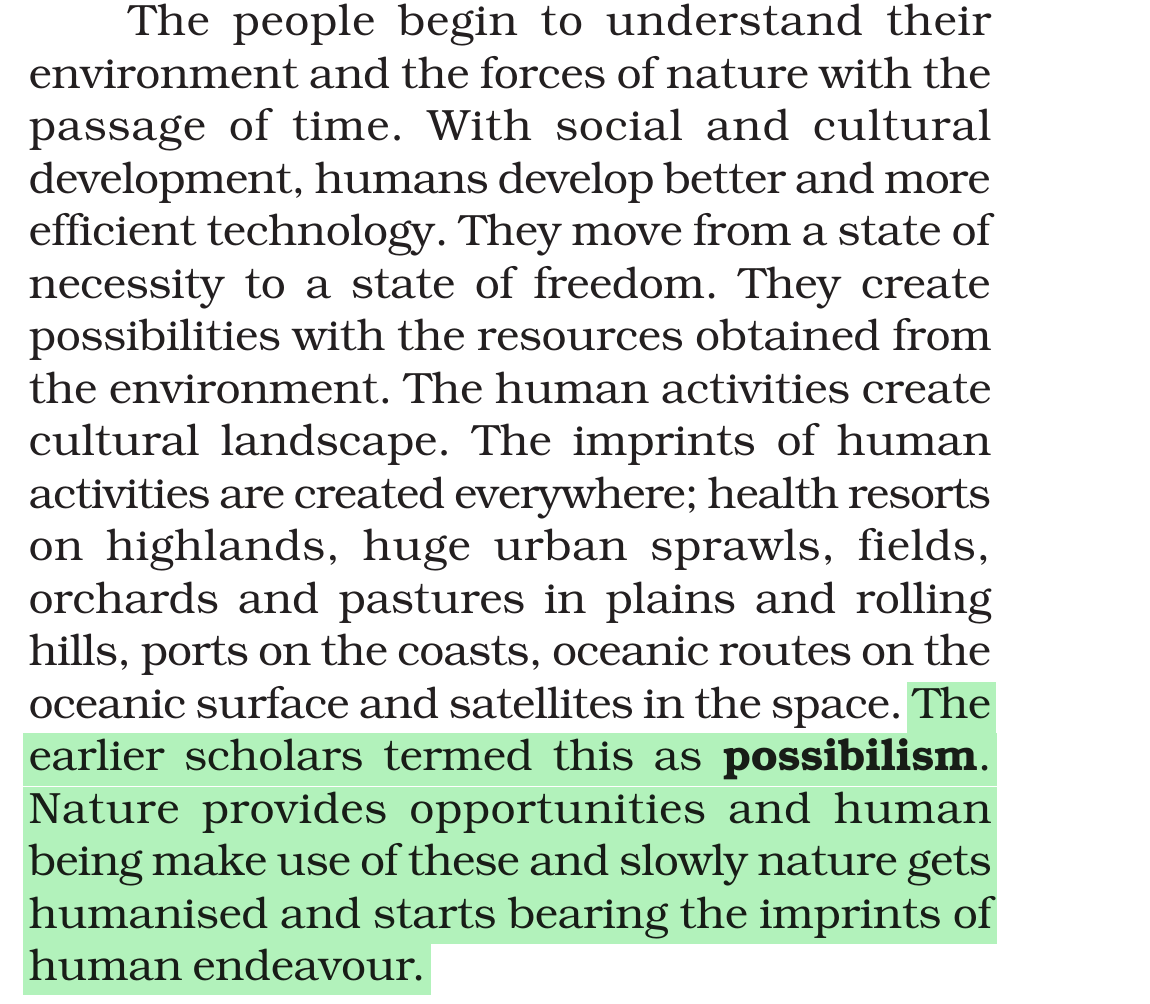
| (C) | Study of human activities which make use of opportunities provided by nature and thus cause humanization of nature | (III) | Behavioural School of thought |
| (D) | Study of lived experience and perceptions of space by social categories based on religion, race and ethnicity | (IV) | Possibilism |
Choose the correct answer from the options given below:
Answer & explanation
Correct answer: option 3
The correct answer is Option (3) → (A) - (II), (B) - (I), (C) - (IV), (D) - (III)
(A) Perspective that contemporary social problems are related to the development of capitalism — this matches (II) Radical School of thought. It used Marxian theory to explain poverty, deprivation and social inequality, and related social problems to capitalism.
(B) Study of social well-being of people like housing, health and education — this matches (I) Welfare Geography. The welfare or humanistic school was concerned with social well-being; a paper called Geography of Social Well-being is taught at the postgraduate level.
(C) Study of human activities which make use of opportunities provided by nature and thus cause humanization of nature — this matches (IV) Possibilism. With better technology, people use the opportunities nature provides and nature slowly gets humanised; earlier scholars called this possibilism.
(D) Study of lived experience and perceptions of space by social categories based on religion, race and ethnicity — this matches (III) Behavioural School of thought. It laid great emphasis on lived experience and on how social groups perceive space.
NCERT: Fundamentals of Human Geography — Chapter 1: Human Geography: Nature and Scope, possibilism; box: schools of thought (2025-26)
|