Match the LIST-I with LIST-II
| LIST-I | LIST-II | ||
|---|---|---|---|
| A. | Limits the number of its members to 200 (excluding its employees). | I. | Companies Limited by Shares |
| B. | The liability of its members is limited to the amount they undertake to contribute in the event of the company being wound up. | II. | Private Company |
| C. | The liability of its members is limited to the extent of the nominal value of shares held by them. | III. | Public Company |
| D. | Invites the public to subscribe for its shares. | IV. | Companies Limited by Guarantee |
Choose the correct answer from the options given below:
Answer & explanation
Correct answer: option 3
The correct answer is Option (3) → A-II, B-IV, C-I, D-III
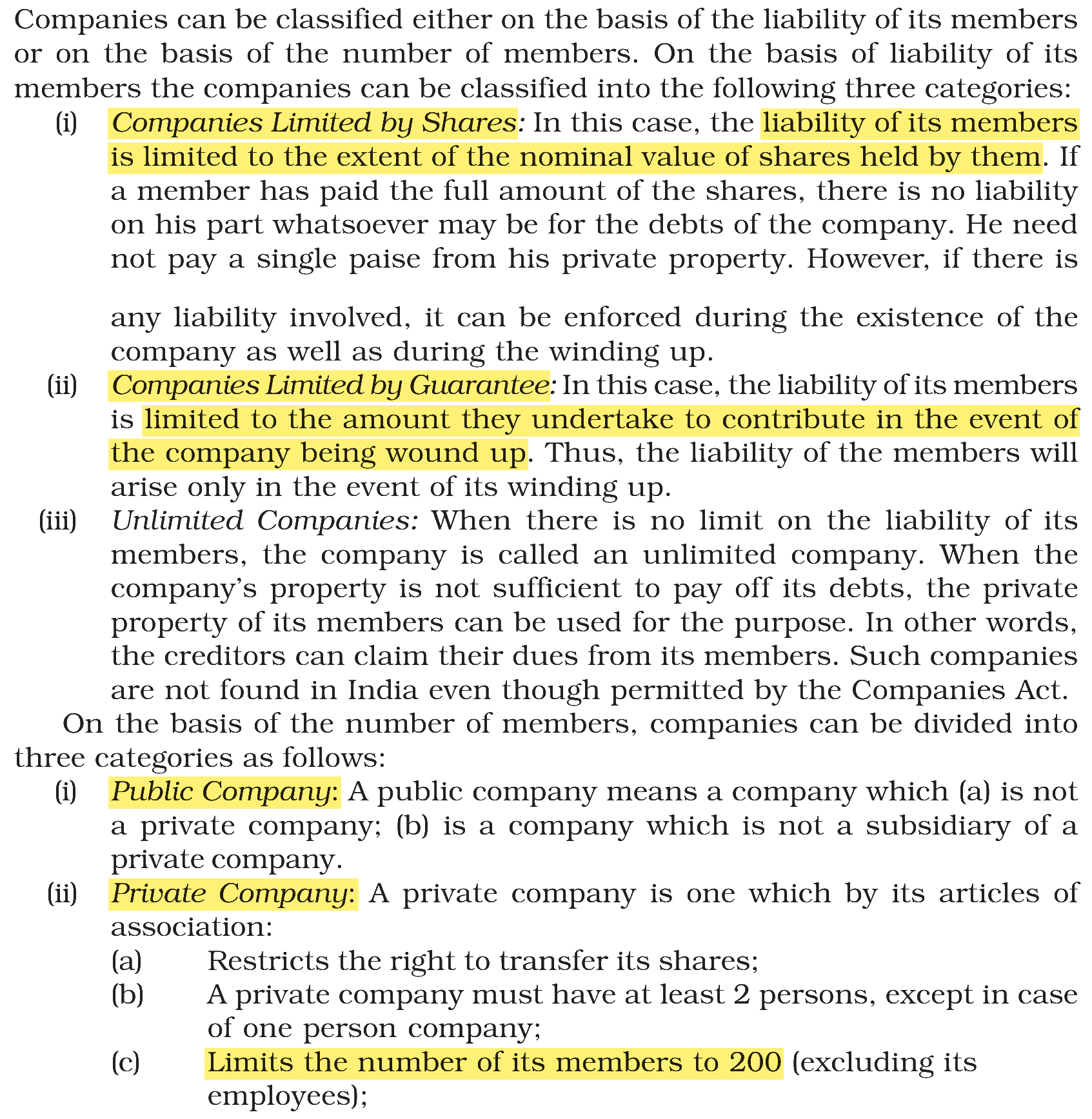
Companies are classified in two ways: by the liability of their members (limited by shares, limited by guarantee) and by the number of members and their right to approach the public (private, public).
(A) Limits the number of its members to 200 (excluding its employees). — this matches (II) Private Company. A cap of 200 members is one of the restrictions a private company places on itself in its articles, along with a restriction on the transfer of its shares.
(B) The liability of its members is limited to the amount they undertake to contribute in the event of the company being wound up. — this matches (IV) Companies Limited by Guarantee. The members promise a fixed sum, and that promise is called upon only at winding up.
(C) The liability of its members is limited to the extent of the nominal value of shares held by them. — this matches (I) Companies Limited by Shares. A member who has paid his shares in full owes nothing more, whatever the company’s debts.
(D) Invites the public to subscribe for its shares. — this matches (III) Public Company. A public company is one that is not a private company, so it is free of the private company’s restrictions and can invite the public to buy its shares.
NCERT (2026-27 edition):
|