
Which among the following is not a layer of the ovum?
Answer & explanation
Correct answer: option 3
The correct answer is Option (3) → Acrosome.
The ovum released from the ovary has coverings around it. Just outside its plasma membrane lies the zona pellucida, a membrane the secondary oocyte forms around itself in the Graafian follicle. Outside this are the cells of the corona radiata (Figure 2.10). The acrosome is not part of the ovum at all; it belongs to the sperm.
Option (1) Zona pellucida. — A layer of the ovum. It is the membrane around the secondary oocyte. During fertilisation the sperm comes in contact with this layer, and the changes it brings about block the entry of more sperms.
Option (2) Corona radiata. — A layer of the ovum. The cells of the corona radiata form the outer covering of cells around the zona pellucida, as labelled in Figure 2.10.
Option (3) Acrosome. — Not a layer of the ovum. The acrosome is the cap-like structure on the sperm head, filled with enzymes. Its secretions help the sperm pass through the zona pellucida into the ovum.
NCERT Extract:
Gametogenesis – “… The tertiary follicle further changes into the mature follicle or Graafian follicle (Figure 2.7). The secondary oocyte forms a new membrane called zona pellucida surrounding it. The Graafian follicle now ruptures to release the secondary oocyte (ovum) from the ovary by the process called ovulation.”
Fertilisation and Implantation – “… During fertilisation, a sperm comes in contact with the zona pellucida layer of the ovum (Figure 2.10) and induces changes in the membrane that block the entry of additional sperms. Thus, it ensures that only one sperm can fertilise an ovum. The secretions of the acrosome help the sperm enter into the cytoplasm of the ovum through the zona pellucida and the plasma membrane.”
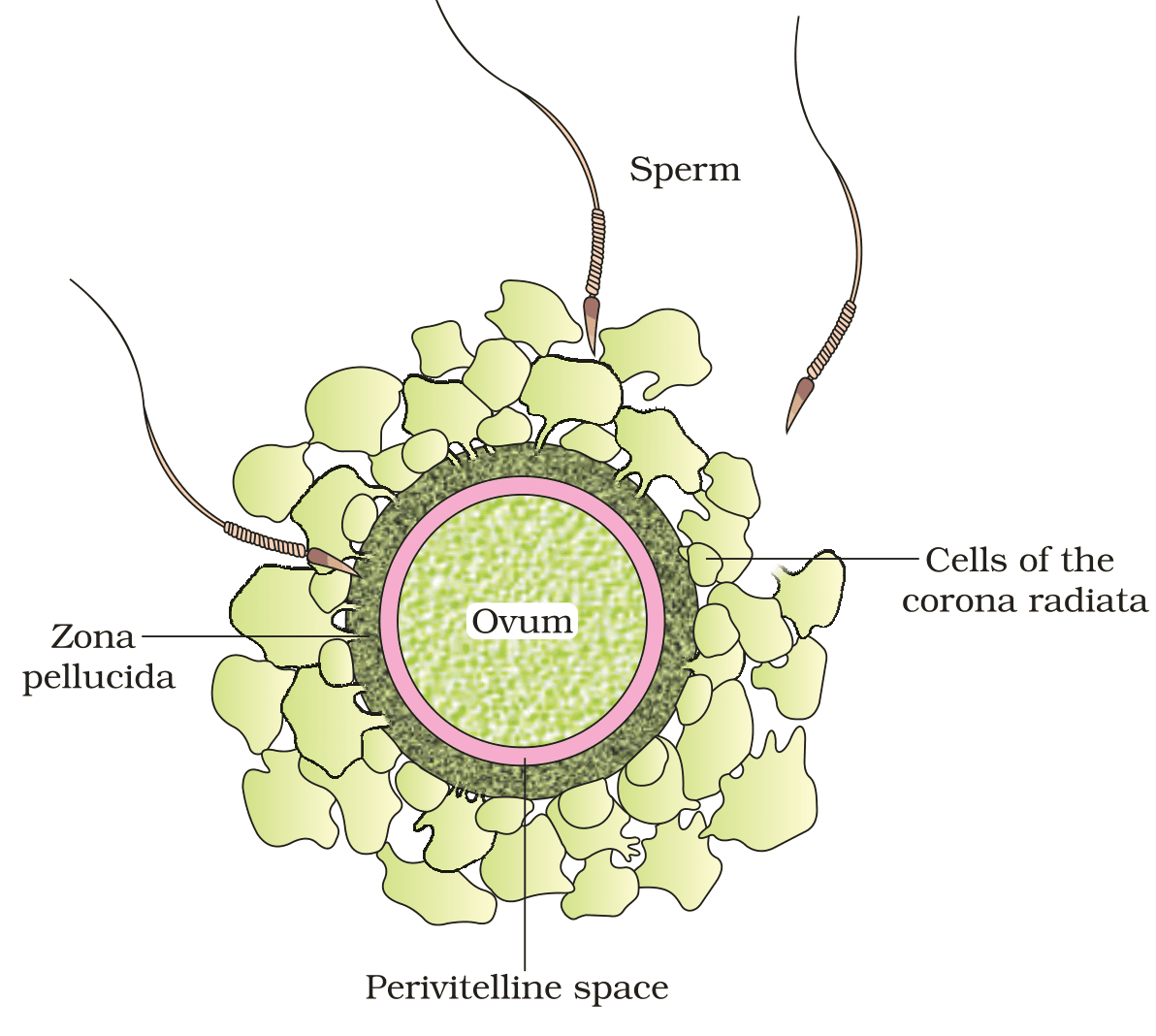
Figure 2.10 Ovum surrounded by few sperms