Identify the correct statements:
A. Mahabhashya was written by Patanjali.
B. Jatakas are associated with Buddhism.
C. Dharmasutras were written in Pali language.
D. Sutta Pitaka deals with Jainism.
E. Upanishads deals with meaning of life and philosophy.
Choose the correct answer from the options given below:
Answer & explanation
Correct answer: option 4
The correct answer is Option (4) → A, B, E only
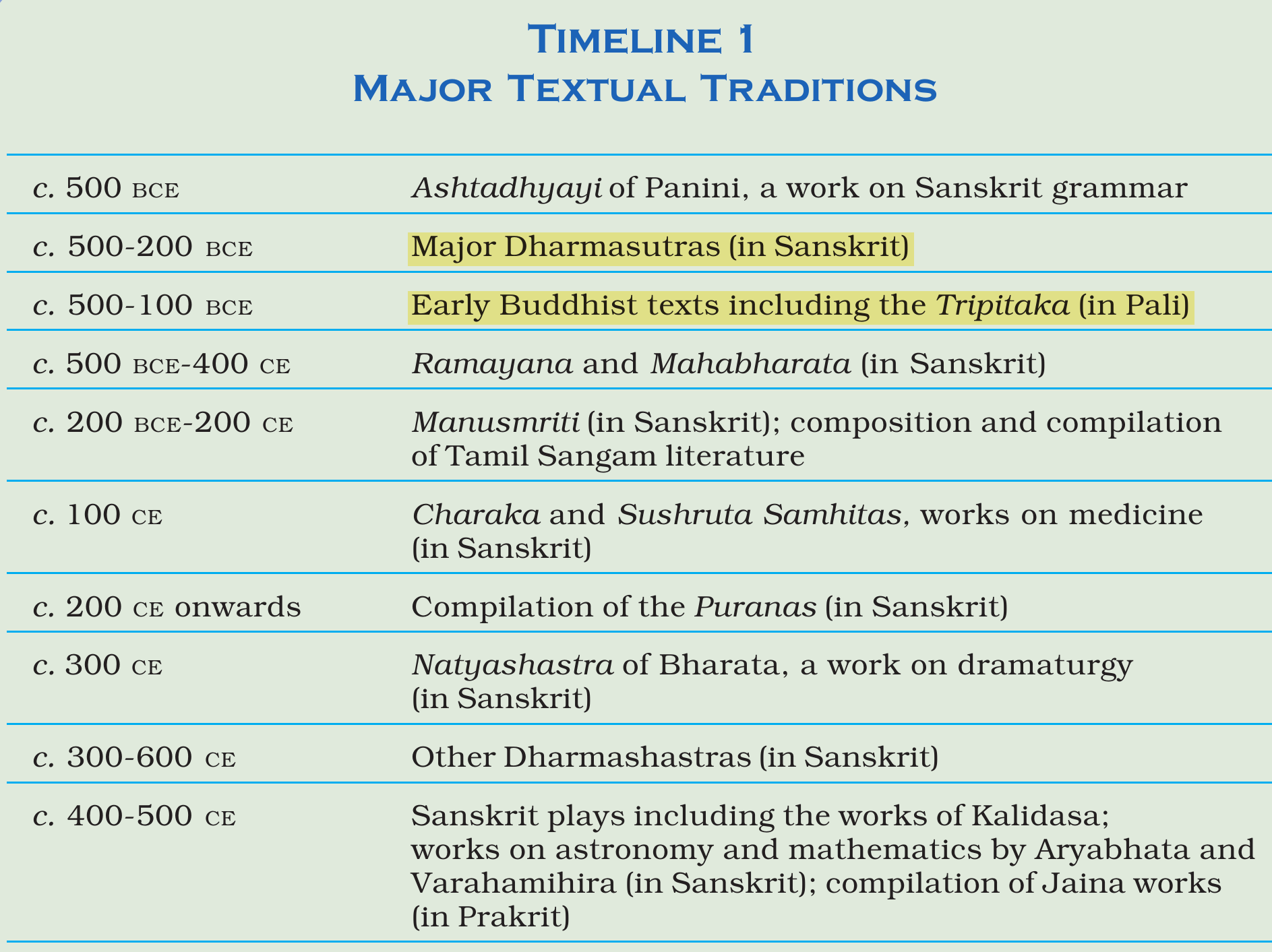
A. Mahabhashya was written by Patanjali. Correct statement. The Mahabhashya is the great commentary written by the grammarian Patanjali on Panini’s Ashtadhyayi, the work on Sanskrit grammar.
B. Jatakas are associated with Buddhism. Correct statement. The Jatakas were written in Pali, and scenes from them, such as the Vessantara Jataka, are carved on the Buddhist stupa at Sanchi.
C. Dharmasutras were written in Pali language. Incorrect statement. Brahmanas composed the Dharmasutras in Sanskrit; Pali is the language of the early Buddhist texts such as the Tripitaka.
D. Sutta Pitaka deals with Jainism. Incorrect statement. The Sutta Pitaka is one of the three Buddhist baskets; it contains the Buddha’s teachings, not Jaina ideas.
E. Upanishads deals with meaning of life and philosophy. Correct statement. Many ideas in the Upanishads show that people were curious about the meaning of life, the possibility of life after death and rebirth, and the nature of the ultimate reality.
Note: The Mahabhashya of Patanjali (statement A) is not in NCERT (2026-27); it is explained here for the benefit of the students.
NCERT (2026-27): “…These compilations were known as Tipitaka – literally, three baskets to hold different types of texts. They were first transmitted orally and then written and classified according to length as well as subject matter. The Vinaya Pitaka included rules and regulations for those who joined the sangha or monastic order; the Buddha’s teachings were included in the Sutta Pitaka; and the Abhidhamma Pitaka dealt with philosophical matters.… 2.2 New questions … Many ideas found in the Upanishads (c. sixth century BCE onwards) show that people were curious about the meaning of life, the possibility of life after death, and rebirth. Was rebirth due to past actions? Such issues were hotly debated. Thinkers were concerned with understanding and expressing the nature of the ultimate reality.… 9.1 Stories in stone … However, art historians who have carefully studied the sculpture at Sanchi identify it as a scene from the Vessantara Jataka. This is a story about a generous prince who gave away everything to a Brahmana, and went to live in the forest with his wife and children.… 5.1 Popular perceptions of kings … Nevertheless, historians have tried to solve this problem by examining stories contained in anthologies such as the Jatakas and the Panchatantra. Many of these stories probably originated as popular oral tales that were later committed to writing. The Jatakas were written in Pali around the middle of the first millennium CE.…”
|