A control system loses some of its effectiveness when standards cannot be defined in quantitative terms. Which difficulty does this create?
Answer & explanation
Correct answer: option 4
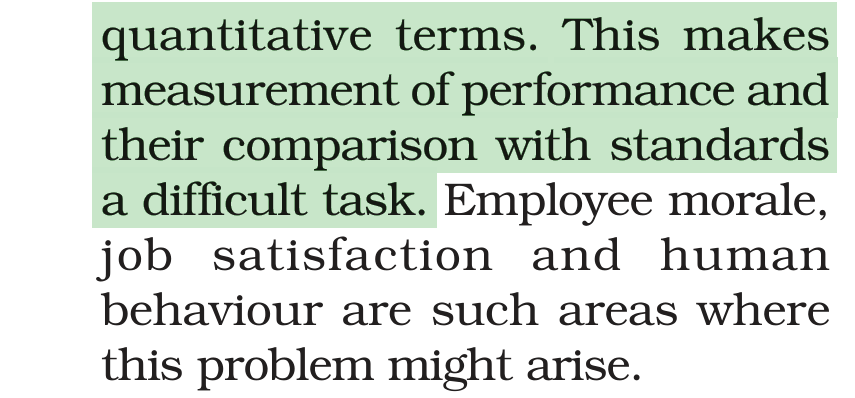
The correct answer is Option (4) → Measurement of performance and its comparison with standards become difficult.
Option (1) Corrective action cannot be taken at the appropriate level. — Incorrect. Corrective action is taken at the appropriate level once deviations and their causes are reported. This is part of analysing deviations and does not depend on numbers in standards.
Option (2) Employees do not know in advance the standards on which they will be appraised. — Incorrect. Telling employees the appraisal standards in advance is part of improving employee motivation. It has nothing to do with whether standards are in numbers.
Option (3) The costs of installing the control system exceed the benefits derived from it. — Incorrect. This is the limitation costly affair. Managers must see that the cost of a control system does not exceed its benefits.
Option (4) Measurement of performance and its comparison with standards become difficult. — Correct. A standard that is not in numbers gives no clear figure to check against. So measuring performance and comparing it with the standard becomes difficult.
NCERT (2026-27 Edition): NCERT (2026-27 Edition): “(i) Difficulty in setting quantitative standards: Control system loses some of its effectiveness when standards cannot be defined in…”
“(iv) Costly affair: Control is a costly affair as it involves a lot of expenditure, time and effort. A small enterprise cannot afford to install an expensive control system. It cannot justify the expenses involved. Managers must ensure that the costs of installing and operating a control system should not exceed the benefits derived from it. …” “(iv) Improving employee motivation: A good control system ensures that employees know well in advance what they are expected to do and what are the standards of performance on the basis of which they will be appraised. It, thus, motivates them and helps them to give better performance.” |