
In which type of RNA, methyl guanosine triphosphate capping is added to 5'-end?
Answer & explanation
Correct answer: option 4
The correct answer is Option (4) → hnRNA
In eukaryotes, RNA polymerase II makes the precursor of mRNA, called heterogeneous nuclear RNA (hnRNA). Before it can leave the nucleus, the hnRNA is processed: introns are spliced out, a cap is added at the 5′-end, and a tail is added at the 3′-end.
Option (1) rRNA — Incorrect. rRNAs are made by RNA polymerase I and form part of the ribosome; they are not capped.
Option (2) mRNA — Incorrect as per NCERT’s wording. mRNA carries the cap, but the cap is added earlier, while the molecule is still hnRNA.
Option (3) tRNA — Incorrect. tRNA is made by RNA polymerase III and brings amino acids to the ribosome; it is not capped.
Option (4) hnRNA — Correct. Capping is done on hnRNA: methyl guanosine triphosphate is added to its 5′-end.
Note: One can argue for Option (2) mRNA, since the capped hnRNA becomes mRNA. But NCERT says the cap is added to hnRNA, so Option (4) is the most appropriate answer.
NCERT Extract:
Types of RNA and the Process of Transcription – “… (ii) The second complexity is that the primary transcripts contain both the exons and the introns and are non-functional. Hence, it is subjected to a process called splicing where the introns are removed and exons are joined in a defined order. hnRNA undergoes additional processing called as capping and tailing. In capping an unusual nucleotide (methyl guanosine triphosphate) is added to the 5’-end of hnRNA. In tailing, adenylate residues (200-300) are added at 3’-end in a template independent manner. It is the fully processed hnRNA, now called mRNA, that is transported out of the nucleus for translation (Figure 5.11).”
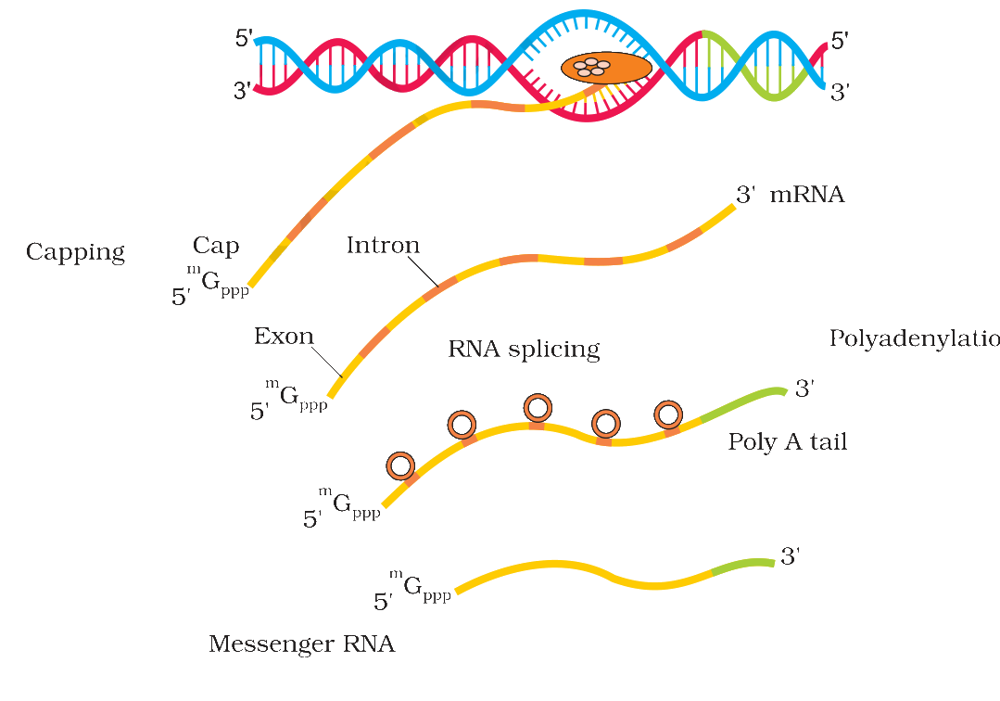
Figure 5.11 Process of Transcription in Eukaryotes