Match List-I with List-II
| List-I | List-II |
| (A) Final goods market | (I) \( \bar A+ cY \) |
| (B) Consumers demand | (II) \( ΔY/ΔA \) |
| (C) Investment multiplier | (III) \( \bar C+cY \) |
| (D) Linear equation | (IV) \( a + bX \) |
Choose the correct answer from the options given below:
Answer & explanation
Correct answer: option 2
The correct answer is Option (2) → (A)-(I), (B)-(III), (C)-(II), (D)-(IV)
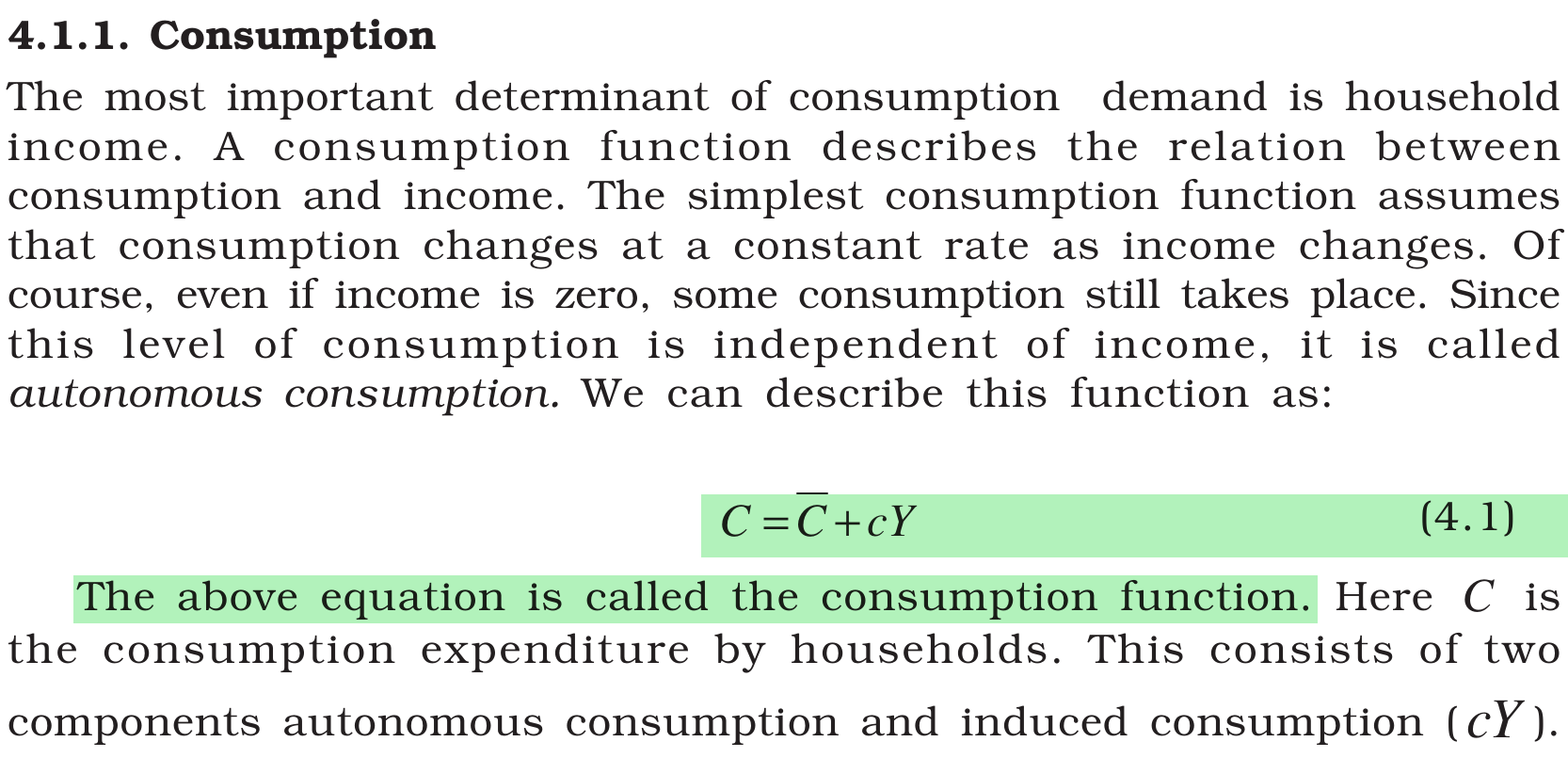
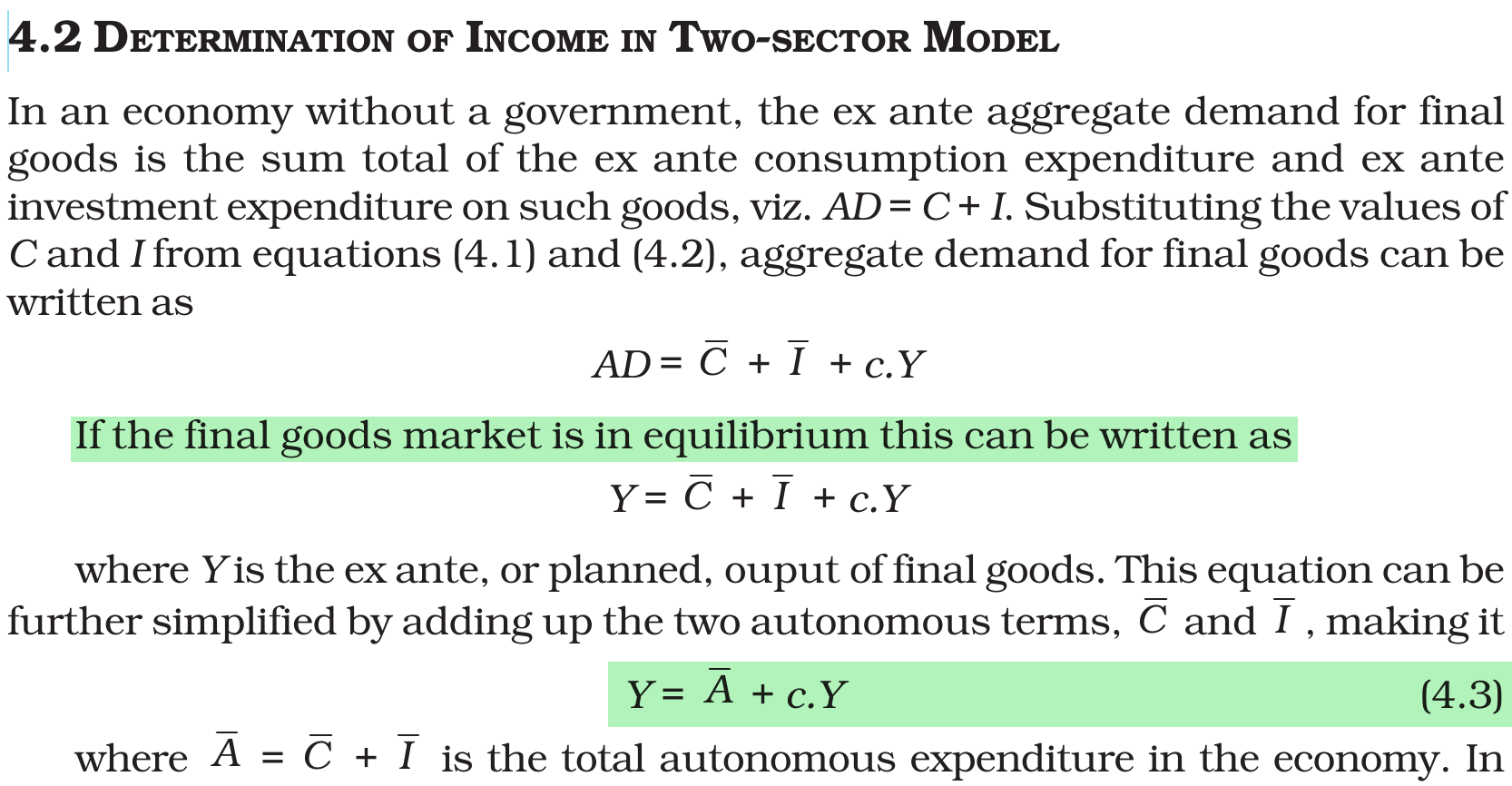
In the simple model of income, consumption plus investment gives the aggregate demand for final goods. These relations are straight lines, so they are written as linear equations.
| List-I | List-II | Reason |
|---|---|---|
| (A) Final goods market | (I) \( \bar{A} + cY \) | Aggregate demand is \( AD = \bar{C} + \bar{I} + cY \), and its two fixed terms add up to \( \bar{A} \), the total autonomous expenditure. The final goods market is in equilibrium when \( Y = \bar{A} + cY \). |
| (B) Consumers demand | (III) \( \bar{C} + cY \) | This is the consumption function: \( \bar{C} \) is autonomous consumption, spent even at zero income. \( cY \) is induced consumption, which rises with income (c is the marginal propensity to consume). |
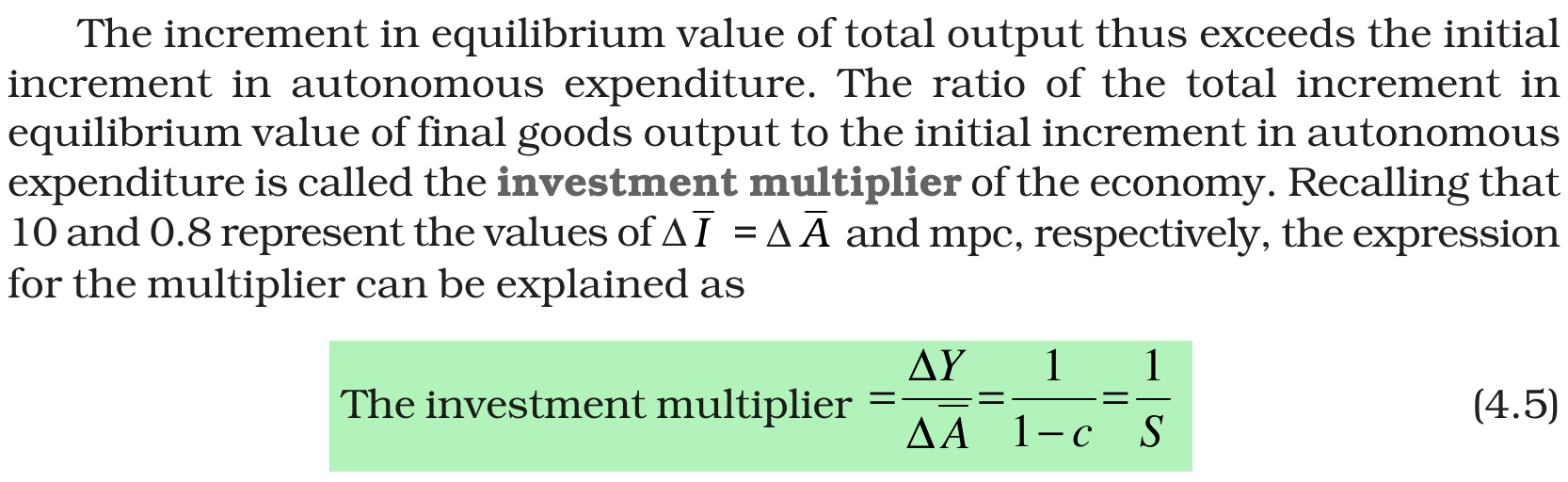
| (C) Investment multiplier | (II) \( \Delta Y/\Delta A \) | It is the total rise in equilibrium output divided by the initial rise in autonomous expenditure. It equals \( \frac{1}{1-c} \). |
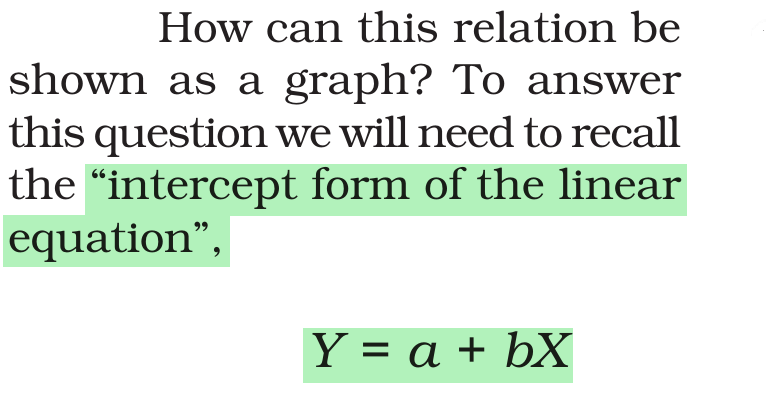
| (D) Linear equation | (IV) \( a + bX \) | This is the intercept form of the linear equation, \( Y = a + bX \): a is where the line cuts the Y-axis; b is its slope. |
Note: It seems that there is a mistake in the original NTA paper, which prints Option (3) as ‘(A)-(I), (B)-(II), (C)-(IV), (D)-(IV)’ when it should read ‘(C)-(IV), (D)-(III)’. As printed, (IV) appears twice and (III) never. Option (3) is wrong either way, so the question can still be answered.
NCERT (2026-27): Introductory Macroeconomics — Chapter 4: Determination of Income and Employment
|