Match List-I with List-II
| List-I | List-II | ||
| (Act/Programs of Govt. of India) | (Year of Launch) | ||
| (A) | Jal Kranti Abhiyan | (I) | 2015-16 |
| (B) | National Water Policy | (II) | 1974 |
| (C) | Water (Prevention and Control of Pollution) Act | (III) | 2002 |
| (D) | Water Cess Act | (IV) | 1977 |
Choose the correct answer from the options given below:
Answer & explanation
Correct answer: option 2
The correct answer is Option (2) → (A)-(I), (B)-(III), (C)-(II), (D)-(IV)
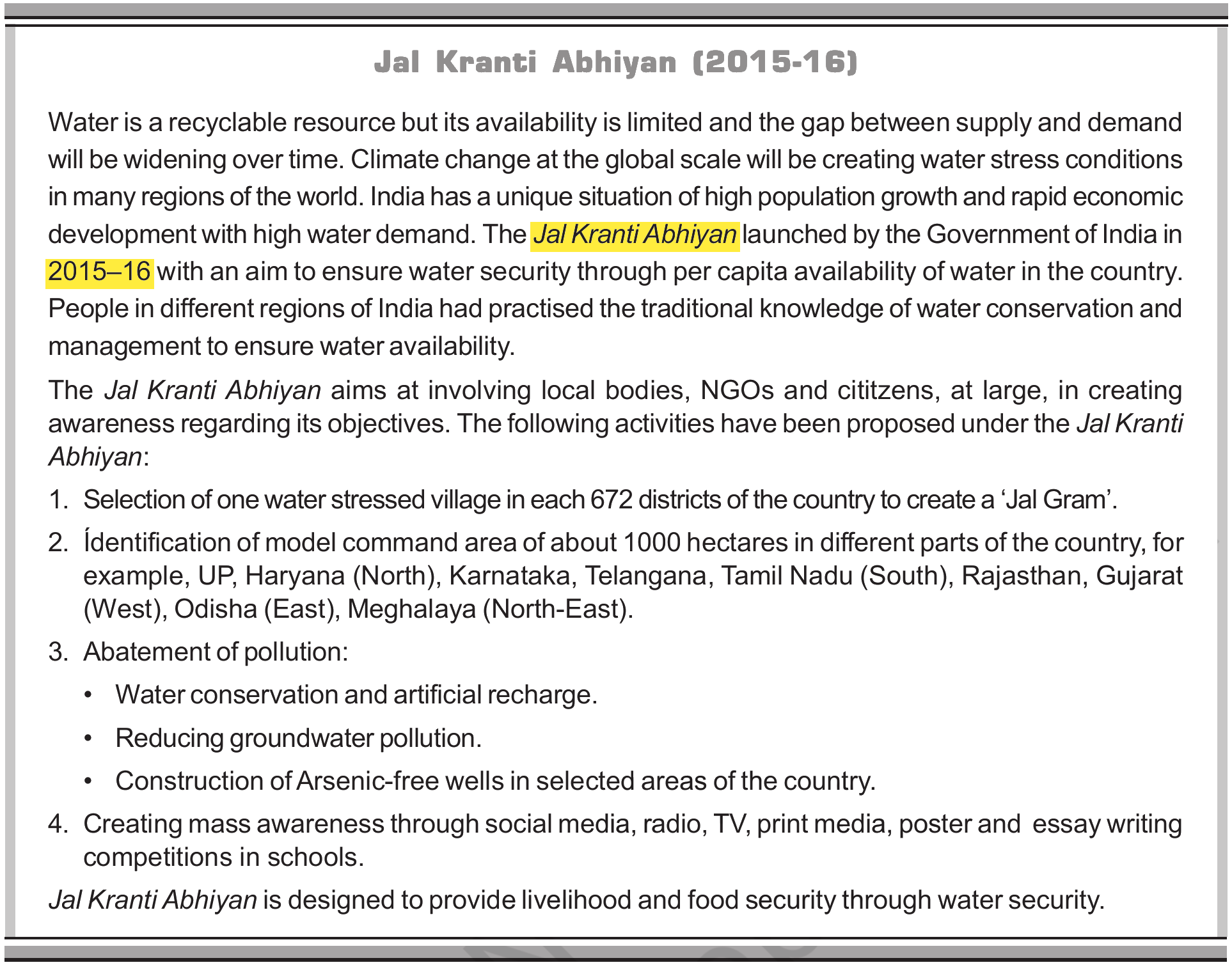
(A) Jal Kranti Abhiyan — this matches (I) 2015-16. It aims at water security through per capita availability of water.
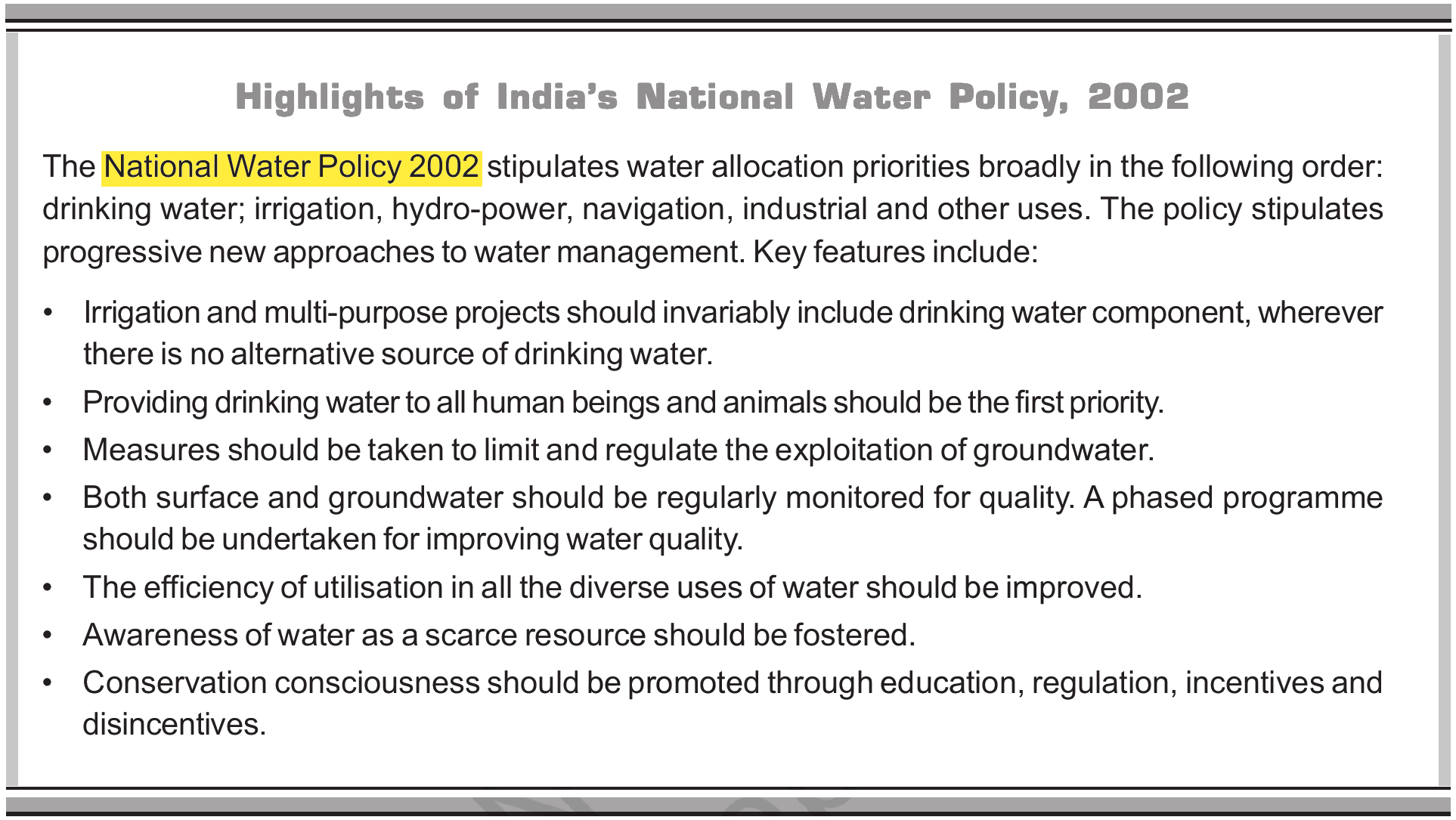
(B) National Water Policy — this matches (III) 2002. It set the order of water use, with drinking water first.
(C) Water (Prevention and Control of Pollution) Act — this matches (II) 1974.
(D) Water Cess Act — this matches (IV) 1977. It was meant to reduce water pollution.
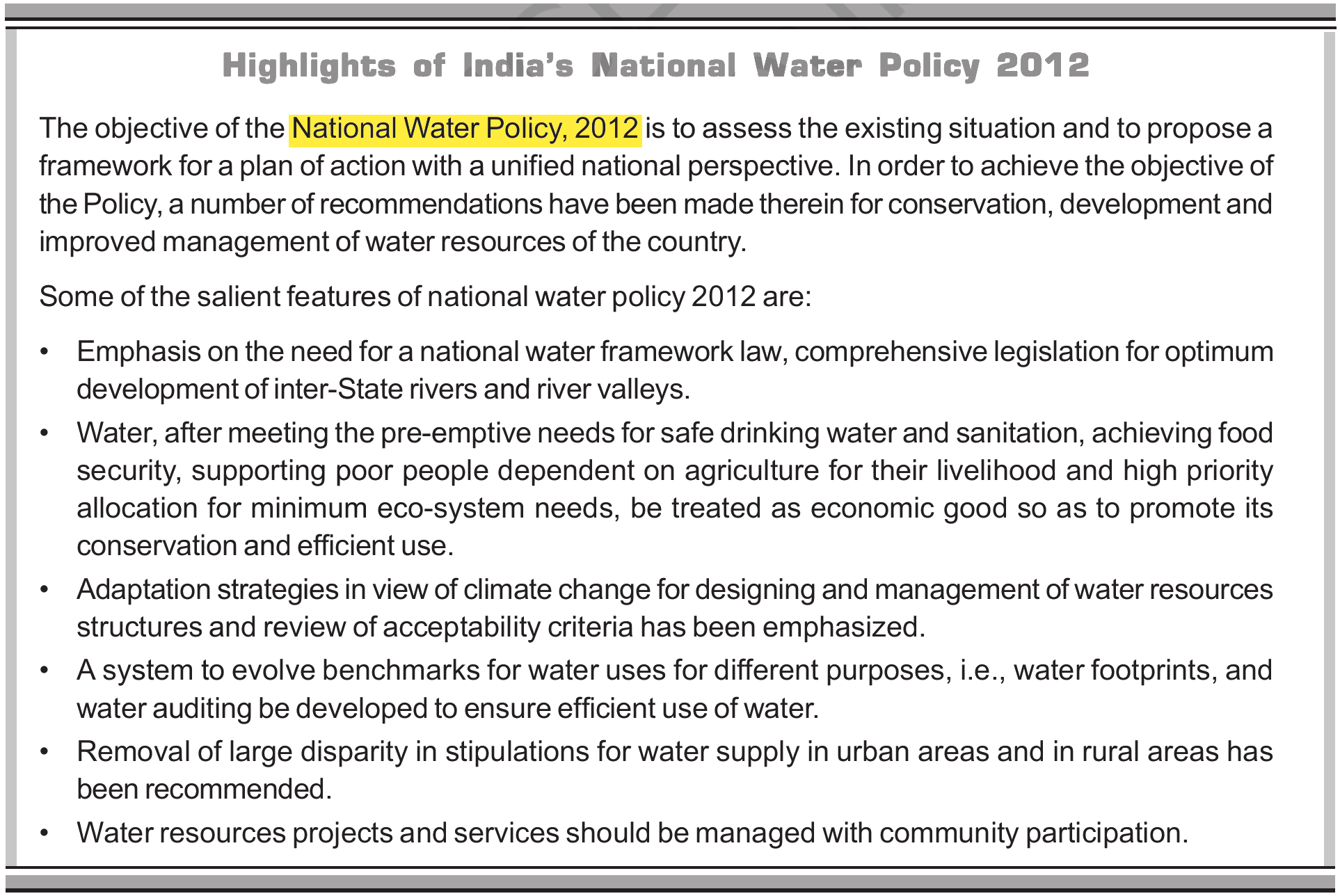
Note: This question is taken from an earlier edition of the NCERT book (2023-24), which describes the National Water Policy of 2002. The latest edition (2026-27) gives newer data (the National Water Policy 2012). Both editions are given below for your benefit.
NCERT (2026-27): “The legislative provisions such as the Water (Prevention and Control of Pollution) Act 1974, and Environment Protection Act 1986 have not been implemented effectively. The result is that in 1997, 251 polluting industries were located along the rivers and lakes. The Water Cess Act, 1977, meant to reduce pollution has also made marginal impacts.”
Box: Jal Kranti Abhiyan (2015-16)
Box: Highlights of India’s National Water Policy 2012
NCERT (2023-24):
Box: Highlights of India’s National Water Policy, 2002 |