CUETMOCK
  • Pricing
  • Mentors
Log inStart freeStart free mocks→

First test, then trust

Try a free CUET mock test.

Join 5,00,000+ students who rehearsed exam day on the exact NTA screen before sitting CUET. On the web and on Android.

Start free mocks →Get the Android app
CUETMOCK

India's #1 CUET Mock Test Platform. Original NCERT-based questions on the exact NTA exam screen — trusted by 5,00,000+ students since CUET 2022.

Get it onGoogle PlayScan to download the CUETMOCK app

Mock tests

  • CUET mock test series
  • Commerce mocks
  • Humanities (Arts) mocks
  • Science mocks
  • Languages & GAT mocks
  • Free practice questions
  • Pricing

Resources

  • CUET exam guide
  • CUET syllabus
  • Universities accepting CUET
  • Expert blogs
  • News & notifications
  • Webinars & counselling
  • CUET score calculator
  • How we estimate your rank
  • FAQs

Company

  • About us
  • Our leadership & team
  • Our toppers
  • Mentors
  • For schools
  • Contact us
  • Terms
  • Privacy
  • Refund policy

Talk to us

+91 7696 6630 56info@cuetmock.comWhatsApp us

Our other platforms

  • JEE Mock — For IIT-JEE aspirants
  • NEET Mock — For NEET aspirants

Newsletter

Exam updates, study material and offers — no spam.

© 2026 NYC Ventures Pvt. Ltd.

701-702, Royal Business Park, Zirakpur, Punjab - 140603

  • Terms of use
  • Privacy policy
  • Refund policy
  • Contact us

iCUETMOCK is an independent preparation platform, not affiliated with the National Testing Agency (NTA). Always check exam details on the official NTA website.

  • Home
  • Mock tests
  • CUET guide
  • Pricing
  • Log in
Home/Practice questions/History
HistoryAncient India: Bricks, Beads and Bones

What do you understand by the term “Shamans”?

What do you understand by the term “Shamans”?

Answer & explanation+

Correct answer: option 3

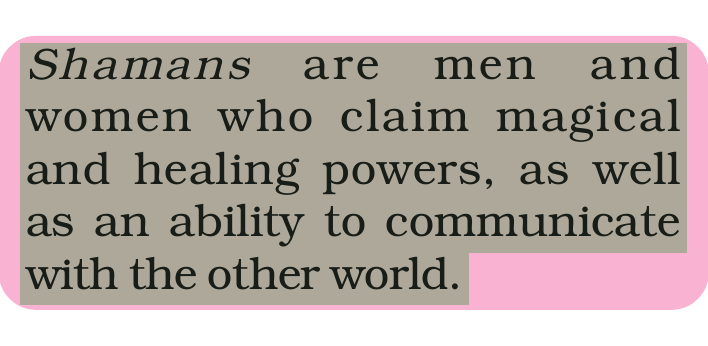
The correct answer is Option (3) → Men and women who claim magical and healing powers, as well as an ability to communicate with the other world

All four options come from the discussion of Harappan religion, so each is worth telling apart.

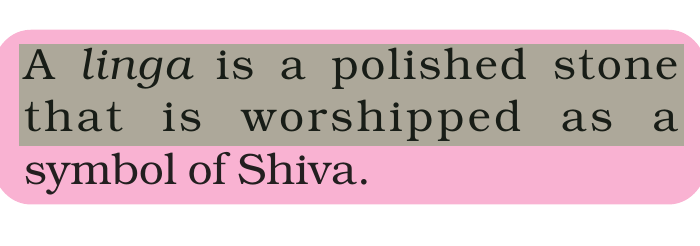
Option (1) A polished stone that is worshipped as a symbol of “proto-Shiva” — Incorrect. This describes a linga, a polished stone worshipped as a symbol of Shiva. Some conical stones found at Harappan sites have been classified as lingas.

Option (2) A figure shown seated cross-legged in a “yogic” posture, sometimes surrounded by animals — Incorrect. This is the figure on the so-called ‘proto-Shiva’ seals. Because Rudra in the Rigveda is neither a yogi nor a lord of animals, some scholars suggest that this figure may be a shaman, but the figure itself is not what the word means.

Option (3) Men and women who claim magical and healing powers, as well as an ability to communicate with the other world — Correct. This is the meaning of shamans.

Option (4) Rare stone statuary of men in an almost standardised posture, seated with one hand on the knee – such as the “priest-king” — Incorrect. This describes the rare Harappan stone statues such as the ‘priest-king’, which early archaeologists, like the female figurines they called mother goddesses, took to have a religious meaning.


NCERT (2025-26): “11.2 Problems of interpretation … Rare stone statuary of men in an almost standardised posture, seated with one hand on the knee – such as the ‘priest-king’ – was also similarly classified. In other instances, structures have been assigned ritual significance. These include the Great Bath and fire altars found at Kalibangan and Lothal. Attempts have also been made to reconstruct religious beliefs and practices by examining seals, some of which seem to depict ritual scenes. Others, with plant motifs, are thought to indicate nature worship. Some animals – such as the one-horned animal, often called the ‘unicorn’ – depicted on seals seem to be mythical, composite creatures. In some seals, a figure shown seated cross-legged in a ‘yogic’ posture, sometimes surrounded by animals, has been regarded as a depiction of ‘proto-Shiva’, that is, an early form of one of the major deities of Hinduism. Besides, conical stone objects have been classified as lingas. Many reconstructions of Harappan religion are made on the assumption that later traditions provide parallels with earlier ones. This is because archaeologists often move from the known to the unknown, that is, from the present to the past. While this is plausible in the case of stone querns and pots, it becomes more speculative when we extend it to ‘religious’ symbols. Let us look, for instance, at the ‘proto-Shiva’ seals. The earliest religious text, the Rigveda (compiled c. 1500-1000 BCE) mentions a god named Rudra, which is a name used for Shiva in later Puranic traditions (in the first millennium CE ; see also Chapter 4). However, unlike Shiva, Rudra in the Rigveda is neither depicted as Pashupati (lord of animals in general and cattle in particular), nor as a yogi. In other words, this depiction does not match the description of Rudra in the Rigveda. Is this, then, possibly a shaman as some scholars have suggested?…”

NCERT extractNCERT extract

Advertisement

Practise more on Ancient India: Bricks, Beads and Bones

Chapter-wise mocks on the real NTA exam screen, with solutions and your rank. Your first mocks are free.

Start free mocks →

Advertisement

Next questions

  1. Bacillus thuringiensis is available in sachets as dried spores, which are mixed with water and sprayed onto vulnerable plants such as brass…Biology · Microbes in Human Welfare
  2. Fill in the blank with a suitable adverb from the given alternatives: The traffic jam was _________ cleared by the traffic police.English · Grammar: Adverb
  3. If the ratio of the volumes of two cylinders is 6 : 1 and the ratio of their heights is 1 : 6, then what is the ratio of their radii ?General Aptitude Test · Numerical Ability
  4. In the circuit shown in figure, the ratio of currents i1 / i2 isPhysics · Current Electricity
  5. If 3sec^2 x - 4 = 0 , then the value of x ( 0 < x < 90°)General Aptitude Test · Quantitative Reasoning
  6. What is mentioned as a key factor enabling businesses to serve customers in distant geographical markets in the era of globalization?Business Studies · Business Environment
  7. Which method of training is highlighted in the above paragraph?Business Studies · Staffing
  8. As per Nuclear Physics there is close relationship between mass number and radius of nucleus. If mass number of A is 216 and mass number of…Physics · Nuclei
  9. If the following data is obtained from a simple random sample: 6, 7, 9, 10, 11, 17 Then the point estimate of population standard deviation…Applied Maths. Section B2 · Inferential Statistics
  10. Select the option that corrects the misspelt words in the given sentence. There is a feling of hopelesness among the youth.English · Spelling Check