When more and more workers are applied on the fixed land then the marginal productivity of additional worker will .............. to the total output.
Answer & explanation
Correct answer: option 4
The correct answer is Option (4) → Fall
As more workers are put on fixed land, the addition that one more worker makes to total output falls after a point. This is the law of diminishing marginal product, also called the law of variable proportions.
The marginal product is the extra output from one more unit of an input. At first, more workers suit the land better, so the marginal product rises. Later, each worker has less land to work with, so the marginal product starts falling.
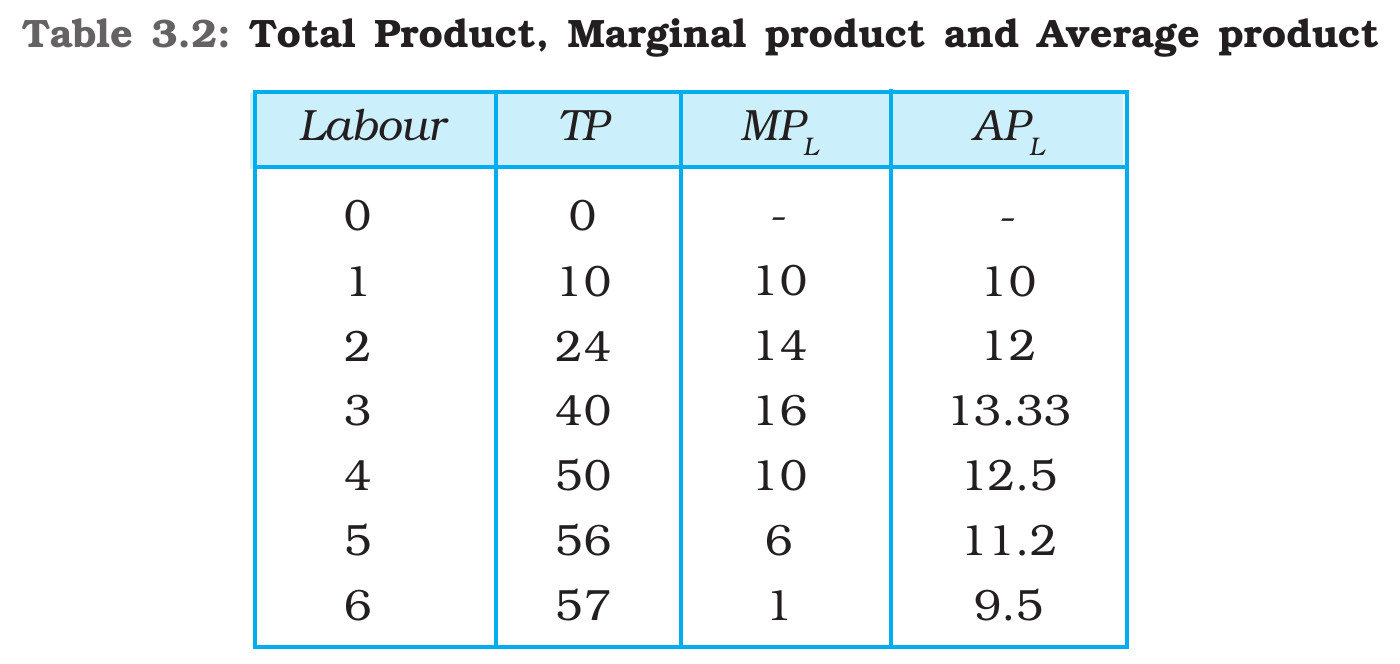
NCERT (2026-27): “3.4 The Law of Diminishing Marginal Product and the Law of Variable Proportions … Notice that the MP first increases (upto 3 units of labour) and then begins to fall. This tendency of the MP to first increase and then fall is called the law of variable proportions or the law of diminishing marginal product. Law of variable proportions say that the marginal product of a factor input initially rises with its employment level. But after reaching a certain level of employment, it starts falling. … Suppose table 3.2 describes the output of a farmer who has 4 hectares of land, and can choose how much labour he wants to use. If he uses only 1 worker, he has too much land for the worker to cultivate alone. As he increases the number of workers, the amount of labour per unit land increases, and each worker adds proportionally more and more to the total output. Marginal product increases in this phase. When the fourth worker is hired, the land begins to get ‘crowded’. Each worker now has insufficient land to work efficiently. So the output added by each additional worker is now proportionally less. The marginal product begins to fall.…”
|