The value of money multiplier depends upon which of the following?
Answer & explanation
Correct answer: option 1
The correct answer is Option (1) → Cash reserve ratio only
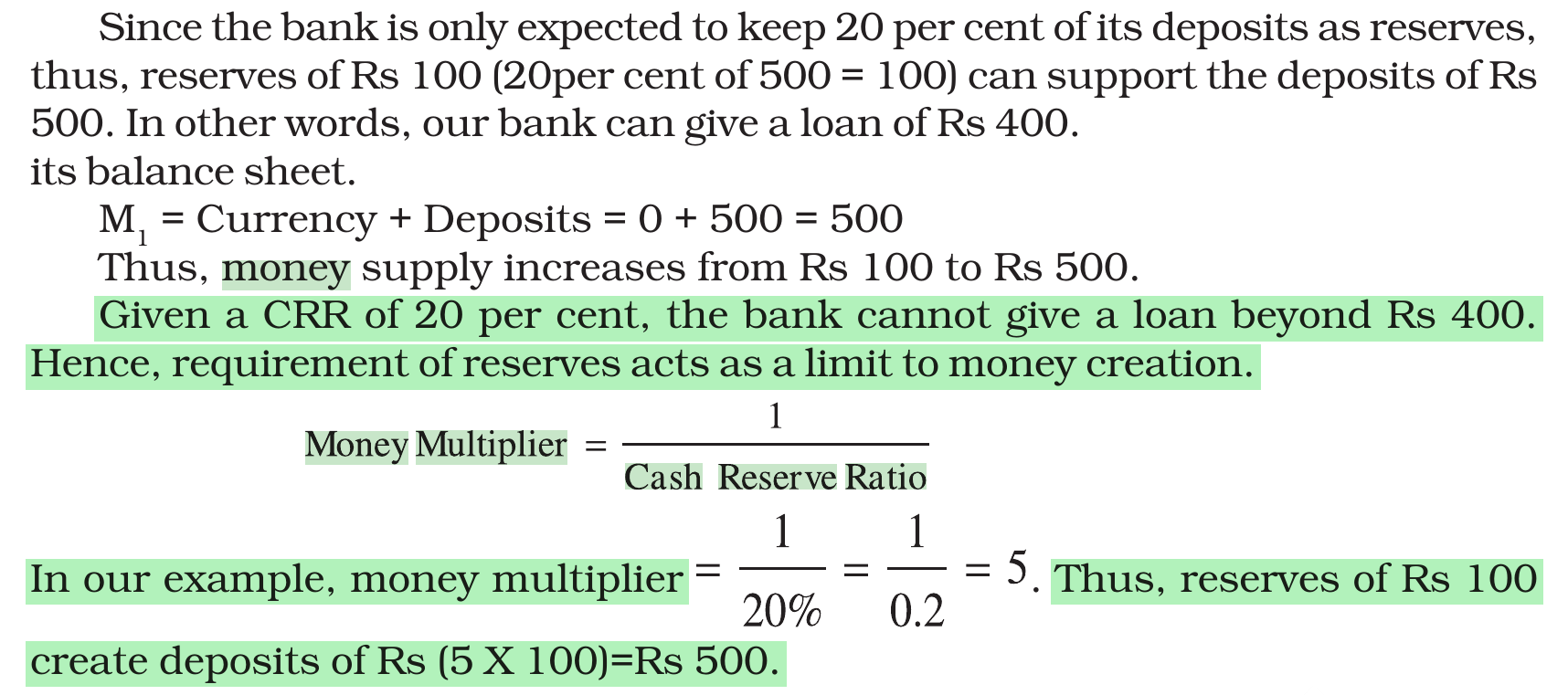
Banks create money by lending out deposits, but they must keep a part of every deposit as reserves, and the size of that part is set by the cash reserve ratio (CRR). Each round of lending is therefore smaller than the last, and the total deposits created stop at a multiple of the initial reserves. That multiple is the money multiplier, and it is worked out from the reserve ratio alone:
Money multiplier = 1 / Cash Reserve Ratio
With a CRR of 20 per cent, money multiplier = 1 / 0.2 = 5
A higher CRR therefore gives a smaller multiplier, and a lower CRR a larger one.
Why the other options are incorrect
Option (2) Bank Rate only — Incorrect. The bank rate is the rate at which the RBI lends to commercial banks. It changes the reserves banks borrow, not the multiple to which reserves can support deposits.
Option (3) Repo rate only — Incorrect. The repo rate is the rate on the RBI’s short-term repurchase lending to banks. Like the bank rate, it works on the cost of funds, not on the multiplier.
Option (4) Statutory Liquidity Ratio only — Incorrect. The SLR is the share of deposits banks must hold in specified liquid assets. The multiplier is worked out from the cash reserve ratio, and in any case the word ‘only’ makes this option wrong.
NCERT: Introductory Macroeconomics — Chapter 3: Money and Banking (2025-26)
|