Which one of the following statements is NOT true in the context of the imposition of a price ceiling by the government on the market for kerosene.
Answer & explanation
Correct answer: option 2
The correct answer is Option (2) → The imposition of price is above the equilibrium price of kerosene.
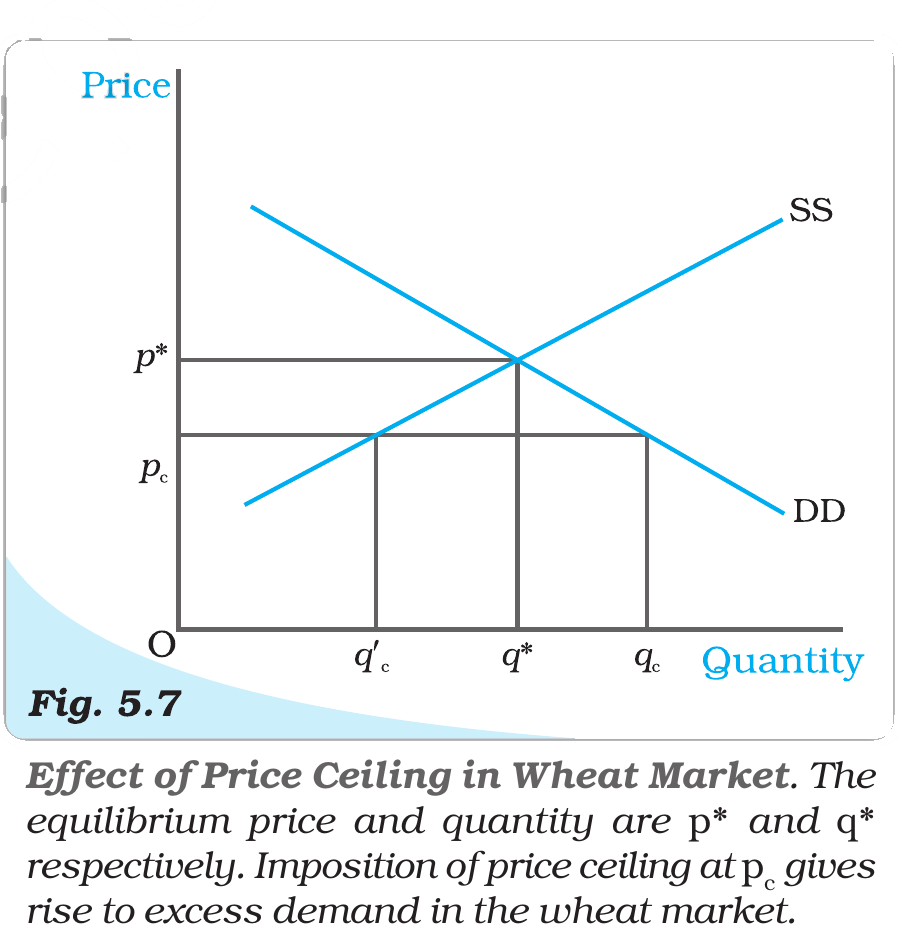
Left to itself, the market for kerosene settles at the equilibrium price, where the quantity buyers want equals the quantity sellers offer. When a necessity such as kerosene is too dear for poorer households at that price, the government may fix an upper limit on its price, a price ceiling. What the ceiling does depends on where it is fixed:
Ceiling above the equilibrium price: the market price is already lower, so the limit never binds and nothing changes. A ceiling meant to help consumers is therefore always fixed below the market price.
Ceiling below the equilibrium price: at the lower price buyers want more and sellers offer less, so there is excess demand. The government then rations the good through fair-price shops; the quota there does not satisfy every consumer, some are ready to pay more, and a black market may grow.
Option (2) puts the ceiling on the wrong side of the equilibrium price, where it would have no effect at all. The other three statements describe a ceiling at work:
Option (1) The imposition of price is below the equilibrium price of kerosene. — True (not the answer). A price ceiling holds the price below the level the market would set; only then does it bind.
Option (3) It may result in the creation of a black market due to non-satisfactory quantity in a fair-price shop for kerosene. — True (not the answer). The rationed quantity falls short of what consumers want at the controlled price, so the unmet demand may spill into a black market at higher prices.
Option (4) It could end up creating excess demand of kerosene. — True (not the answer). At the controlled price the quantity demanded exceeds the quantity supplied; this gap is the shortage that rationing has to manage.
NCERT (2025-26): “5.2.1 Price Ceiling … It is not very uncommon to come across instances where government fixes a maximum allowable price for certain goods. The government-imposed upper limit on the price of a good or service is called price ceiling. Price ceiling is generally imposed on necessary items like wheat, rice, kerosene, sugar and it is fixed below the market-determined price since at the market-determined price some section of the population will not be able to afford these goods.… …When the government imposes price ceiling at pc which is lower than the equilibrium price level, there will be an excess demand for wheat in the market at that price.… …(b) Since all consumers will not be satisfied by the quantity of the goods that they get from the fair price shop, some of them will be willing to pay higher price for it. This may result in the creation of black market.…”
|