Read the passage and answer the questions that follow:
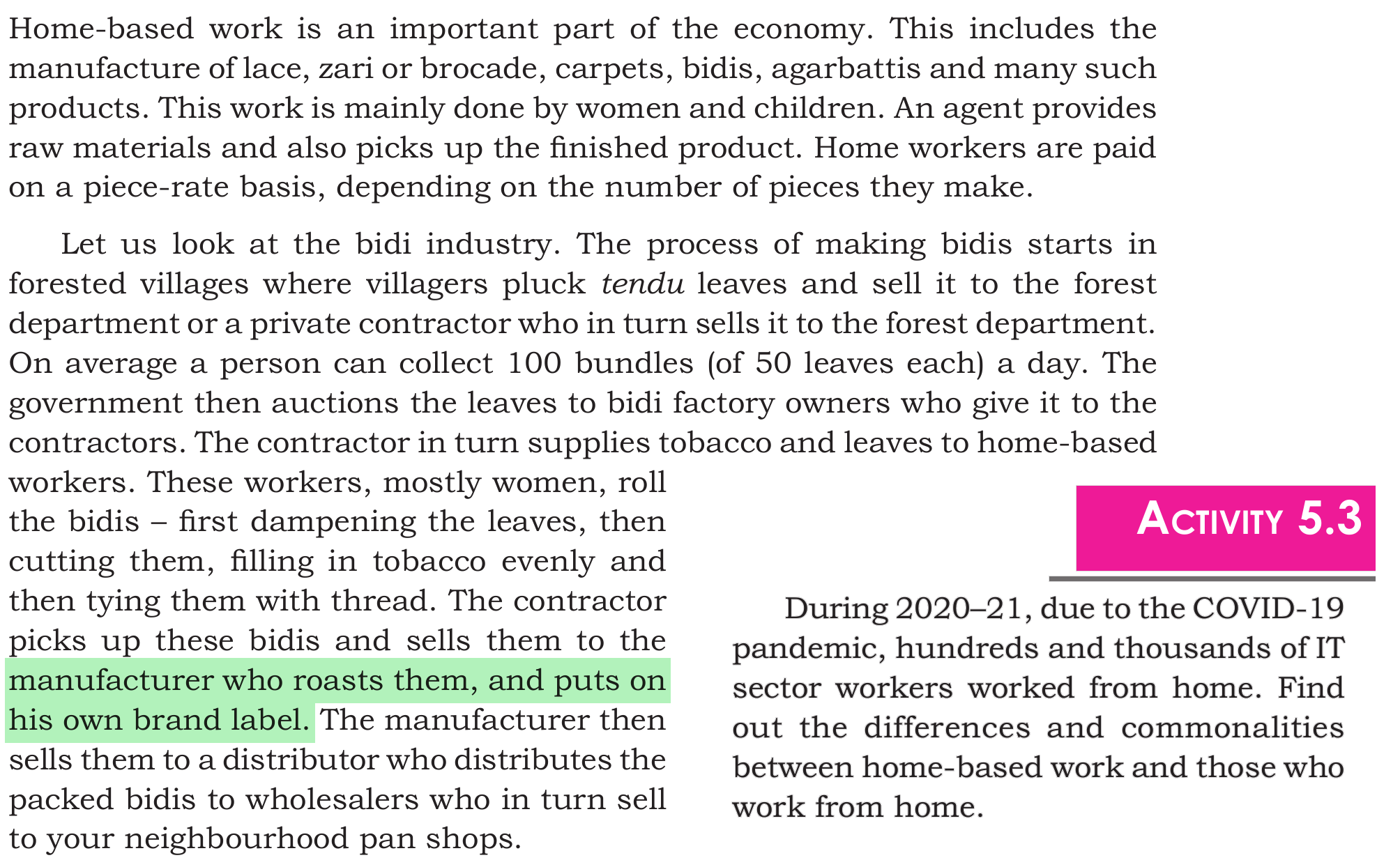
The process of making Bidis starts in forested villages where villagers pluck Tendu leaves and sell it to the forest department or a private contractor who in turn sells it to the forest department. On average a person can collect 100 bundles (of 50 leaves each) a day. The government then auctions the leaves to Bidi factory owners who give it to contractors. The contractor in turn supplies tobacco and leaves to home-based workers. These workers, mostly women, roll the bidis-first dampening the leaves, then cutting them, filling in tobacco evenly and then tying them with thread. The contractor picks up these bidis and sells them to the manufacturer who roasts them and sells them and put his own brand label. The manufacturer then sells them to a distributor who distributes the packed bidis to wholesalers who in turn sell to your neighborhood pan shops.
Who among the following receives the maximum profit in Bidi industry?
Answer & explanation
Correct answer: option 3
The correct answer is Option (3) → Manufacturers
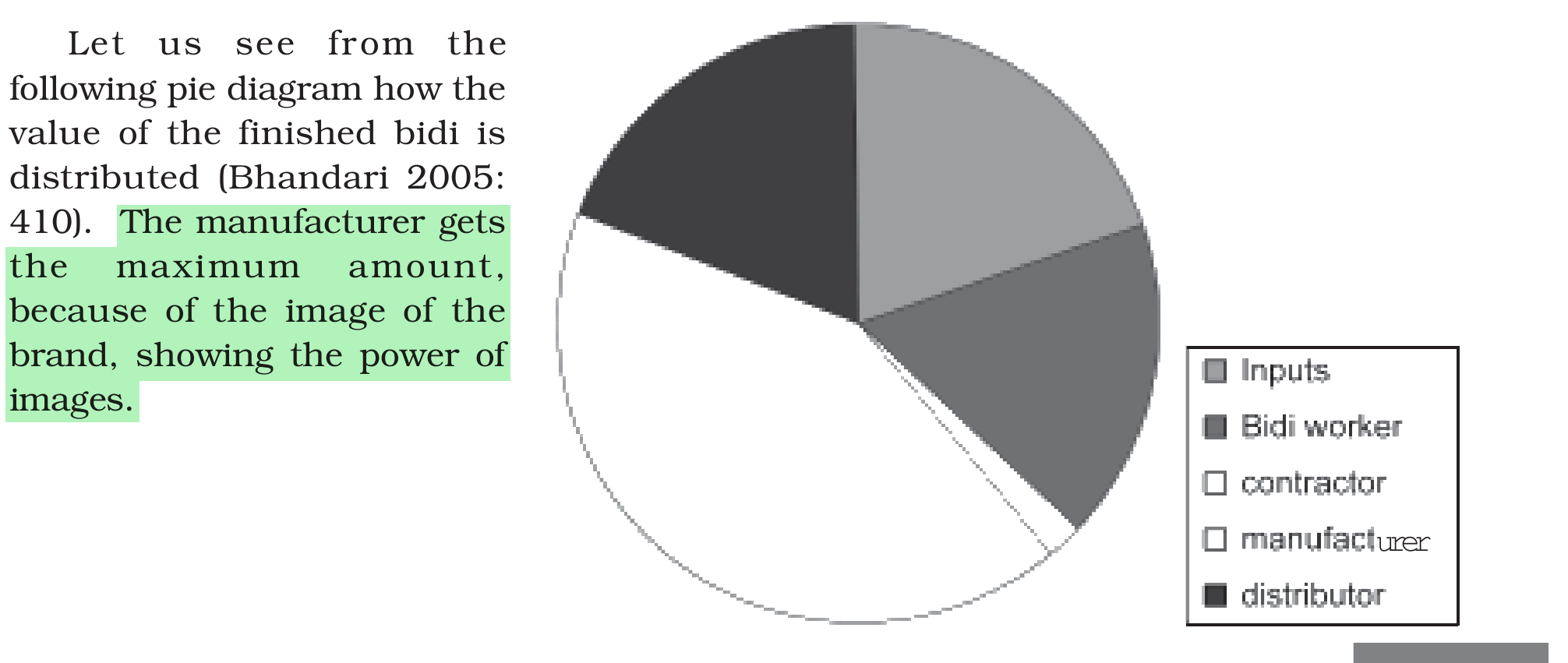
Option (3) Manufacturers — Correct. The manufacturer buys the bidis from the contractor, roasts them and puts on his own brand label before selling them to a distributor. A pie diagram of how the value of a finished bidi is shared shows that the manufacturer gets the maximum amount, because of the image of the brand, showing the power of images.
Note: The pie diagram of how the value of a finished bidi is distributed, with its line that the manufacturer gets the maximum amount, was there in the pre-rationalised NCERT chapter ‘Change and Development in Industrial Society’. This portion has been deleted from the NCERT book (2025-26) (and was not in the 2023-24 NCERT either), though the chapter and the bidi passage are still there. NTA kept the old pie chart in its pocket; a quick look at it now is an easy mark later.
NCERT: Social Change and Development in India — Chapter 5: Change and Development in Industrial Society (2025-26)
NCERT (Pre-rationalised): the pie diagram on how the value of a finished bidi is distributed |