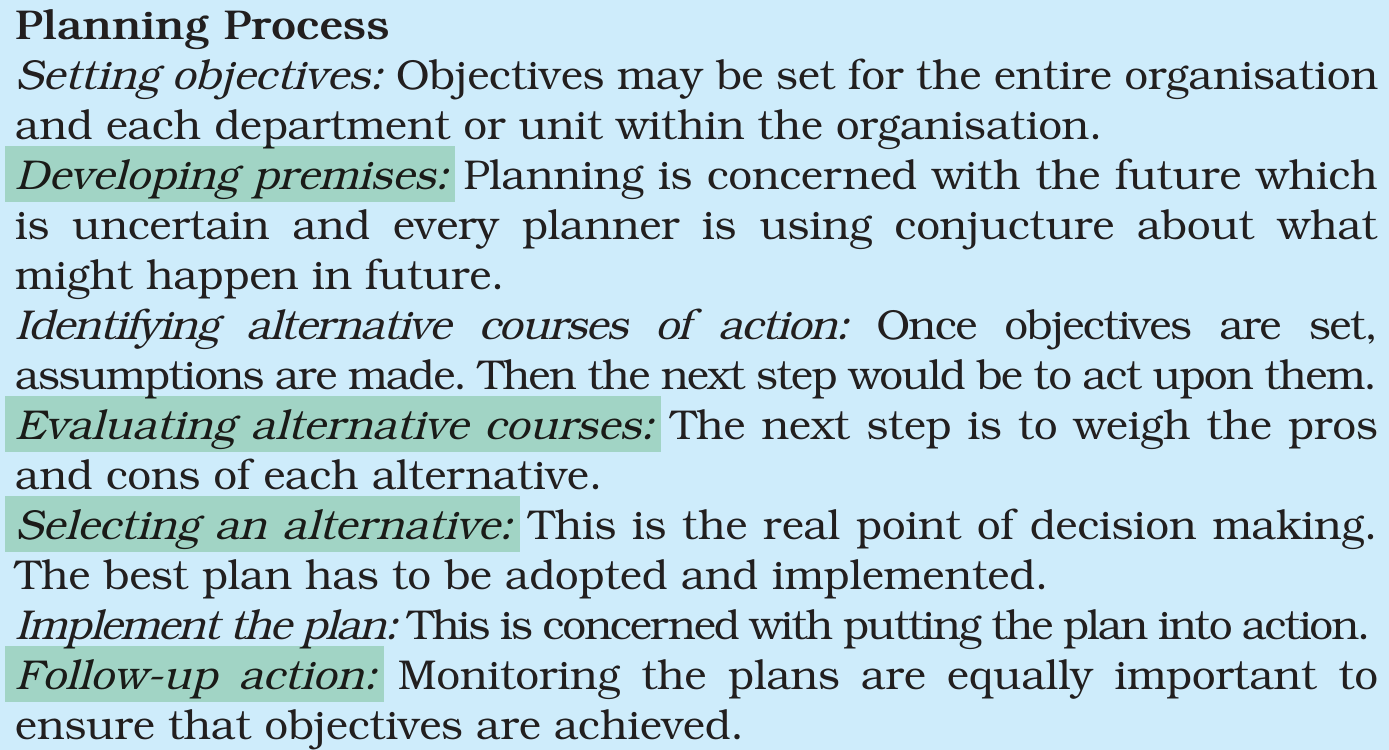
Arrange the following steps of planning process in a logical sequence.
(A) Making certain assumptions about the future
(B) Selecting the best possible and viable alternative
(C) Weighing the pros and cons of each alternative
(D) Monitoring the plan to ensure that objectives are achieved
Choose the correct answer from the options given below:
Answer & explanation
Correct answer: option 2
The correct answer is Option (2) → (A), (C), (B), (D)
(A) Making certain assumptions about the future — this is developing premises. The future is not certain, so the manager makes some guesses about it. These guesses are called premises.
(C) Weighing the pros and cons of each alternative — this is evaluating alternative courses, that is, checking the good and bad points of each choice. It comes after the choices have been found.
(B) Selecting the best possible and viable alternative — this is the real point of decision making. The best plan is chosen.
(D) Monitoring the plan to ensure that objectives are achieved — this is follow-up action. It is the last step, after the plan has been put into action.
NCERT (2026-27 Edition): “Developing Premises: Planning is concerned with the future which is uncertain and every planner is using conjecture about what might happen in future.” “Therefore, the manager is required to make certain assumptions about the future. …”
|