Match List I with List II
| List I Types of Code | List II Example | ||
|---|---|---|---|
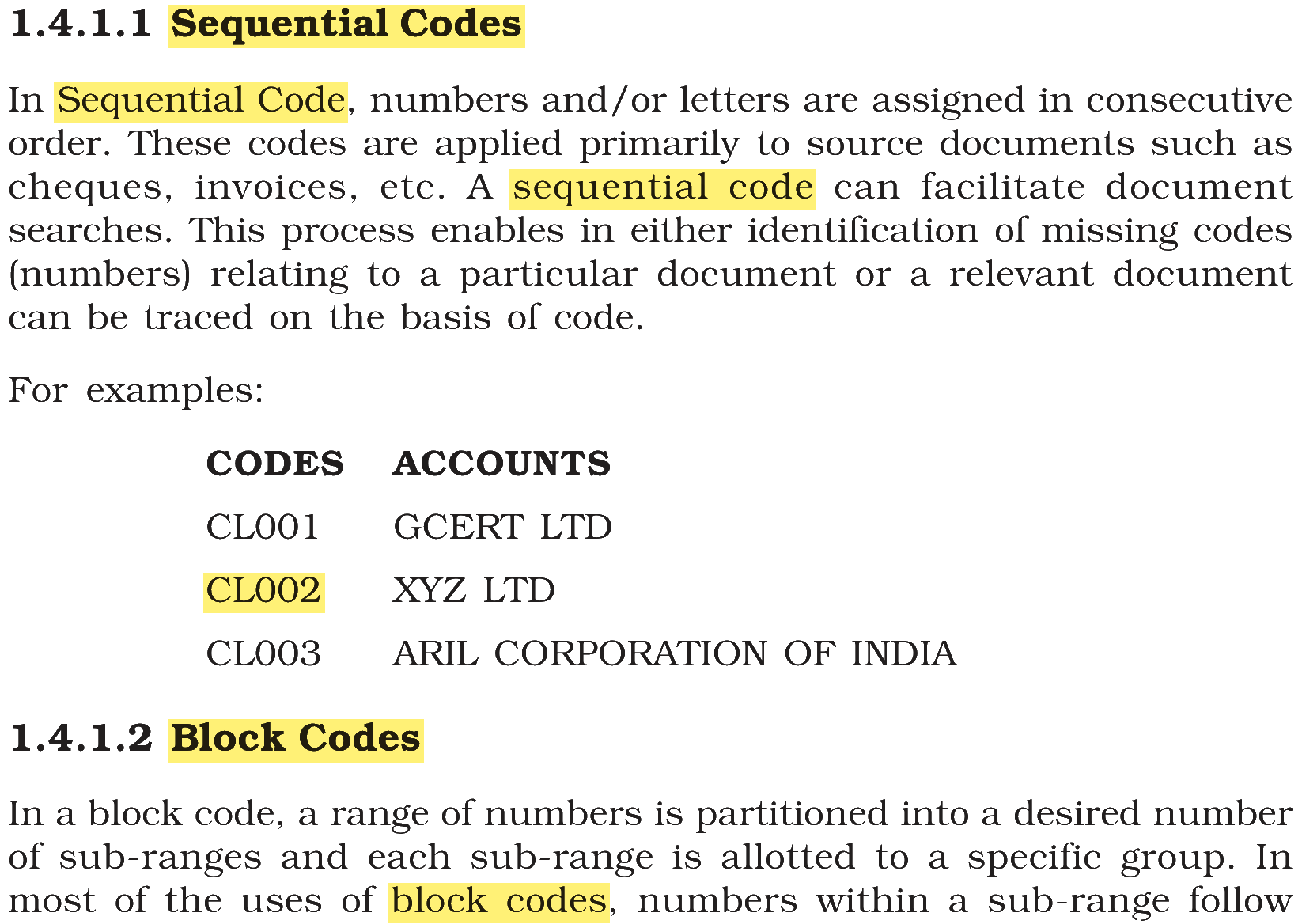
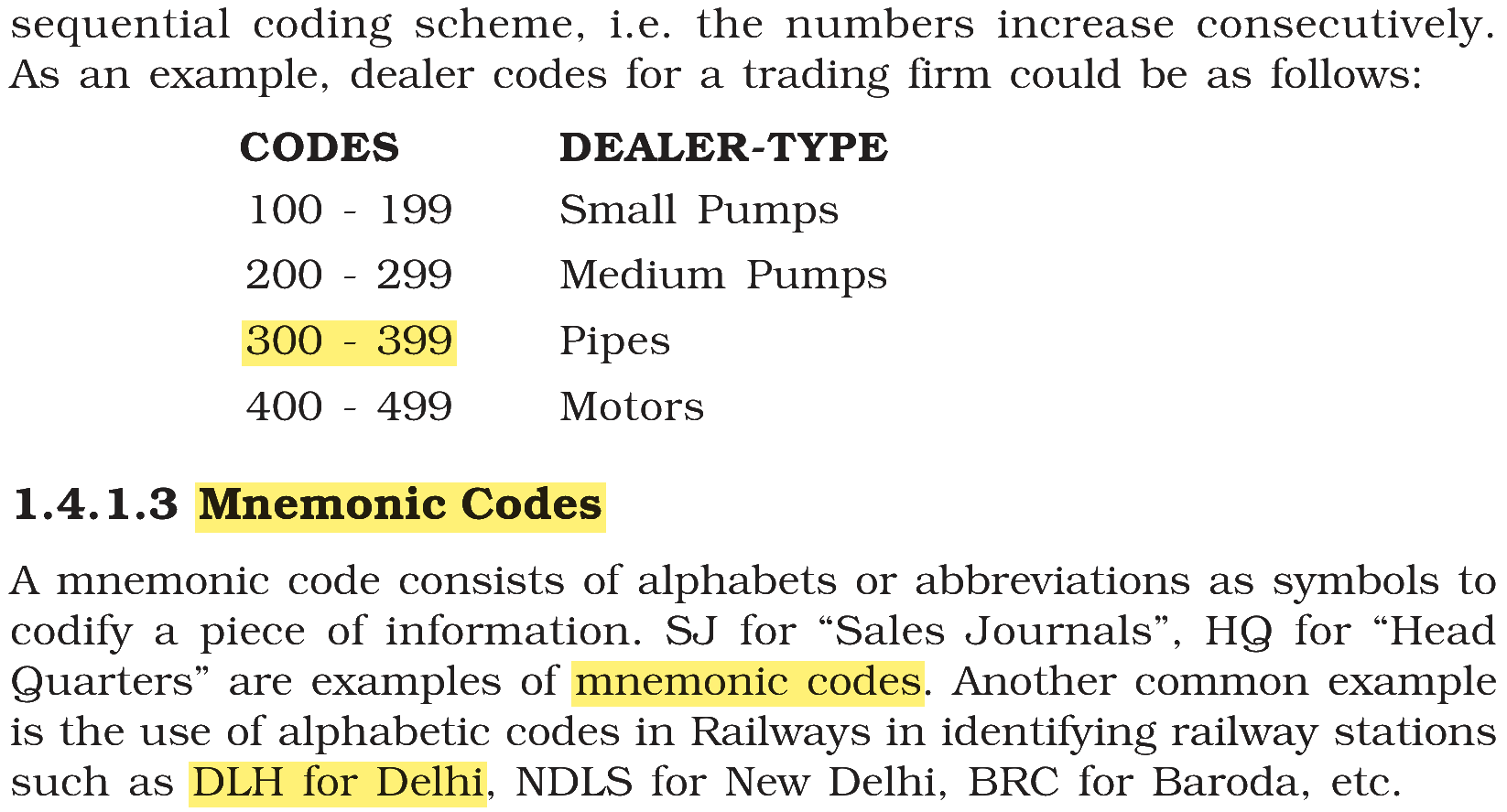
| (A) | Sequential Codes | (I) | DLH |
| (B) | Block Codes | (II) | CL002 |
| (C) | Mnemonic Codes | (III) | Key (Code) |
| (D) | Password | (IV) | 300 - 399 |
Choose the correct answer from the options given below:
Answer & explanation
Correct answer: option 3
The correct answer is Option (3) → (A) - (II), (B) - (IV), (C) - (I), (D) - (III)
Each type of code is matched with the example that shows how it is built.
(A) Sequential Codes — this matches (II) CL002. Numbers or letters are given in consecutive order, so CL001, CL002, CL003 follow one another.
(B) Block Codes — this matches (IV) 300 - 399. A range of numbers is split into sub-ranges, and each sub-range, such as 300 to 399, is kept for one group of items.
(C) Mnemonic Codes — this matches (I) DLH. Letters or abbreviations are chosen to suggest the item, as DLH stands for Delhi.
(D) Password — this matches (III) Key (Code). A password is the secret key that has to be entered to get into the system and its data.
NCERT (2026-27 edition):
NCERT (2026-27 edition): |