Calculate the change in the value of equilibrium income when the government increases spending by 100 at a given marginal propensity to consume 0.8.
Answer & explanation
Correct answer: option 2
The correct answer is Option (2) → 500
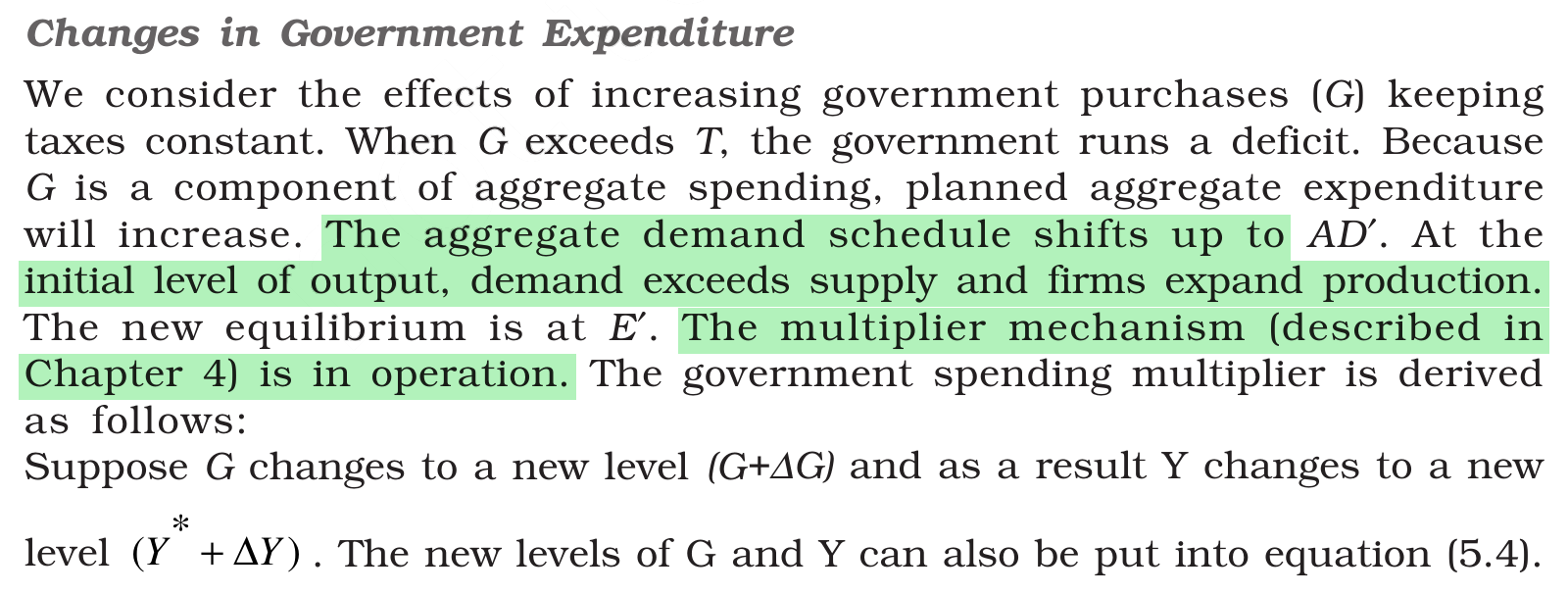
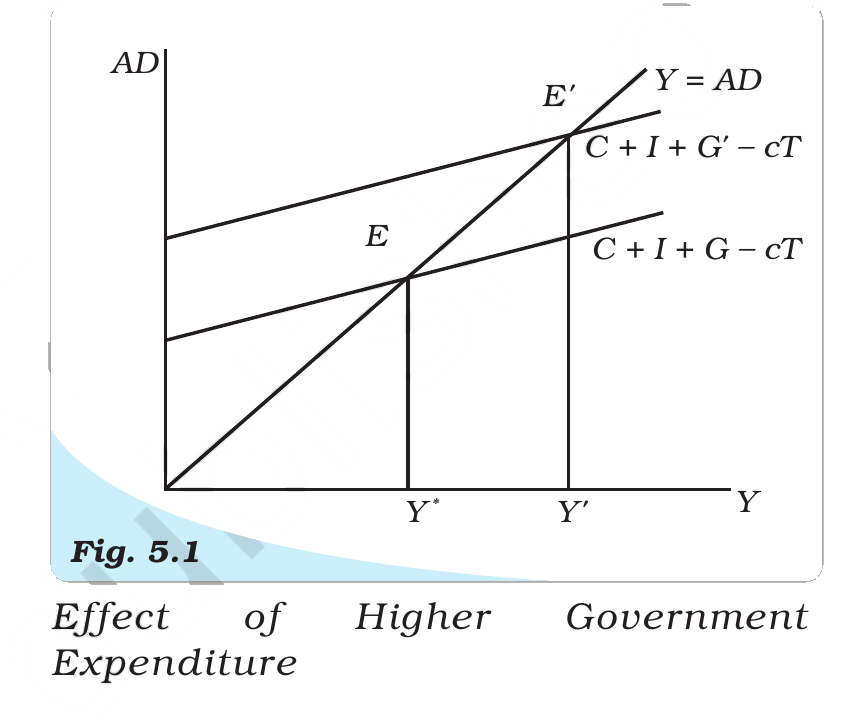
When the government spends more on final goods, it adds to aggregate demand. Firms produce more, the extra output is paid out as income, and people spend a part of that income, the fraction given by the marginal propensity to consume; this raises demand again, round after round. Income therefore rises by a multiple of the extra spending, and that multiple is the government expenditure multiplier, 1 ÷ (1 − c).
Given:
Increase in government spending, ΔG = 100
Marginal propensity to consume, c = 0.8
Substituting the values:
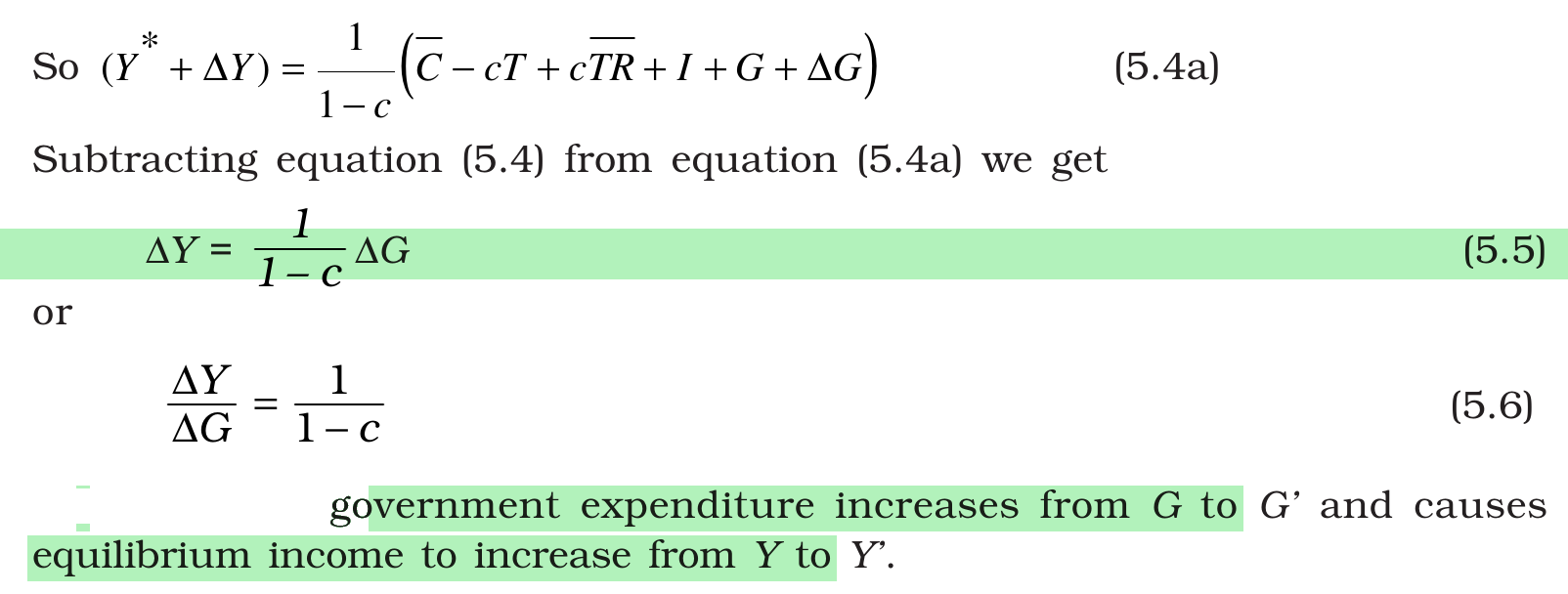
ΔY = [1 ÷ (1 − c)] × ΔG
Multiplier = 1 ÷ (1 − 0.8) = 1 ÷ 0.2 = 5
ΔY = 5 × 100 = 500, which is Option (2)
The 5 in Option (4) is the multiplier itself, not the change in income.
NCERT: Introductory Macroeconomics — Chapter 5: Government Budget and the Economy (2025-26)
|