Comprehension:
VITAMINS
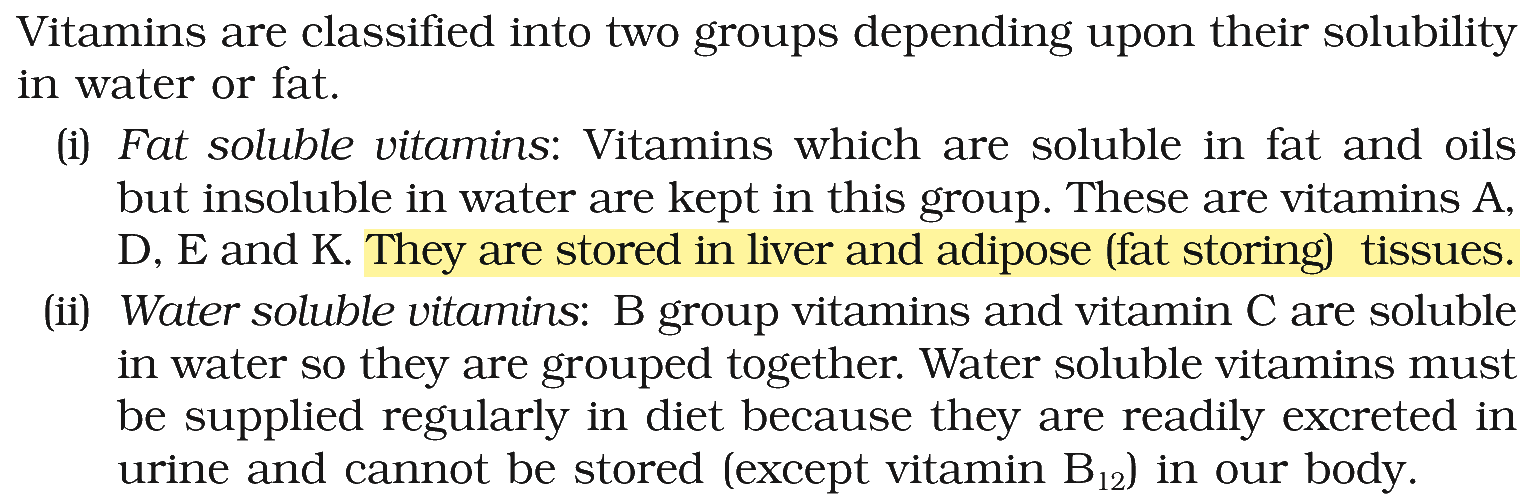
In living organism, some of organic compounds are required in small amounts in our diet but their deficiency causes specific diseases. These compounds are called vitamins. Most of the vitamins cannot be synthesized in our body but plants can synthesise almost all of them, so they are considered as essential food factors. However, the bacteria of the gut can produce some of the vitamins required by us. All the vitamins are generally available in our diet. Different vitamins belong to various chemical classes and it is difficult to define them on the basis of structure. They are generally regarded as organic compounds required in the diet in small amounts to perform specific biological functions for normal maintenance of optimum growth and health of the organism. Vitamins are designated by alphabets A, B, C, D, etc. Some of them are further named as sub-groups e.g. B1, B2, B6, B12, etc. Excess of vitamins is also harmful and vitamin pills should not be taken without the advice of doctor. Vitamins are classified into two groups depending upon their solubility in water or fat.
Among the following, vitamin stored in liver and adipose tissues is
Answer & explanation
Correct answer: option 1
The correct answer is Option (1) → Vitamin D
Among the options only vitamin D is a fat-soluble vitamin.
NCERT (2026-27 edition):
Classification of Vitamins