Why has the military continued its dominance in Pakistan?
A. Lack of genuine international support for democratic rule in Pakistan.
B. Pakistan’s conflict with India.
C. Social dominance of the military, clergy and land-owning aristocracy.
D. The fear of the threat of global Islamic terrorism.
Choose the correct answer from the options given below:
Answer & explanation
Correct answer: option 1
The correct answer is Option (1) → A, B, C and D
A. Lack of genuine international support for democratic rule in Pakistan. Correct. This lack of support further encouraged the military to continue its dominance.
B. Pakistan’s conflict with India. Correct. The conflict made the pro-military groups more powerful.
C. Social dominance of the military, clergy and land-owning aristocracy. Correct. It has led to the frequent overthrow of elected governments.
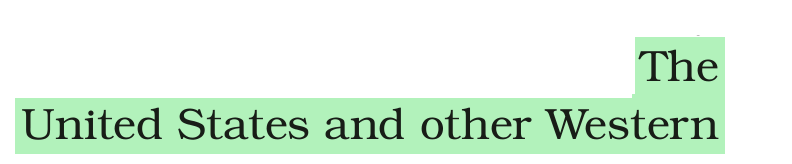
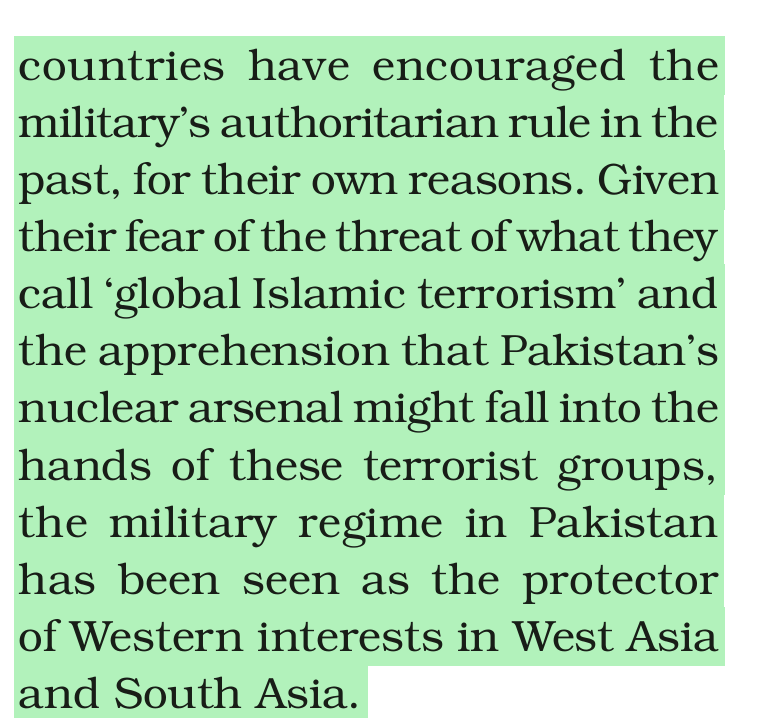
D. The fear of the threat of global Islamic terrorism. Correct. Out of this fear, the US and other Western countries came to see the military regime as the protector of Western interests and encouraged its rule.
NCERT (2025-26): “The Military and Democracy in Pakistan … Several factors have contributed to Pakistan’s failure in building a stable democracy. The social dominance of the military, clergy, and landowning aristocracy has led to the frequent overthrow of elected governments and the establishment of military government. Pakistan’s conflict with India has made the pro-military groups more powerful. These groups have often said that political parties and democracy in Pakistan are flawed, that Pakistan’s security would be harmed by selfish-minded parties and chaotic democracy, and that the army’s stay in power is, therefore, justified. While democracy has not been fully successful in Pakistan, there has been a strong pro-democracy sentiment in the country. Pakistan has a courageous and relatively free press and a strong human rights movement. The lack of genuine international support for democratic rule in Pakistan has further encouraged the military to continue its dominance.…”
|