Match List-I with List-II
| List-I | List-II | ||
| (A) | Net National Product at market price (NNPMP) | (I) | C+I+G+X-M |
| (B) | Gross Domestic Product at market price (GDPMP) | (II) | GDPMP + NFIA |
| (C) | Gross Domestic Product (GDPFC) | (III) | GNPMP - Depreciation |
| (D) | Gross National Product (GNPMP) | (IV) | GDPMP - NIT |
Choose the correct answer from the options given below:
Answer & explanation
Correct answer: option 1
The correct answer is Option (1) → (A) - (III), (B) - (I), (C) - (IV), (D) - (II)
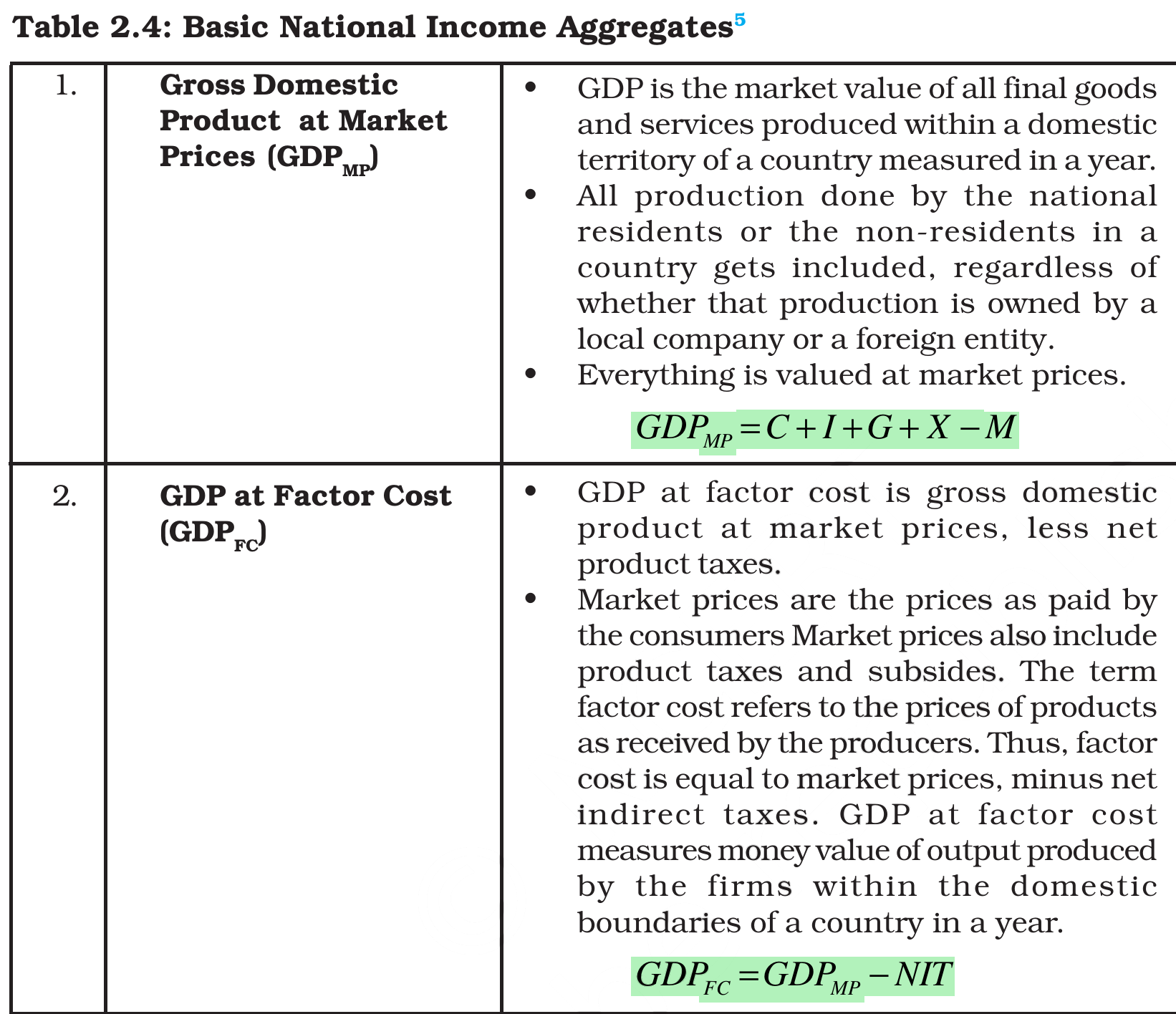
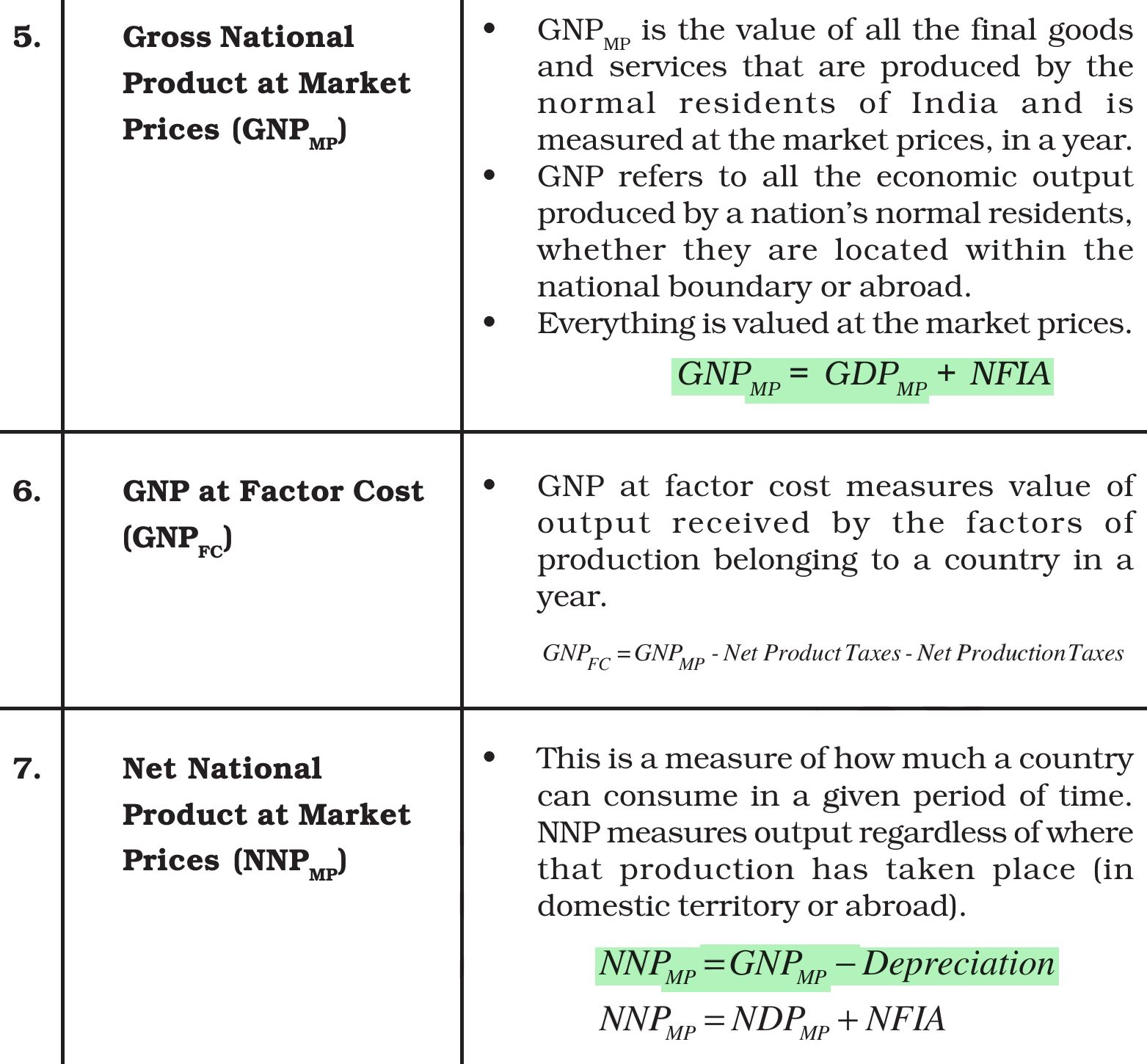
All the national income aggregates start from GDP at market prices, the total spent on the economy’s final goods, and the others are reached from it by three conversions: domestic to national by adding net factor income from abroad (NFIA), gross to net by deducting depreciation, and market price to factor cost by deducting net indirect taxes (NIT).
(A) Net National Product at market price (NNPMP) — this matches (III) GNPMP - Depreciation. Going from gross to net means taking out depreciation, the part of the capital stock used up in production.
(B) Gross Domestic Product at market price (GDPMP) — this matches (I) C+I+G+X-M. By the expenditure method, GDP at market prices is the sum of consumption, investment, government expenditure and net exports (exports minus imports).
(C) Gross Domestic Product (GDPFC) — this matches (IV) GDPMP - NIT. Market prices include indirect taxes and are reduced by subsidies; factor cost is the price received by the producers, so GDP at factor cost is GDP at market prices less net indirect taxes.
(D) Gross National Product (GNPMP) — this matches (II) GDPMP + NFIA. GNP covers the output of a country’s normal residents wherever they produce, so it is GDP plus the factor income residents earn abroad, less what non-residents earn in the country.
Note: A same/similar question was asked in CUET (UG) in the papers below.
| 2026 | 2025 | 2024 | 2023 | 2022 |
| 13-05 S1 13-05 S2* | – | – | – | – |
* A similar question.
NCERT: Introductory Macroeconomics — Chapter 2: National Income Accounting, Table 2.4: Basic National Income Aggregates (2025-26)
|