Match the LIST-I with LIST-II:
| LIST-I Term/Text/Saint | LIST-II Associations | ||
| A. | Nalayira Divyaprabandham | I. | Nayanar |
| B. | Tondaradippodi | II. | Maharashtra |
| C. | Appar | III. | Tamil Veda |
| D. | Jnanadeva | IV. | Alvar |
Choose the correct answer from the options given below:
Answer & explanation
Correct answer: option 4
The correct answer is Option (4) → A - III, B - IV, C - I, D - II
(A) Nalayira Divyaprabandham — this matches (III) Tamil Veda. It is one of the major collections of the songs of the Alvars. It was often called the Tamil Veda, a claim that it was as important as the four Vedas in Sanskrit.
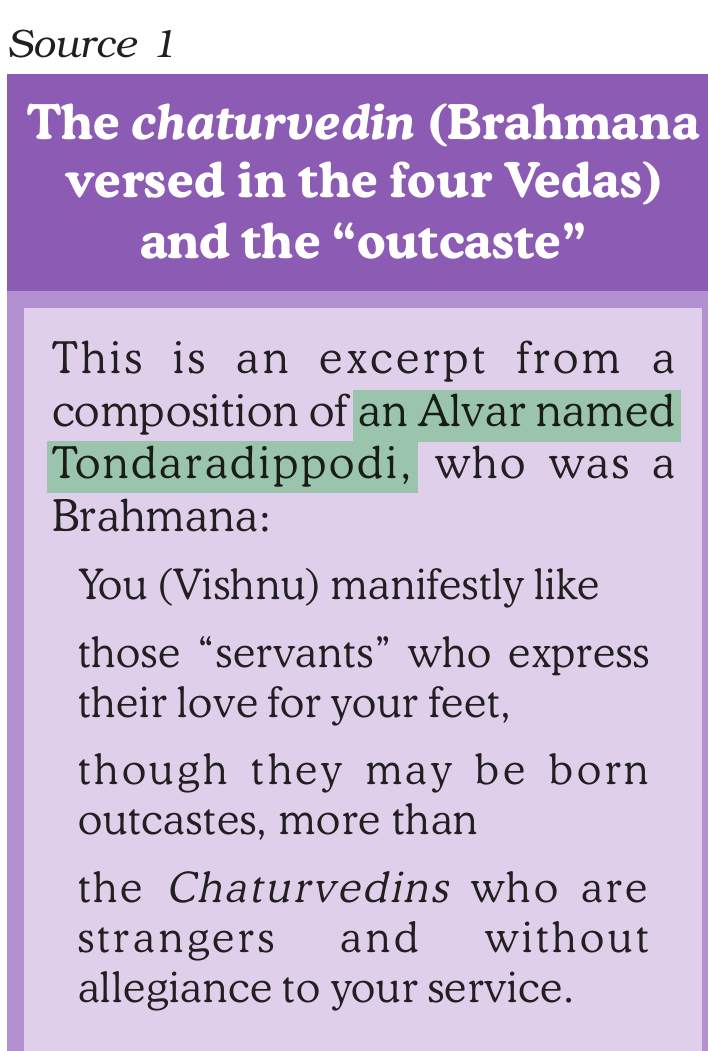
(B) Tondaradippodi — this matches (IV) Alvar. He was an Alvar who was a Brahmana. In one of his songs he says that Vishnu loves his devoted ‘servants’, even if they are born outcastes, more than the Brahmanas who know all four Vedas.
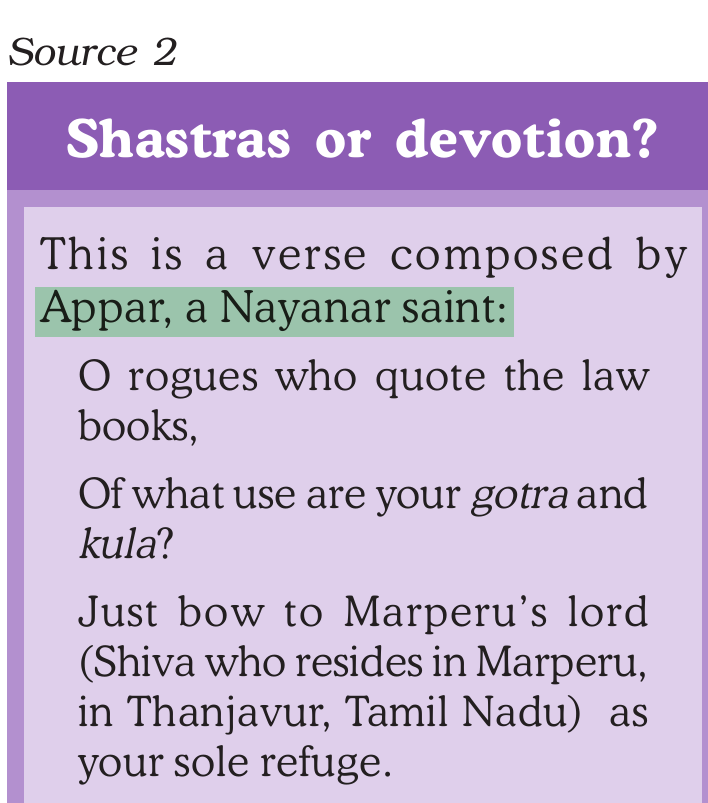
(C) Appar — this matches (I) Nayanar. He was a Nayanar saint, a devotee of Shiva. In one verse he mocks people who quote the law books and asks them to take refuge in Shiva instead.
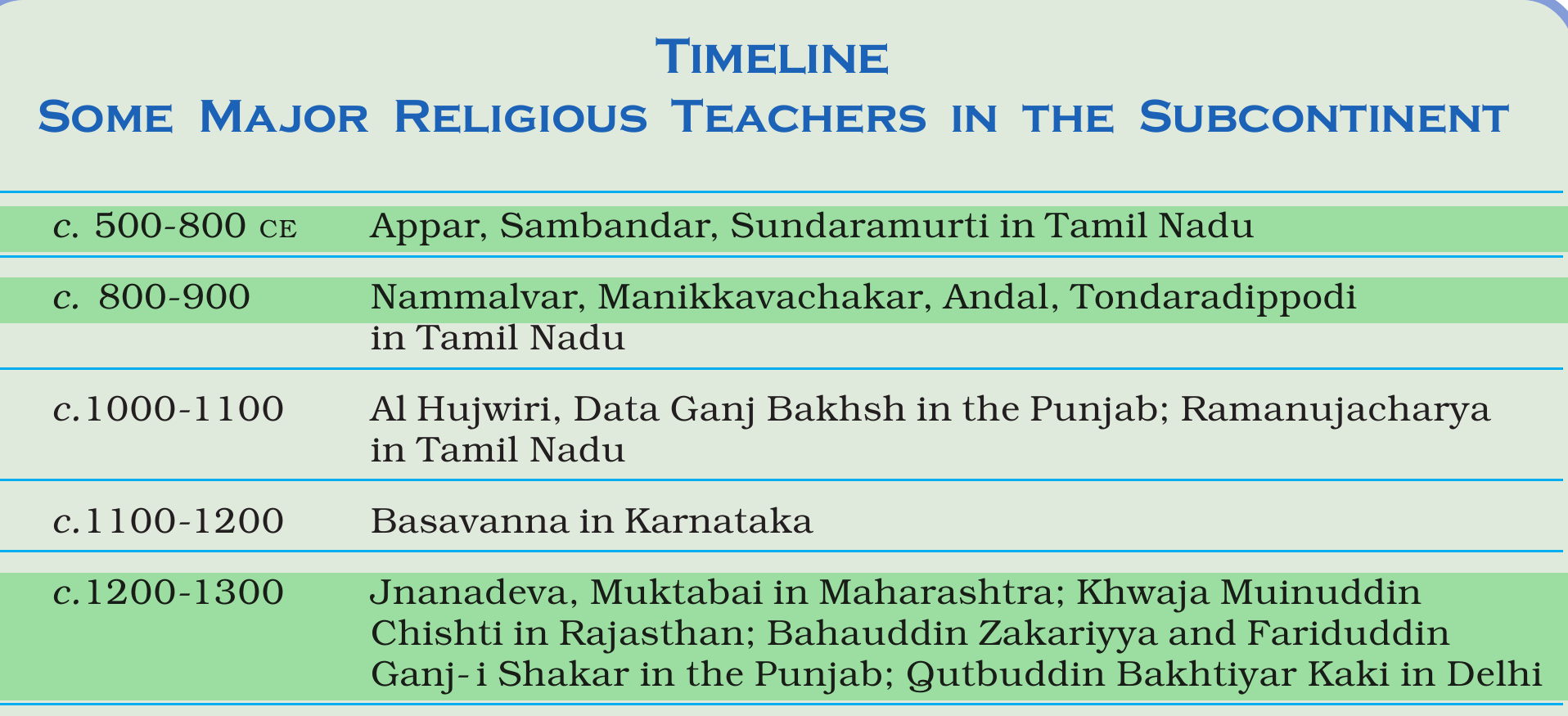
(D) Jnanadeva — this matches (II) Maharashtra. He was a religious teacher of Maharashtra in c. 1200-1300, along with Muktabai.
Tip: Alvars were devotees of Vishnu and Nayanars were devotees of Shiva. Fix this pair first, and the saints and their songs fall into place.
NCERT (2025-26): “2.1 The Alvars and Nayanars of Tamil Nadu … Some of the earliest bhakti movements (c. sixth century) were led by the Alvars (literally, those who are ‘immersed’ in devotion to Vishnu) and Nayanars (literally, leaders who were devotees of Shiva). They travelled from place to place singing hymns in Tamil in praise of their gods.… 2.2 Attitudes towards caste … The importance of the traditions of the Alvars and Nayanars was sometimes indicated by the claim that their compositions were as important as the Vedas. For instance, one of the major anthologies of compositions by the Alvars, the Nalayira Divyaprabandham, was frequently described as the Tamil Veda, thus claiming that the text was as significant as the four Vedas in Sanskrit that were cherished by the Brahmanas.…”
|