Match List-I with List-II
| List-I | List-II | ||
|---|---|---|---|
| (A) | Death of an existing partner | (I) | Executor's Account |
| (B) | Transfer of closing balance of Deceased partner's capital Account | (II) | Profit for the Intervening Period |
| (C) | Bad Debts Recovered | (III) | Debit Side of Revaluation Account |
| (D) | Liability not recorded in Balance Sheet | (IV) | Credit side of Revaluation Account |
Choose the correct answer from the options given below:
Answer & explanation
Correct answer: option 2
The correct answer is Option (2) → (A) - (II), (B) - (I), (C) - (IV), (D) - (III)
(A) Death of an existing partner — this matches (II) Profit for the Intervening Period. A partner may die at any time in the year, so his share of profit from the last balance sheet to the date of death has to be worked out.
(B) Transfer of closing balance of Deceased partner's capital Account — this matches (I) Executor's Account. What is due to the deceased is moved to his executors' account and paid to them.
(C) Bad Debts Recovered — this matches (IV) Credit side of Revaluation Account. A debt written off earlier and now recovered is a gain on revaluation.
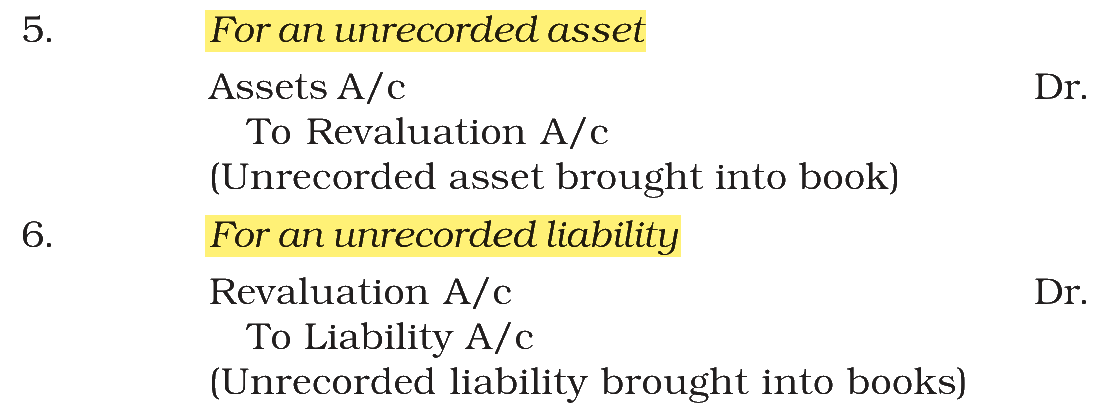
(D) Liability not recorded in Balance Sheet — this matches (III) Debit Side of Revaluation Account. Bringing a forgotten liability into the books is a loss on revaluation.
NCERT (2026-27 edition): NCERT (2026-27 edition):
|