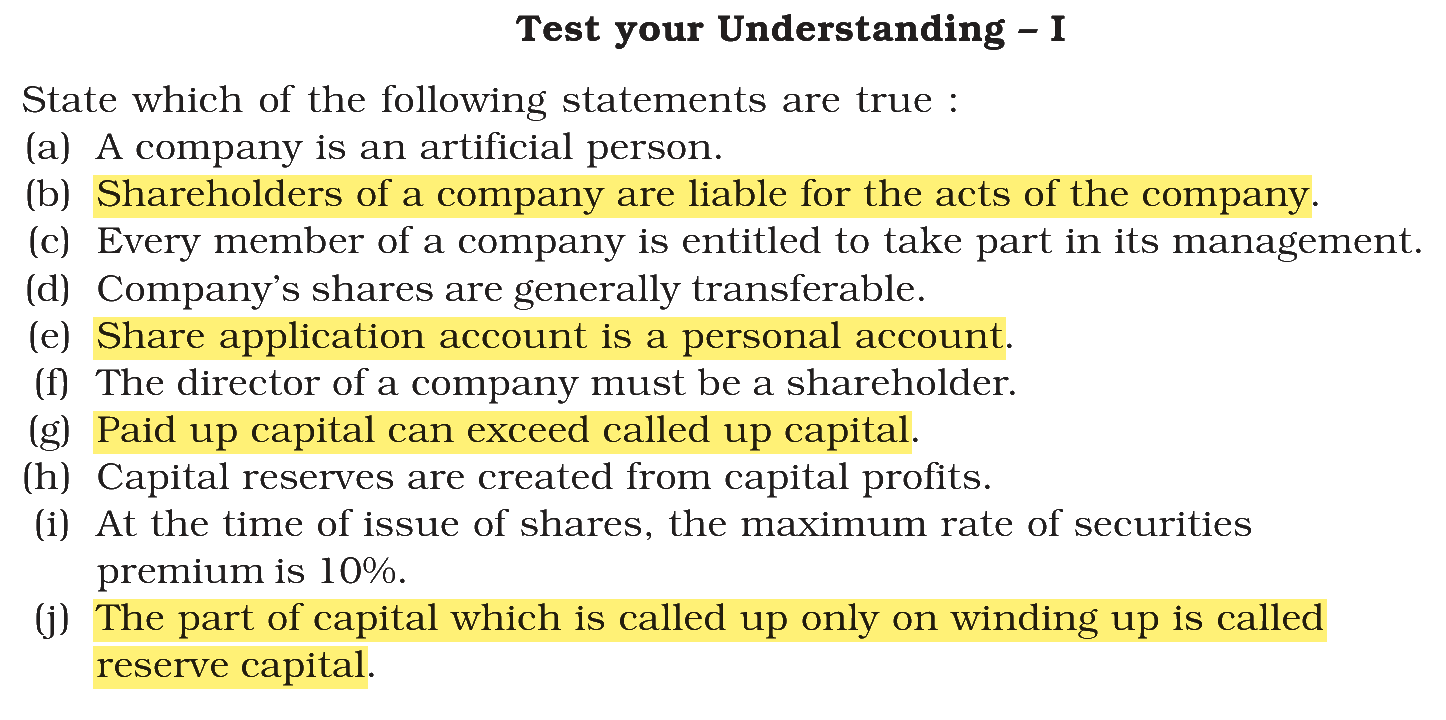
Select which of the following statements are true:
A. Shareholders of a company are liable for the acts of the company.
B. Share application account is a personal account.
C. The part of capital which is called up only on winding up is called reserve capital.
D. Paid up capital can exceed called up capital.
Choose the correct answer from the options given below:
Answer & explanation
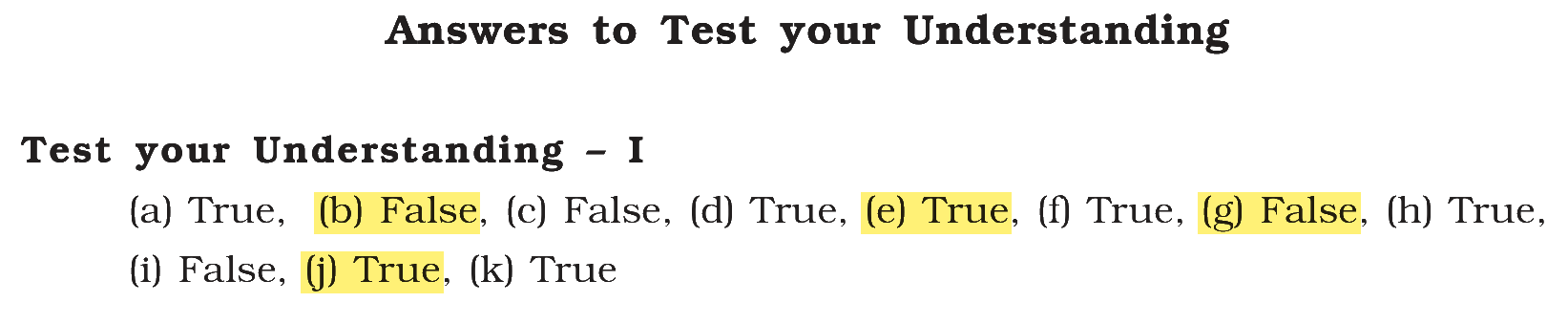
Correct answer: option 4
The correct answer is Option (4) → B and C only
A company is a separate legal person, and its capital is described at several stages: authorised, issued, subscribed, called up, paid up and reserve capital.
A. Shareholders of a company are liable for the acts of the company. Incorrect. A company is a separate legal entity, and its shareholders' liability is limited to the unpaid amount on their shares. They are not liable for what the company does.
B. Share application account is a personal account. Correct. It records the money received from the applicants, who are persons, so it is a personal account of the applicants.
C. The part of capital which is called up only on winding up is called reserve capital. Correct. A company may decide that part of its uncalled capital will be called only in the event of winding up; that part is reserve capital.
D. Paid up capital can exceed called up capital. Incorrect. Paid up capital is the part of the called up capital that has actually been received, so it is equal to or less than called up capital. Money paid before it is called is calls in advance, not paid up capital.
NCERT (2026-27 edition):
|