Human health and disease
Read the following passage carefully and answer the given questions.
Diseases like typhoid, cholera, pneumonia, fungal infections of skin, malaria and many others are a major cause of distress to human beings. Our immune system plays the major role in preventing these diseases when we are exposed to disease-causing agents. If the pathogens succeed in gaining entry to our body, specific antibodies and cells serve to kill these pathogens. AIDS and cancer kill a large number of individuals worldwide. AIDS is fatal but can be prevented if certain precautions are taken. Many cancers are curable if detected early and appropriate therapeutic measures are taken. Drug and alcohol abuse among youth and adolescents is becoming another cause of concern.
Which one of the following cells are responsible for the release of chemicals like histamine and serotonin involved in allergy?
Answer & explanation
Correct answer: option 3
The correct answer is Option (3) → Mast cells
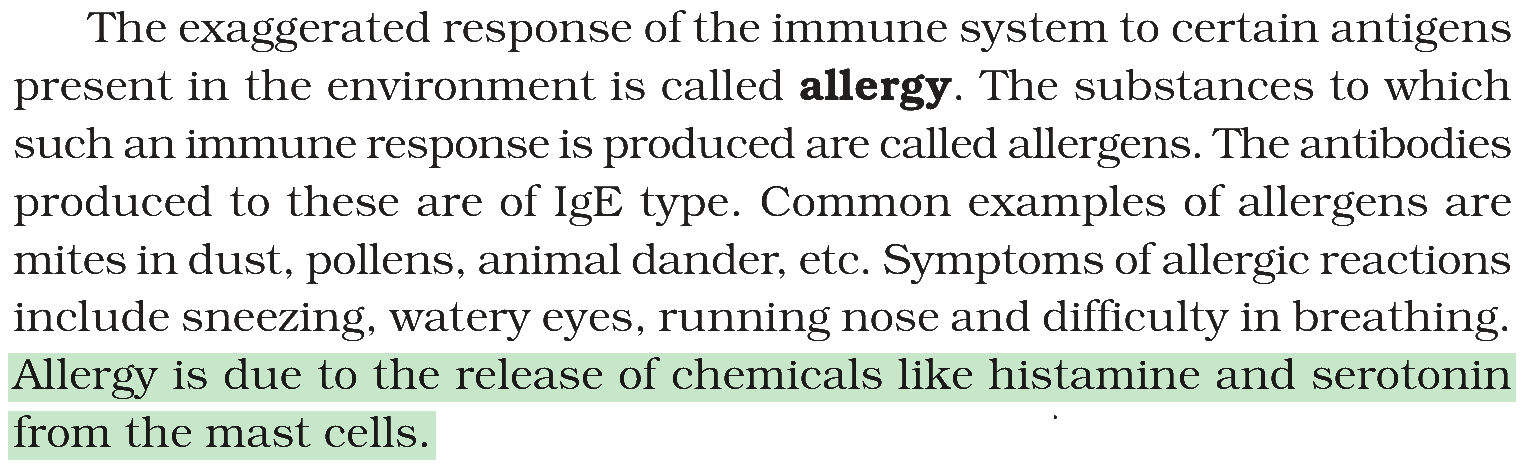
An allergy is an over-reaction of the immune system to some foreign substances (allergens) in the environment, such as dust, pollen or animal dander. The symptoms include sneezing, watery eyes, a running nose and difficulty in breathing. The allergy is due to the release of chemicals like histamine and serotonin from the mast cells.
(1) Platelets — Incorrect. These are cell fragments that help blood to clot.
(2) Red blood cells — Incorrect. They carry oxygen with the help of haemoglobin.
(3) Mast cells — Correct. They release histamine and serotonin when an allergen enters.
(4) White blood cells — Incorrect. This is the general name for the cells that defend the body. NCERT names the mast cells as the cells that release these chemicals.
Note: The passage is taken from NCERT. NTA has put lines of the NCERT text together to make it. Most CUET (UG) questions come straight from NCERT, so study the book line by line, including figures and their titles.
NCERT Extract:
Allergies –