
Which of the following statements are correct about seeds?
A. Mature seeds with residual endosperms are called non-albuminous.
B. Residual, persistent nucellus is called as perisperm.
C. The integuments of ovules harden as tough protective seed coats.
D. Micropyle remains as small pore in the seed coat that facilitates entry of oxygen and water during seed germination
Choose the correct answer from the options given below:
Answer & explanation
Correct answer: option 3
The correct answer is Option (3) → B, C and D only
A seed forms from the ovule after fertilisation. Its parts change as it matures.
A. Mature seeds with residual endosperms are called non-albuminous. — Incorrect. A non-albuminous seed has no residual endosperm, because it is used up during embryo development, as in pea and groundnut. A seed that keeps some endosperm is albuminous, as in wheat and maize.
B. Residual, persistent nucellus is called as perisperm. — Correct. In seeds such as black pepper and beet, a remnant of the nucellus stays. This is the perisperm.
C. The integuments of ovules harden as tough protective seed coats. — Correct. The seed coat is made from the integuments.
D. Micropyle remains as small pore in the seed coat that facilitates entry of oxygen and water during seed germination — Correct. The micropyle stays as a small pore, through which oxygen and water enter the seed.
NCERT Extract:
Seed – …
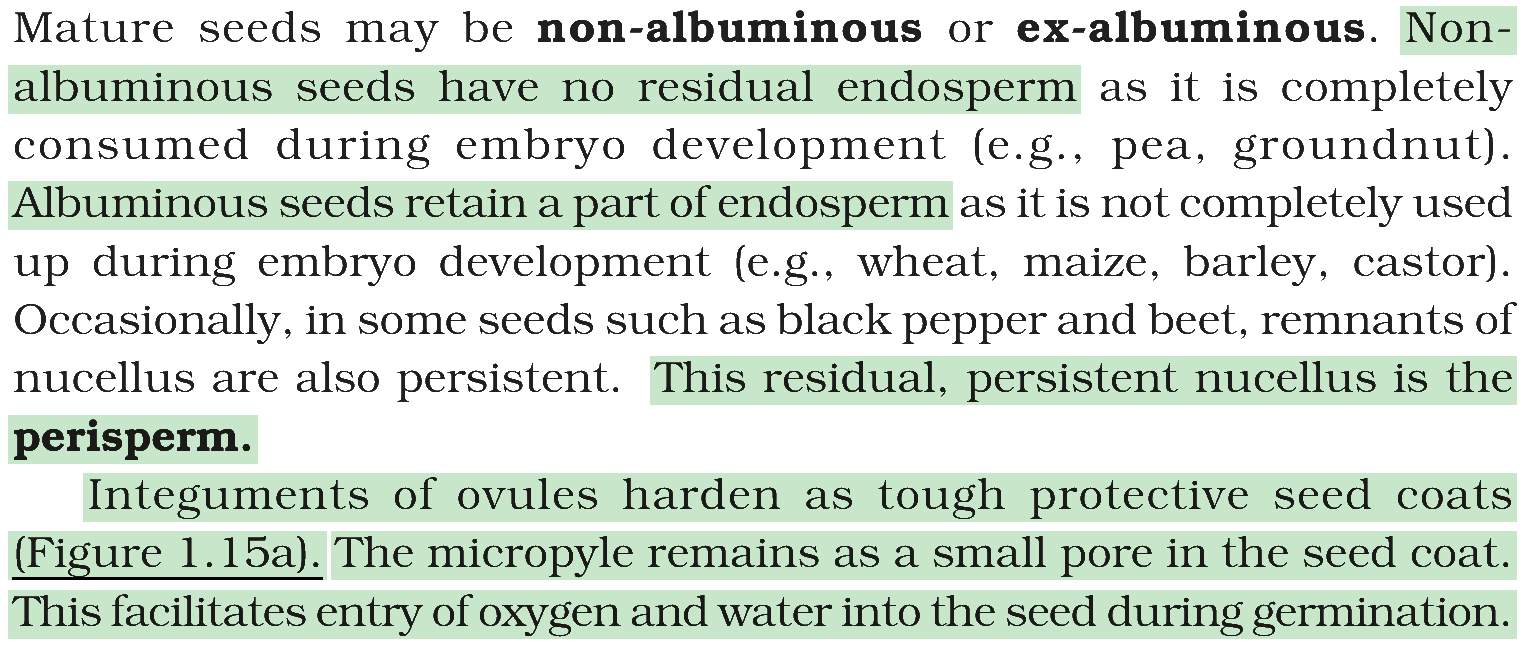
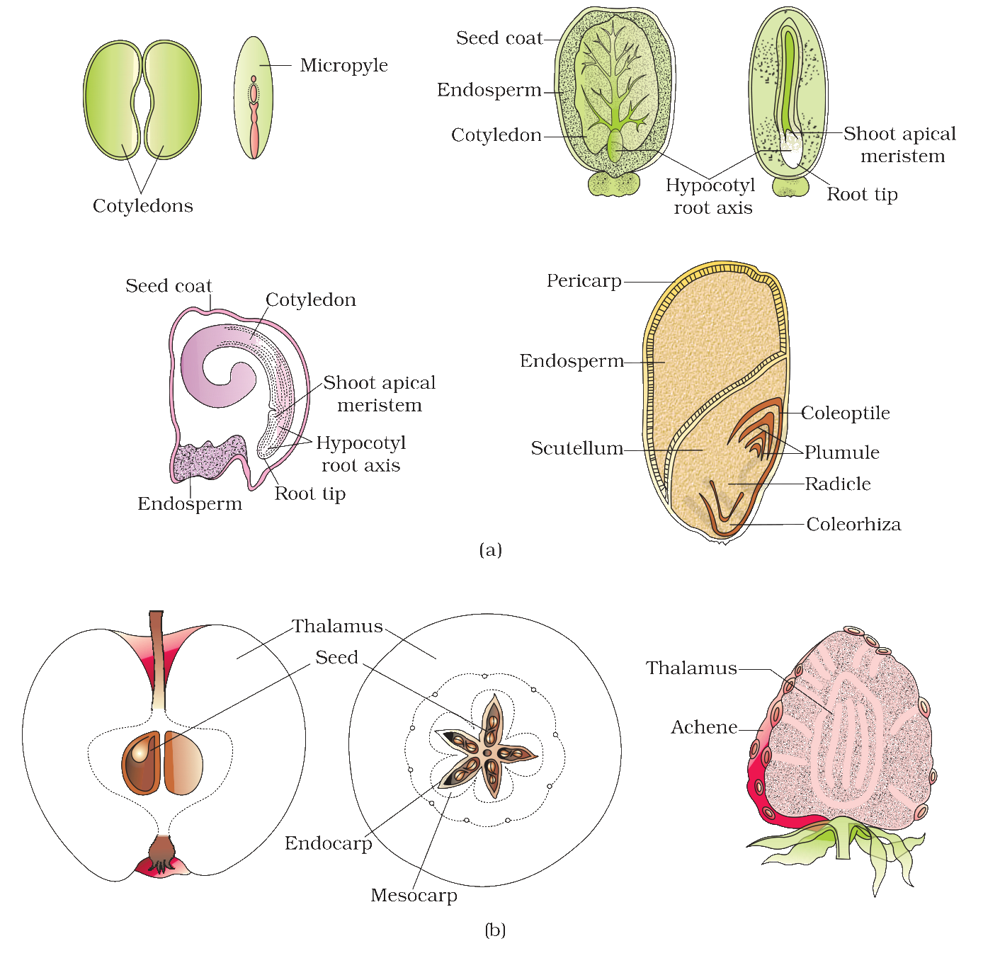
Figure 1.15 (a) Structure of some seeds. (b) False fruits of apple and strawberry