What are the short and long term tools of lending to commercial banks by the RBI?
Answer & explanation
Correct answer: option 3
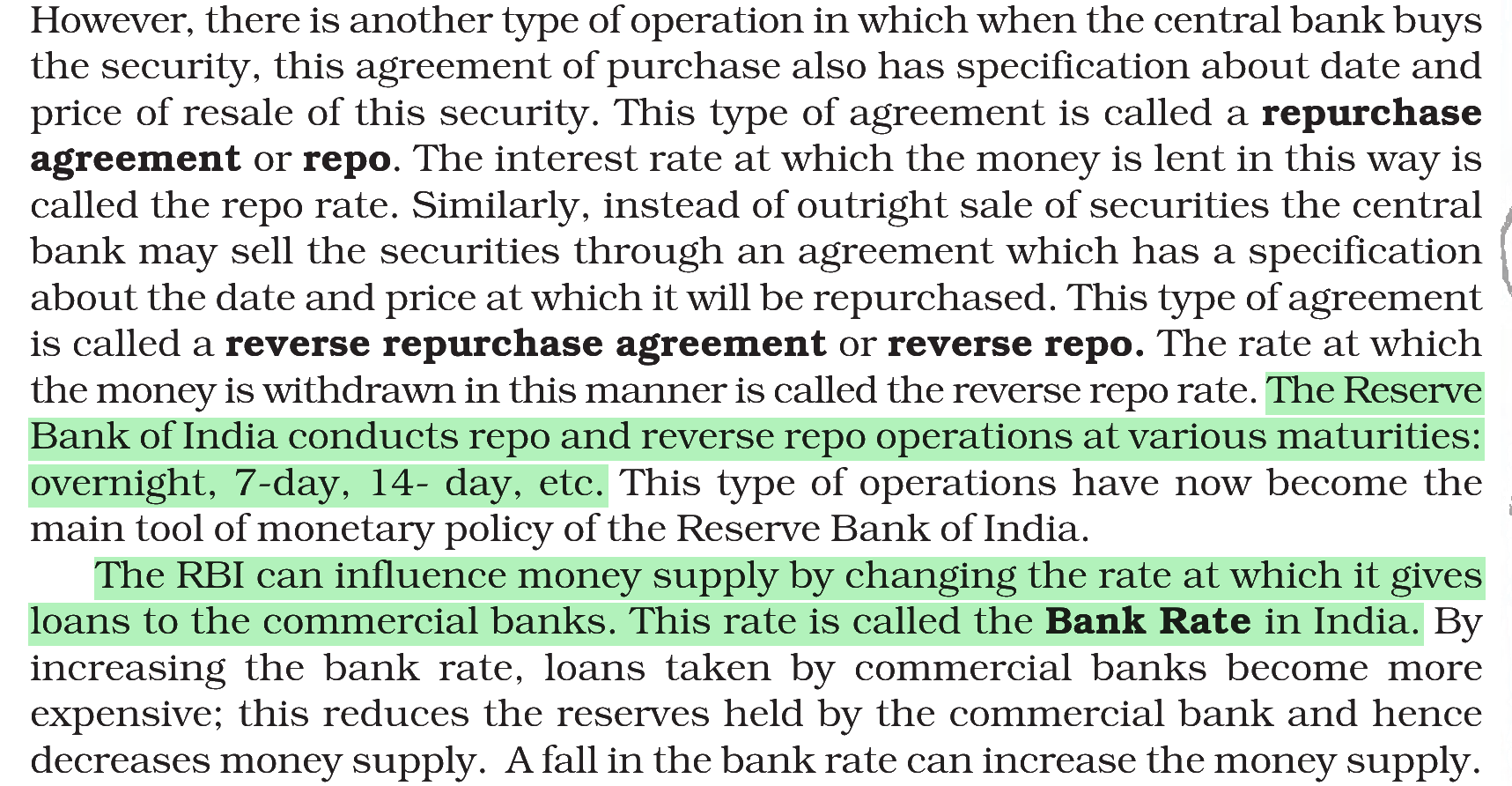
The correct answer is Option (3) → Short period- Repo rate, Long Period- Bank Rate
The RBI lends to commercial banks at two rates, told apart by the length of the loan. For short periods, often overnight, it lends against government securities that the bank buys back later, at the repo rate. For longer periods it lends at the Bank Rate. Raising either rate makes borrowing from the RBI dearer, so banks lend less and the money supply contracts.
Why the other options are incorrect
Option (1) Short period- Cash Reserve Ratio, Long Period- Bank Rate — Incorrect. The Bank Rate is correctly placed, but the Cash Reserve Ratio is the fraction of their deposits that banks must keep with the RBI. It controls how much banks can lend to the public; it is not a loan from the RBI.
Option (2) Short period- Open market operations, Long Period- Reverse repo rate — Incorrect. Open market operations are the RBI’s purchases and sales of government securities in the open market, which add money to or take it out of the economy; they are not loans to banks. The reverse repo rate is the rate at which the RBI borrows from the banks, the opposite direction of lending.
Option (4) Short period- Bank rate, Long Period- Reverse repo rate — Incorrect. The two are misplaced: the Bank Rate is the long-period lending rate, not the short one, and the reverse repo rate is the RBI borrowing, not lending.
NCERT: Introductory Macroeconomics — Chapter 3: Money and Banking (2025-26)
|