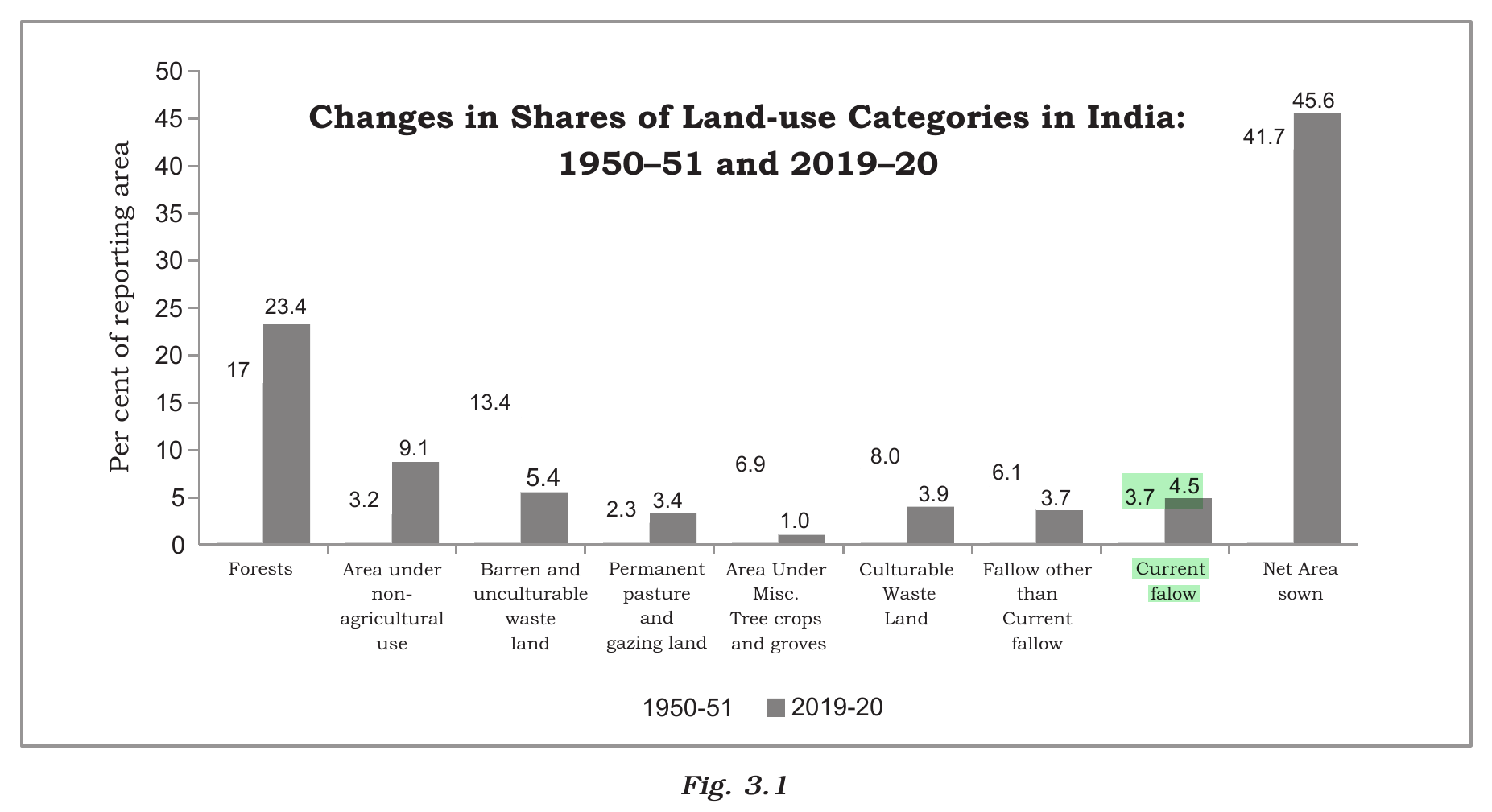
Which of the following is NOT true about changes in shares of Land-use Categories in India, between 1950–51 and 2019–20?
Answer & explanation
Correct answer: option 4
The correct answer is Option (4) → Current fallow land has decreased
Option (1) Forest area has increased — True. The share rose from 17 to 23.4 per cent of the reporting area, mostly because more area was demarcated as forest, not because of an actual increase in forest cover.
Option (2) Net sown area has increased — True. It rose from 41.7 to 45.6 per cent, as culturable wasteland was brought under the plough.
Option (3) Culturable waste land has decreased — True. It fell from 8.0 to 3.9 per cent; this land was brought under cultivation.
Option (4) Current fallow land has decreased — False. Current fallow is one of the categories that increased, from 3.7 to 4.5 per cent. Its share goes up and down from year to year with the rainfall and the cropping cycle.
NCERT (2025-26): “Land-use Changes in India … India has undergone major changes within the economy over the past four or five decades, and this has influenced the land-use changes in the country. These changes between 1950–51 and 2019–20 have been shown in Fig. 3.1. There are two points that you need to remember before you derive some meaning from this figure. Firstly, the percentages shown in the figure have been derived with respect to the reporting area. Secondly, since even the reporting area has been relatively constant over the years, a decline in one category usually leads to an increase in some other category. Five categories have undergone increases, while four have registered declines. Share of area under forest, area under non-agricultural uses, current fallow lands and net area sown have shown an increase.…”
|