
Match List-I with List-II:
| List-I | List-II |
|---|---|
| A. Food web | I. Phytoplankton |
| B. Decomposers | II. Grasshopper |
| C. Primary producer | III. Interconnection of food chains |
| D. Primary consumer | IV. Bacteria |
Choose the correct answer from the options given below:
Answer & explanation
Correct answer: option 1
The correct answer is Option (1) → A-III, B-IV, C-I, D-II
Each term in List-I is a part or a feature of a food chain, and List-II gives an example or a meaning for it.
(A) Food web — this matches (III) Interconnection of food chains. Food chains do not stay separate; some organisms of one chain are eaten by those of another, and these natural interconnections make a food web.
(B) Decomposers — this matches (IV) Bacteria. Decomposers are mainly fungi and bacteria, which degrade dead organic matter.
(C) Primary producer — this matches (I) Phytoplankton. Phytoplankton, grass and trees are examples of producers at the first trophic level.
(D) Primary consumer — this matches (II) Grasshopper. The grasshopper feeds on plants, so it is a herbivore at the second trophic level.
So the correct match is A-III, B-IV, C-I, D-II.
NCERT Extract:
Energy Flow – “… It is made up of decomposers which are heterotrophic organisms, mainly fungi and bacteria. … Detritus food chain may be connected with the grazing food chain at some levels: some of the organisms of DFC are prey to the GFC animals, and in a natural ecosystem, some animals like cockroaches, crows, etc., are omnivores. These natural interconnection of food chains make it a food web.”
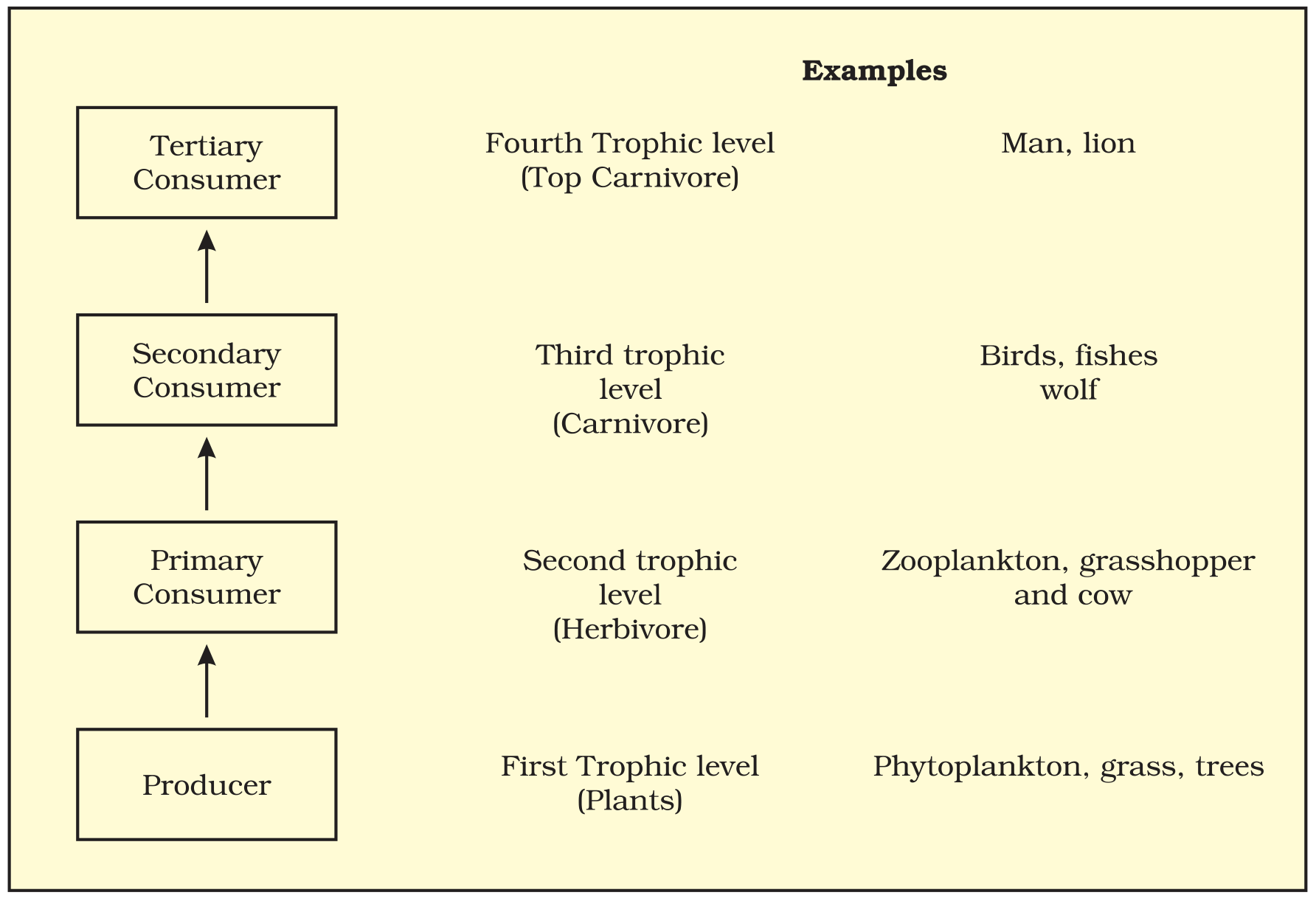
Figure 12.2 Diagrammatic representation of trophic levels in an ecosystem