
Which of the following combinations correctly represents the haploid, diploid, and triploid structures in a fertilised embryo sac?
Answer & explanation
Correct answer: option 1
The correct answer is Option (1) → Synergid, zygote, and primary endosperm nucleus
The embryo sac (female gametophyte) develops from a haploid megaspore by mitotic divisions, so every cell of the mature embryo sac is haploid: the two synergids, the egg, the three antipodals and the two polar nuclei of the central cell. Ploidy changes only at double fertilisation. One male gamete fuses with the egg to give the diploid zygote. The other fuses with the two polar nuclei to give the triploid primary endosperm nucleus (PEN).
Option (1) Synergid, zygote, and primary endosperm nucleus — Correct. The synergid is a haploid cell of the egg apparatus. The zygote (egg + male gamete) is diploid, and the PEN (two polar nuclei + male gamete) is triploid. All three are in the order asked.
Option (2) Synergid, antipodal, and polar nuclei — Incorrect. Synergids and antipodals are both haploid, so the pair gives no diploid structure. The polar nuclei are two separate haploid nuclei; they become part of a triploid nucleus only after triple fusion.
Option (3) Antipodal, synergid, and primary endosperm nucleus — Incorrect. The antipodal is haploid and the PEN is triploid, but the synergid is not diploid. It is a haploid cell like all the other cells of the embryo sac.
Option (4) Synergid, polar nuclei, and zygote — Incorrect. The synergid is haploid, but the order of the other two is wrong. The polar nuclei are haploid, not diploid, and the zygote is diploid, not triploid.
NCERT Extract:
The Pistil, Megasporangium (Ovule) and Embryo Sac – “… Six of the eight nuclei are surrounded by cell walls and organised into cells; the remaining two nuclei, called polar nuclei are situated below the egg apparatus in the large central cell. There is a characteristic distribution of the cells within the embryo sac. Three cells are grouped together at the micropylar end and constitute the egg apparatus. The egg apparatus, in turn, consists of two synergids and one egg cell.”
Double Fertilisation – “… One of the male gametes moves towards the egg cell and fuses with its nucleus thus completing the syngamy. This results in the formation of a diploid cell, the zygote. The other male gamete moves towards the two polar nuclei located in the central cell and fuses with them to produce a triploid primary endosperm nucleus (PEN) (Figure 1.13a). As this involves the fusion of three haploid nuclei it is termed triple fusion.”
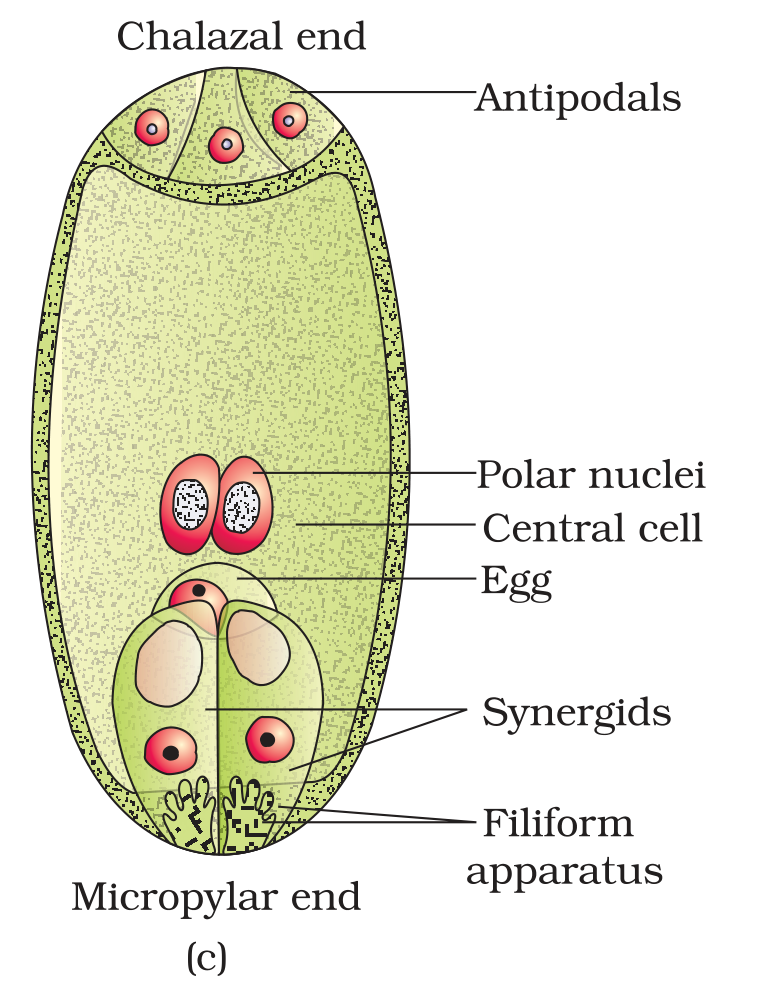
Figure 1.8 (c) A diagrammatic representation of the mature embryo sac