Match List-I with List-II:
| List-I British Colonial Policy/Impact | List-II Year/s | ||
| (A) | Regulating Act passed by the British Parliament | (I) | 1820s |
| (B) | Santhals begin to come to the Rajmahal hills | (II) | 1861 |
| (C) | Agricultural prices begin to fall | (III) | 1773 |
| (D) | Cotton boom begins | (IV) | 1800s |
Answer & explanation
Correct answer: option 2
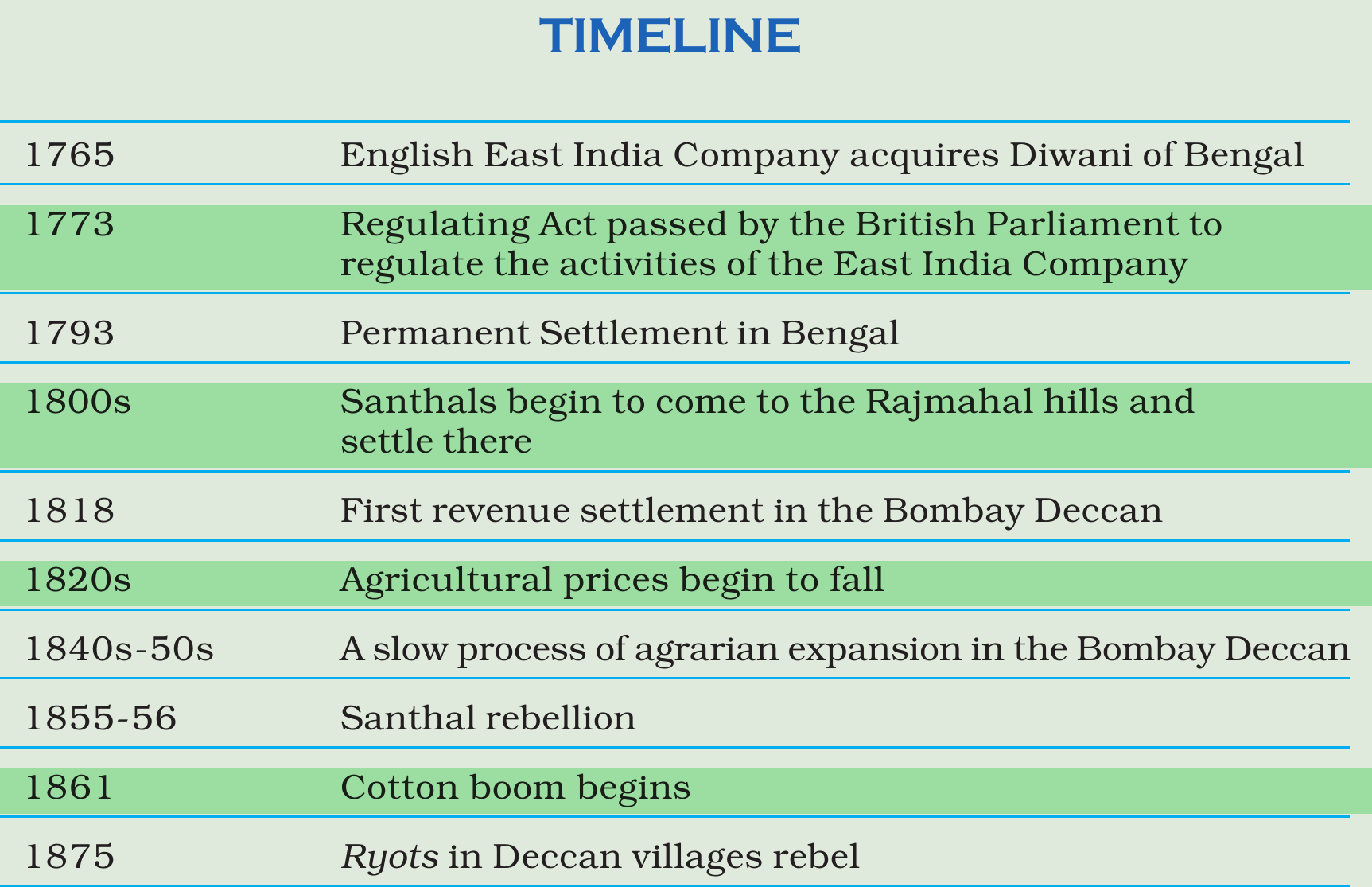
The correct answer is Option (2) → (A)-(III), (B)-(IV), (C)-(I), (D)-(II)
(A) Regulating Act passed by the British Parliament — this matches (III) 1773. The Act was passed to regulate the activities of the East India Company, eight years after the Company acquired the Diwani of Bengal (1765).
(B) Santhals begin to come to the Rajmahal hills — this matches (IV) 1800s. In this decade the Santhals began to come to the Rajmahal hills and settle there.
(C) Agricultural prices begin to fall — this matches (I) 1820s. The fall in agricultural prices began in this decade, a few years after the first revenue settlement in the Bombay Deccan (1818).
(D) Cotton boom begins — this matches (II) 1861. The cotton boom began in 1861, a few years after the Santhal rebellion (1855-56).
NCERT: Themes in Indian History Part III — Chapter 9: Colonialism and the Countryside (2026-27)
|