In a Commercial Bank, if the initial deposit of Rs 1000 create deposits of Rs 5000 , then the cash reserve ratio will be________.
Answer & explanation
Correct answer: option 3
The correct answer is Option (3) → 20 %
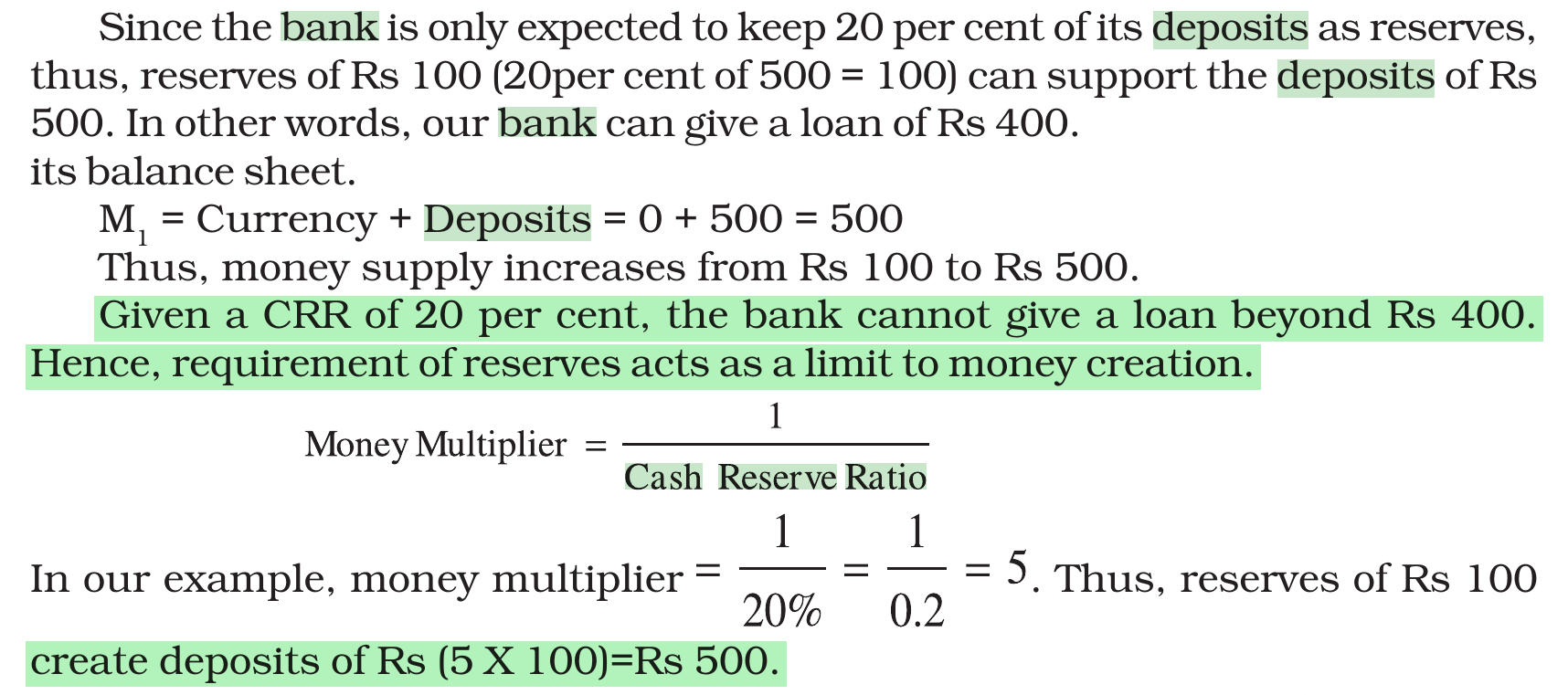
A bank keeps a fraction of every deposit as reserves, the cash reserve ratio (CRR), and lends the rest, which comes back to banks as fresh deposits. This goes on until the reserves needed on all the deposits equal the initial deposit, so total deposits become the initial deposit times the money multiplier, 1/CRR.
Given:
Initial deposit = Rs. 1,000
Total deposits created = Rs. 5,000
Working it out:
Money multiplier = Total deposits ÷ Initial deposit = 5,000 ÷ 1,000 = 5
Money multiplier = 1/CRR, so CRR = 1/5 = 0.2
Check: with a CRR of 20 per cent, deposits of Rs. 5,000 need reserves of Rs. 1,000, the whole of the initial deposit, so no further loan can be made. The CRR is 20 per cent — Option (3).
NCERT: Introductory Macroeconomics — Chapter 3: Money and Banking (2025-26)
|