If the required reserve ratio in an economy is 12.5%, the initial cash deposits of ₹2000 will increase the money supply by ____.
Answer & explanation
Correct answer: option 2
The correct answer is Option (2) → ₹16000
Given:
Required reserve ratio, rrr = 12.5% = 0.125
Initial cash deposit = ₹2000
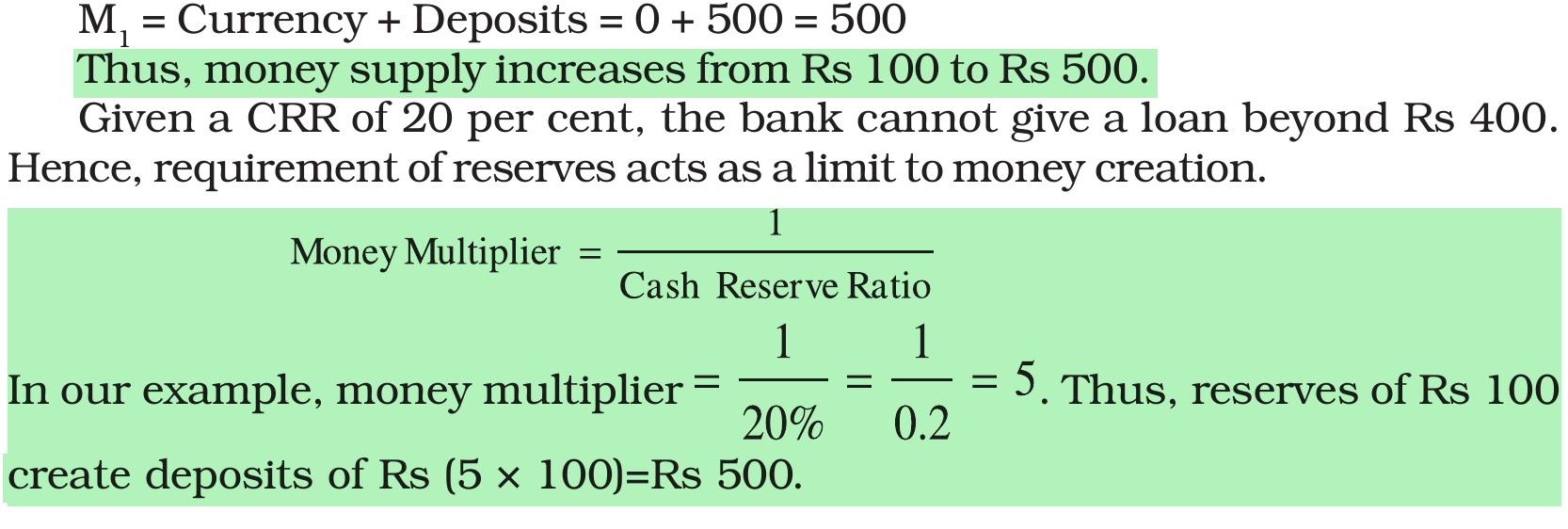
The money supply created is the initial deposit times the money multiplier, which is 1 / reserve ratio:
Money multiplier = \( \displaystyle \frac{1}{\text{rrr}} \)
Money multiplier = \( \displaystyle \frac{1}{0.125} \) = 8
Money supply created = 2000 × 8 = ₹16,000
Option (4), ₹25,000, multiplies the deposit by 12.5, the ratio itself; the multiplier is its reciprocal, 8.
Note: Strictly, the money supply rises from ₹2,000 to ₹16,000. So the increase is ₹14,000, which is not among the options. ₹16,000 is the total money supply created by the deposit of ₹2,000. It is the only option the money multiplier gives.
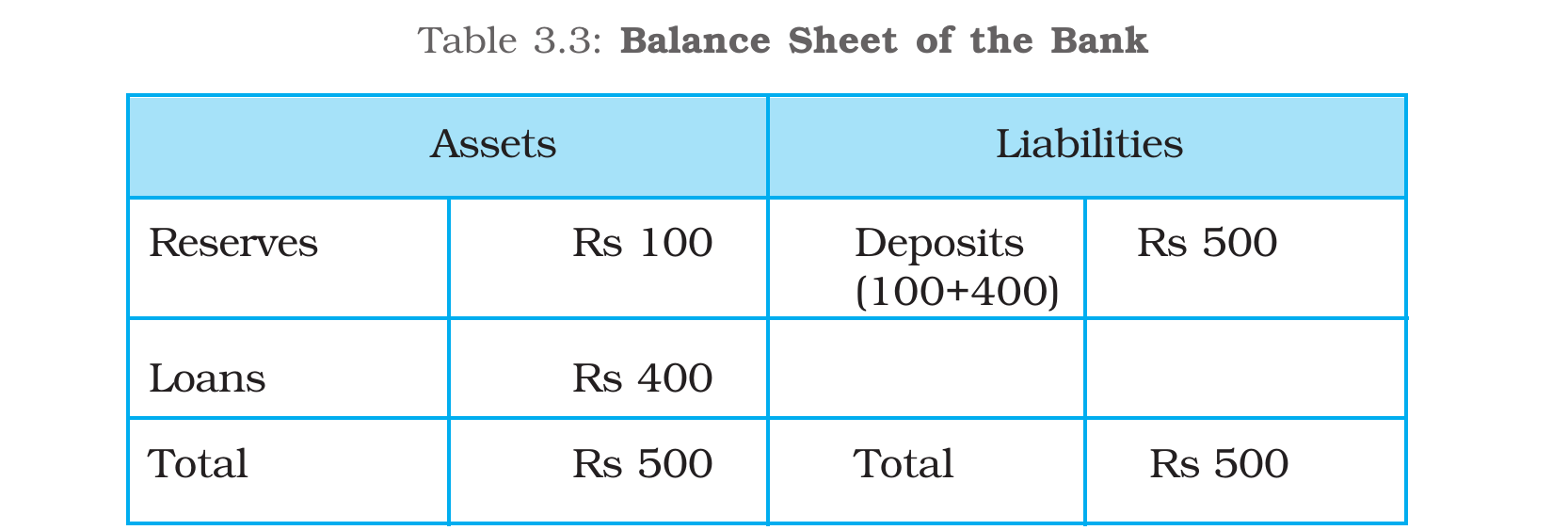
NCERT (2026-27): “3.3.2 Limits to Credit Creation and Money Multiplier … The RBI decides a certain percentage of deposits which every bank must keep as reserves. … This is called the ‘Required Reserve Ratio’ or the ‘Reserve Ratio’ or ‘Cash Reserve Ratio’ (CRR). … Let us assume that our bank starts with a deposit of Rs 100 made by Leela. The reserve ratio is 20 per cent. … In other words, our bank can give a loan of Rs 400. Table 3.3 demonstrates its balance sheet.”
|