Reshma is a class 12 student. She is experiencing symptoms like dizziness, sleeplessness, shortness of breath for the past few months. She constantly worries about her future. According to the above case, Reshma maybe experiencing-
Answer & explanation
Correct answer: option 4
The correct answer is Option (4) → Generalised Anxiety Disorder (GAD)
Option (1) Post-traumatic Stress Disorder (PTSD) — Incorrect. PTSD follows a traumatic event such as a natural disaster, a bomb blast or a serious accident, with recurrent dreams, flashbacks and emotional numbing. Reshma has been through no such event.
Option (2) Obsessive - Compulsive Disorder (OCD) — Incorrect. OCD is the inability to control a preoccupation with specific ideas or to stop repeating particular acts. Reshma has neither.
Option (3) Agoraphobia — Incorrect. Agoraphobia is a fear of entering unfamiliar situations; many people with it are afraid of leaving their home. Reshma’s fear is not tied to places.
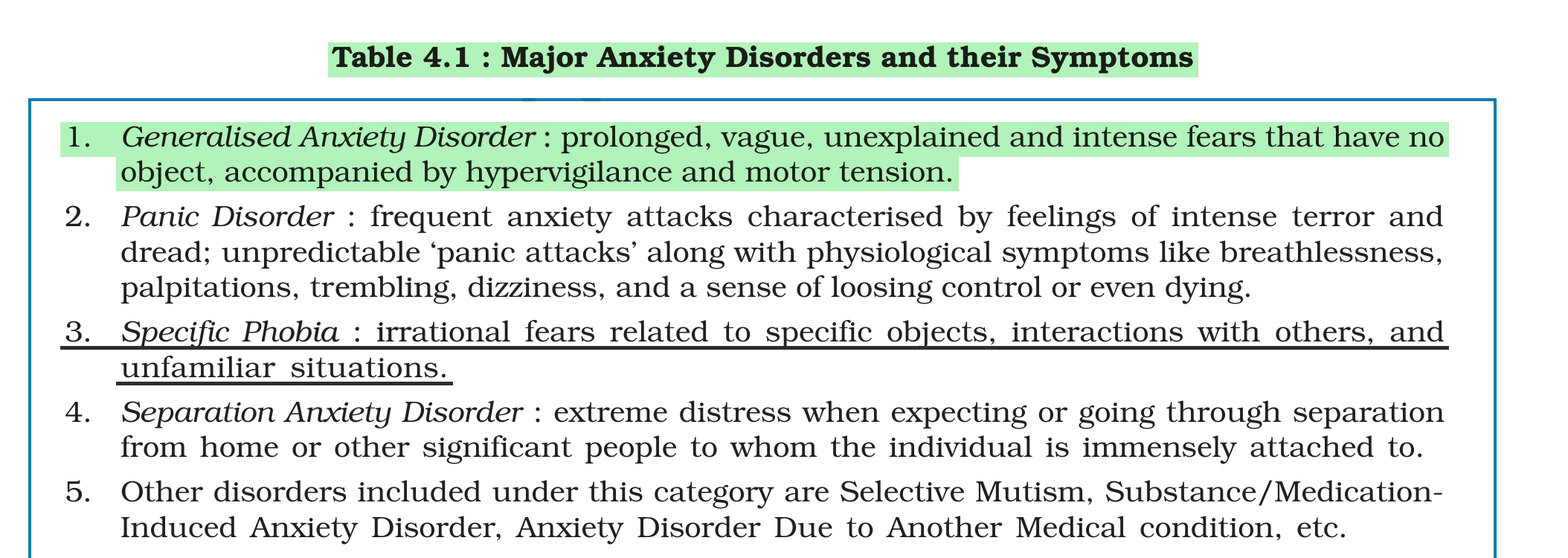
Option (4) Generalised Anxiety Disorder (GAD) — Correct. GAD consists of prolonged, vague, unexplained and intense fears not attached to any particular object; its symptoms include worry and apprehensive feelings about the future and motor tension, which leaves the person unable to relax. Reshma has worried constantly about her future for months, with sleeplessness and other bodily signs of anxiety.
NCERT (2025-26): “Anxiety Disorders … The term anxiety is usually defined as a diffuse, vague, very unpleasant feeling of fear and apprehension. The anxious individual also shows combinations of the following symptoms: rapid heart rate, shortness of breath, diarrhoea, loss of appetite, fainting, dizziness, sweating, sleeplessness, frequent urination and tremors. There are many types of anxiety disorders (see Table 4.1). They include generalised anxiety disorder, which consists of prolonged, vague, unexplained and intense fears that are not attached to any particular object. The symptoms include worry and apprehensive feelings about the future; hypervigilance, which involves constantly scanning the environment for dangers. It is marked by motor tension, as a result of which the person is unable to relax, is restless, and visibly shaky and tense.…” “Anxiety Disorders … Agoraphobia is the term used when people develop a fear of entering unfamiliar situations. Many people with agoraphobia are afraid of leaving their home. So their ability to carry out normal life activities is severely limited.…”
|