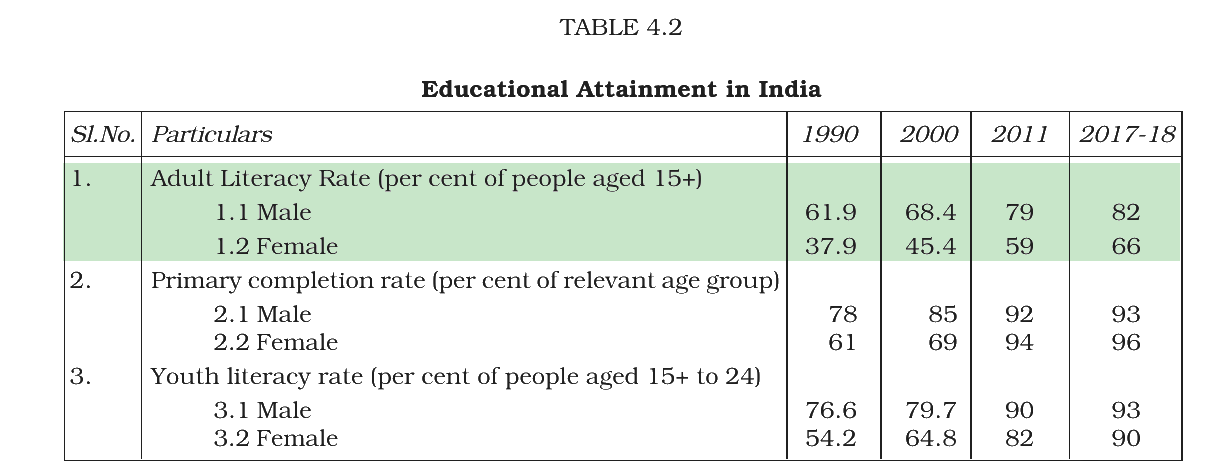
The table shows the adult literacy rate in India for two groups, P and Q.
| Group | 1990 | 2000 | 2011 | 2017–18 |
|---|---|---|---|---|
| P | 61.9 | 68.4 | 79 | 82 |
| Q | 37.9 | 45.4 | 59 | 66 |
Which option correctly labels P and Q and reads the trend?
Answer & explanation
Correct answer: option 3
The correct answer is Option (3) → P = Male, Q = Female; the gap between them has narrowed
In every year P is higher than Q, so P is male and Q is female literacy. The gap between them:
1990: 61.9 − 37.9 = 24 points
2017-18: 82 − 66 = 16 points
So the gap has narrowed, a positive sign for gender equity.
Note: A table in the middle of the chapter can come back as a question with its row names hidden. Learn which row is which, not only the numbers.
NCERT (2026-27): “Gender Equity — Better than Before: The differences in literacy rates between males and females are narrowing signifying a positive development in gender equity; still the need to promote education for women in India is imminent for various reasons such as improving economic independence and social status of women and also because women education makes a favourable impact on fertility rate and health care of women and children. …” |