General Adaptation Syndrome (GAS) model of stress was given by:
Answer & explanation
Correct answer: option 4
The correct answer is Option (4) → Hans Selye
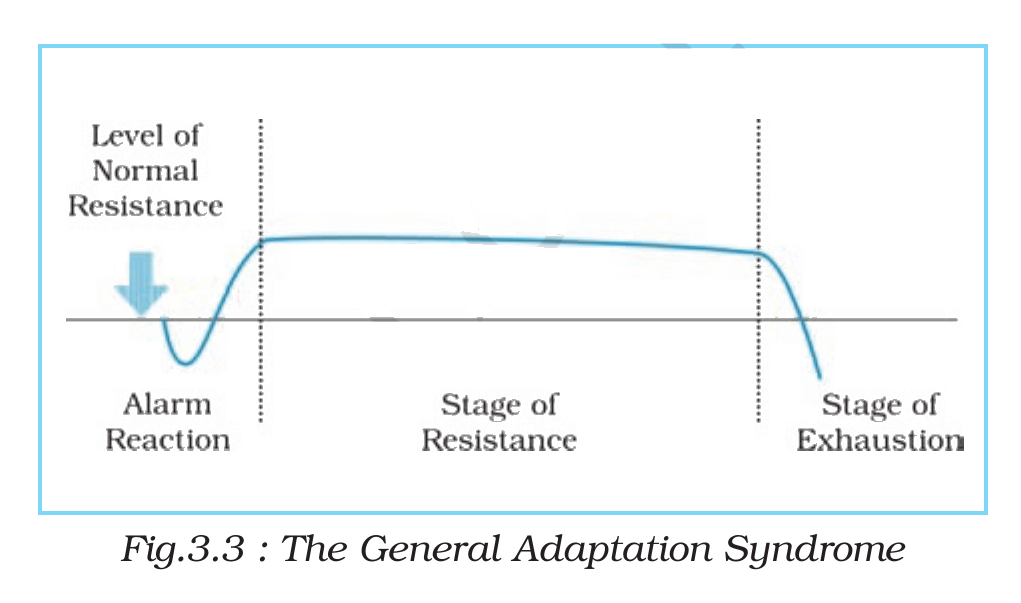
Selye subjected animals to stressors such as high temperature, X-rays and insulin injections, and also observed patients in hospitals. He noticed a similar pattern of bodily response in all of them and called it the General Adaptation Syndrome (GAS), with three stages: alarm reaction, resistance and exhaustion.
Note: A similar question was also asked in CUET (UG) 2026 on 07-06-2026 (Slot 2).
NCERT (2025-26): “General Adaptation Syndrome … What happens to the body when stress is prolonged? Selye studied this issue by subjecting animals to a variety of stressors such as high temperature, X-rays and insulin injections, in the laboratory over a long period of time. He also observed patients with various injuries and illnesses in hospitals. Selye noticed a similar pattern of bodily response in all of them. He called this pattern the General Adaptation Syndrome (GAS). According to him, GAS involves three stages: alarm reaction, resistance, and exhaustion (see Fig.3.3).” “Nature of Stress … The stress process, based on the cognitive theory of stress propounded by Lazarus and his colleagues, is described in Figure 3.2.…”
|