CUETMOCK
  • Pricing
  • Mentors
Log inStart freeStart free mocks→

First test, then trust

Try a free CUET mock test.

Join 5,00,000+ students who rehearsed exam day on the exact NTA screen before sitting CUET. On the web and on Android.

Start free mocks →Get the Android app
CUETMOCK

India's #1 CUET Mock Test Platform. Original NCERT-based questions on the exact NTA exam screen — trusted by 5,00,000+ students since CUET 2022.

Get it onGoogle PlayScan to download the CUETMOCK app

Mock tests

  • CUET mock test series
  • Browse all papers
  • Commerce mocks
  • Humanities (Arts) mocks
  • Science mocks
  • Languages & GAT mocks
  • Free practice questions
  • Pricing

Resources

  • CUET exam guide
  • CUET syllabus
  • Universities accepting CUET
  • Expert blogs
  • News & notifications
  • Webinars & counselling
  • CUET score calculator
  • How we estimate your rank
  • FAQs

Company

  • About us
  • Our leadership & team
  • Our toppers
  • Mentors
  • For schools
  • Contact us
  • Terms
  • Privacy
  • Refund policy

Talk to us

+91 7696 6630 56info@cuetmock.comWhatsApp us

Our other platforms

  • JEE Mock — For IIT-JEE aspirants
  • NEET Mock — For NEET aspirants

Newsletter

Exam updates, study material and offers — no spam.

© 2026 NYC Ventures Pvt. Ltd.

701-702, Royal Business Park, Zirakpur, Punjab - 140603

  • Terms of use
  • Privacy policy
  • Refund policy
  • Contact us

iCUETMOCK is an independent preparation platform, not affiliated with the National Testing Agency (NTA). Always check exam details on the official NTA website.

  • Home
  • Mock tests
  • CUET guide
  • Pricing
  • Log in
Home/Practice questions/Economics
EconomicsMacro Economics: Introduction

Rearrange the given statements in proper chronological sequence in an…

Rearrange the given statements in proper chronological sequence in an ascending order (earliest to latest):

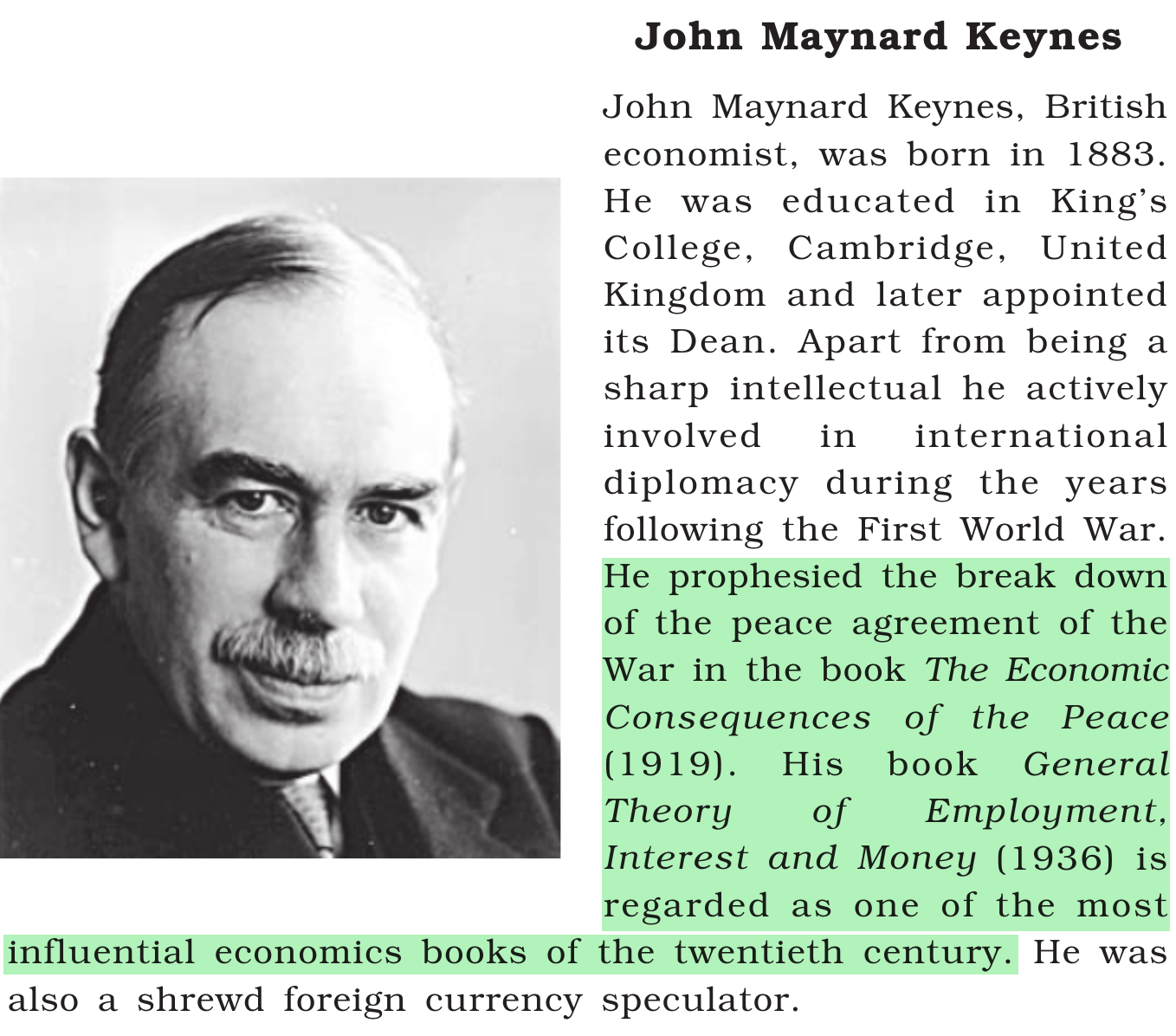
(A) General theory of Employment, Interest and Money by Keynes.

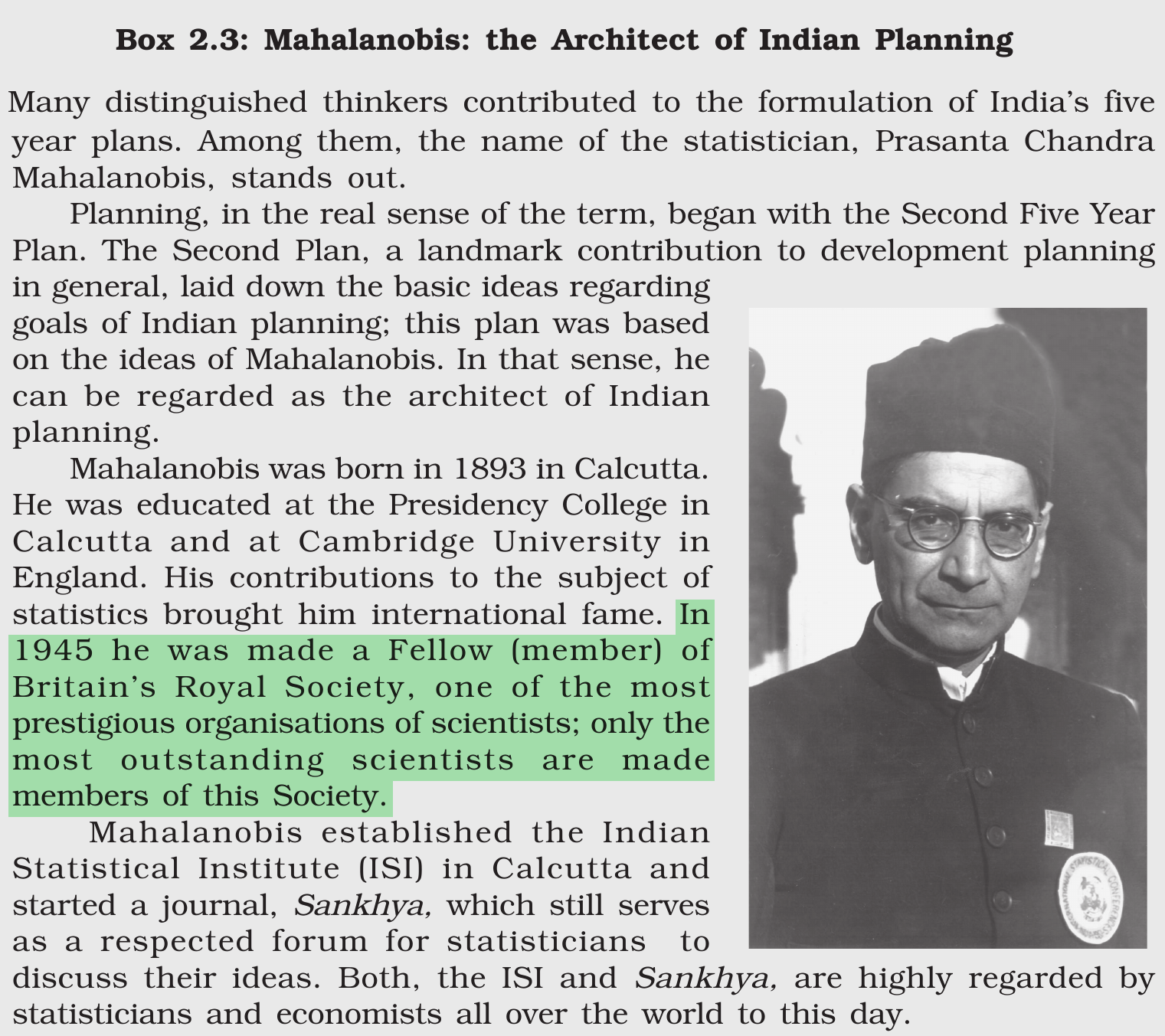
(B) Mahalanobis was made a fellow of Britain's Royal Society.

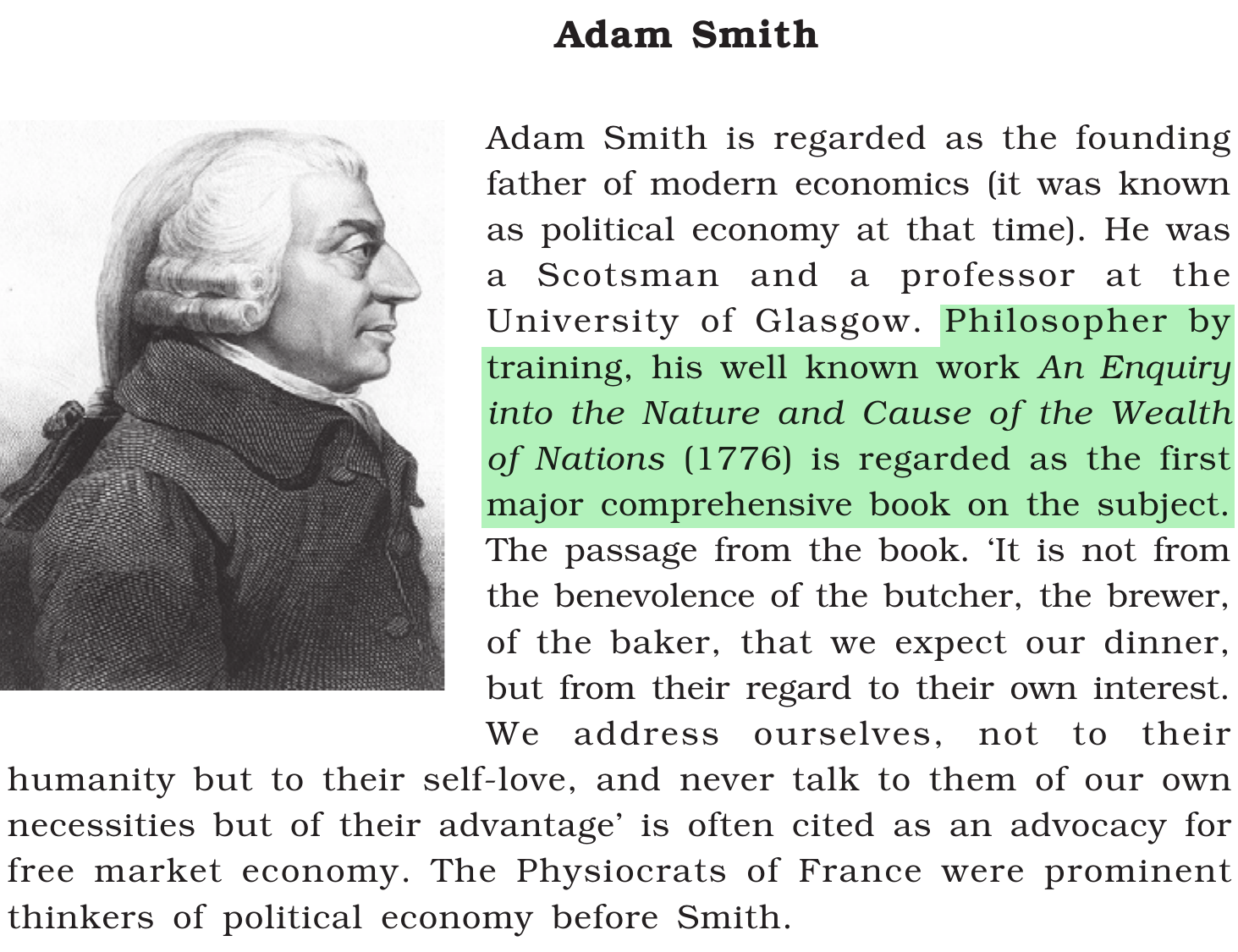
(C) An Inquiry into the Nature and Cause of the Wealth of Nations by Adam Smith.

(D) The Economic Consequences of the Peace by Keynes.

Choose the correct answer from the options given below:

Answer & explanation+

Correct answer: option 1

The correct answer is Option (1) → (C), (D), (A), (B)

  • (C) An Inquiry into the Nature and Cause of the Wealth of Nations by Adam Smith. — 1776

  • (D) The Economic Consequences of the Peace by Keynes. — 1919

  • (A) General theory of Employment, Interest and Money by Keynes. — 1936

  • (B) Mahalanobis was made a fellow of Britain's Royal Society. — 1945

NCERT (2026-27): Introductory Macroeconomics — Chapter 1: Introduction

NCERT extract

NCERT extract

NCERT (2026-27): Indian Economic Development — Chapter 2: Indian Economy 1950-1990

NCERT extract

Advertisement

Practise more on Macro Economics: Introduction

Chapter-wise mocks on the real NTA exam screen, with solutions and your rank. Your first mocks are free.

Start free mocks →

Advertisement

Next questions

  1. How many triangles are present in the following figure ?General Aptitude Test · Verbal Reasoning
  2. Which of the following correctly describes the circuit shown?Physics · Alternating Current
  3. Which country hosted the first ever Commonwealth Games in 1930?General Aptitude Test · Current Affairs
  4. Which of the following country has an unwritten Constitution?General Aptitude Test · General Knowledge
  5. A scholar born in Khwarizm later lived at Ghazni and spent years learning Sanskrit from Brahmana priests and scholars. Into which language…History · Medieval India: Through the Eyes of Travellers
  6. Mrs Dubey borrowed Rs 500000 from a bank to purchase a car and decided to repay by monthly installments in 5 years. The bank charges intere…Applied Maths. Section B2 · Financial Mathematics
  7. If (2x - 5y)^3 - (2x + 5y)^3 = y[Ax^2 + By^2], then what is the value of (2A - B)?General Aptitude Test · Quantitative Reasoning
  8. The S.I. unit of electric charge is :Physics · Electric Charges and Fields
  9. A demographic pattern in which the child sex ratio declines much faster than the overall sex ratio is most likely to indicate:Sociology · Indian Society: Demographic Structure of Indian Society
  10. A __________ may be defined as an organisation oriented towards achieving legitimate control of government through an electoral process.Sociology · Social Change and Development in India: The Constitution and Social Change