
At which stage is the second polar body formed in a human female?
Answer & explanation
Correct answer: option 3
The correct answer is Option (3) → When a sperm enters the secondary oocyte during fertilisation
Oogenesis has two unequal meiotic divisions. The first gives the secondary oocyte and the first polar body; the second gives the ovum (ootid) and the second polar body.
Option (1) At the end of the first meiotic division, before ovulation — Incorrect. The first meiotic division, completed in the tertiary follicle, gives a large haploid secondary oocyte and a tiny first polar body.
Option (2) When the primary oocyte is arrested in prophase I — Incorrect. The primary oocyte stays arrested in prophase-I till the follicle grows; no polar body forms during this arrest.
Option (3) When a sperm enters the secondary oocyte during fertilisation — Correct. The entry of the sperm induces the completion of the second meiotic division of the secondary oocyte, giving the second polar body and a haploid ovum.
Option (4) When the Graafian follicle ruptures at ovulation — Incorrect. At ovulation the Graafian follicle releases the secondary oocyte, whose second meiotic division is still incomplete.
NCERT Extract:
Gametogenesis – “… It is important to draw your attention that it is at this stage that the primary oocyte within the tertiary follicle grows in size and completes its first meiotic division. It is an unequal division resulting in the formation of a large haploid secondary oocyte and a tiny first polar body (Figure 2.8b).”
Fertilisation and Implantation – “… The secretions of the acrosome help the sperm enter into the cytoplasm of the ovum through the zona pellucida and the plasma membrane. This induces the completion of the meiotic division of the secondary oocyte. The second meiotic division is also unequal and results in the formation of a second polar body and a haploid ovum (ootid).”
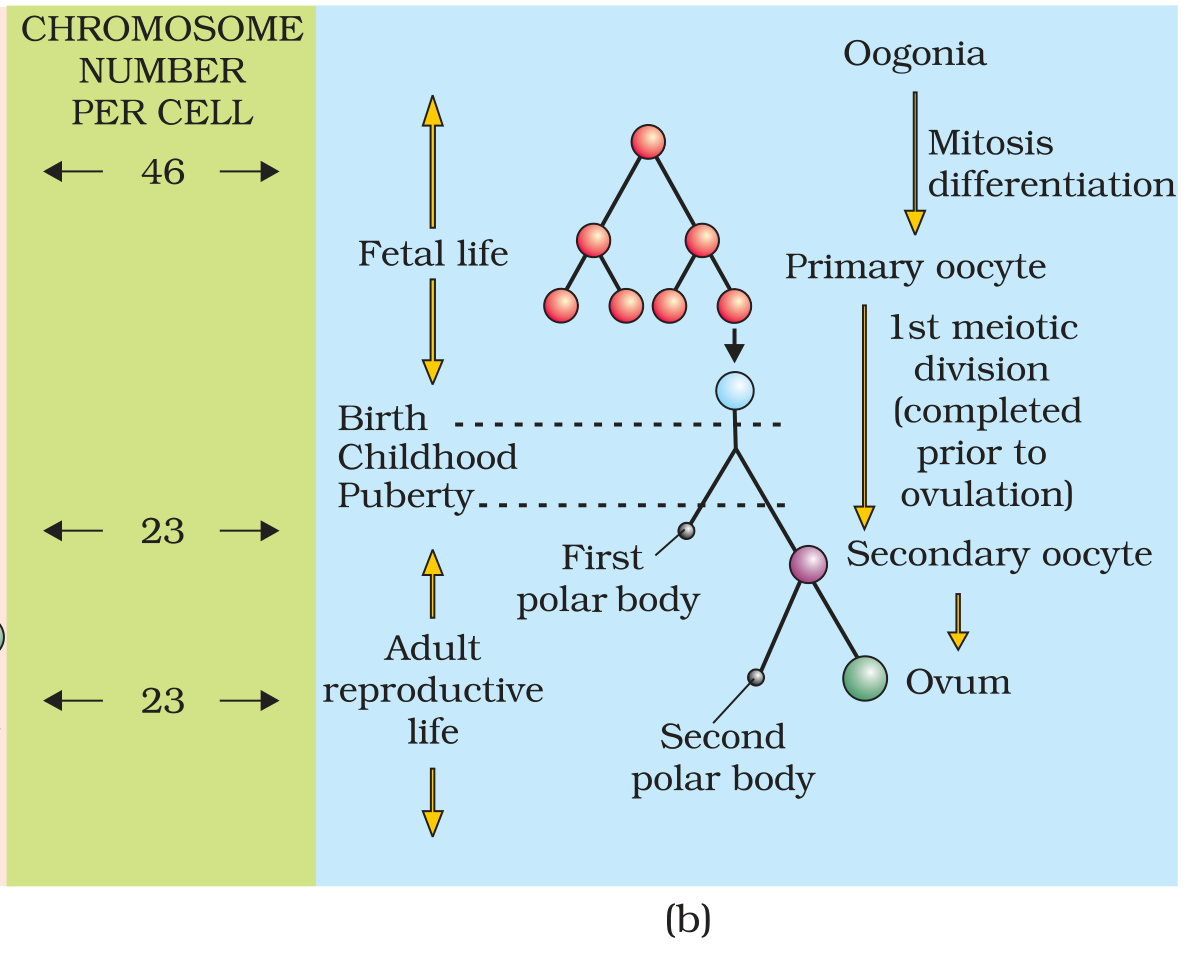
Figure 2.8 (b) Schematic representation of Oogenesis