Match List I with List II.
| List – I | List – II |
| (A) Silappadikaram | (I) Tamil Epic |
| (B) Prayaga Prashasti | (II) Written by Harishena |
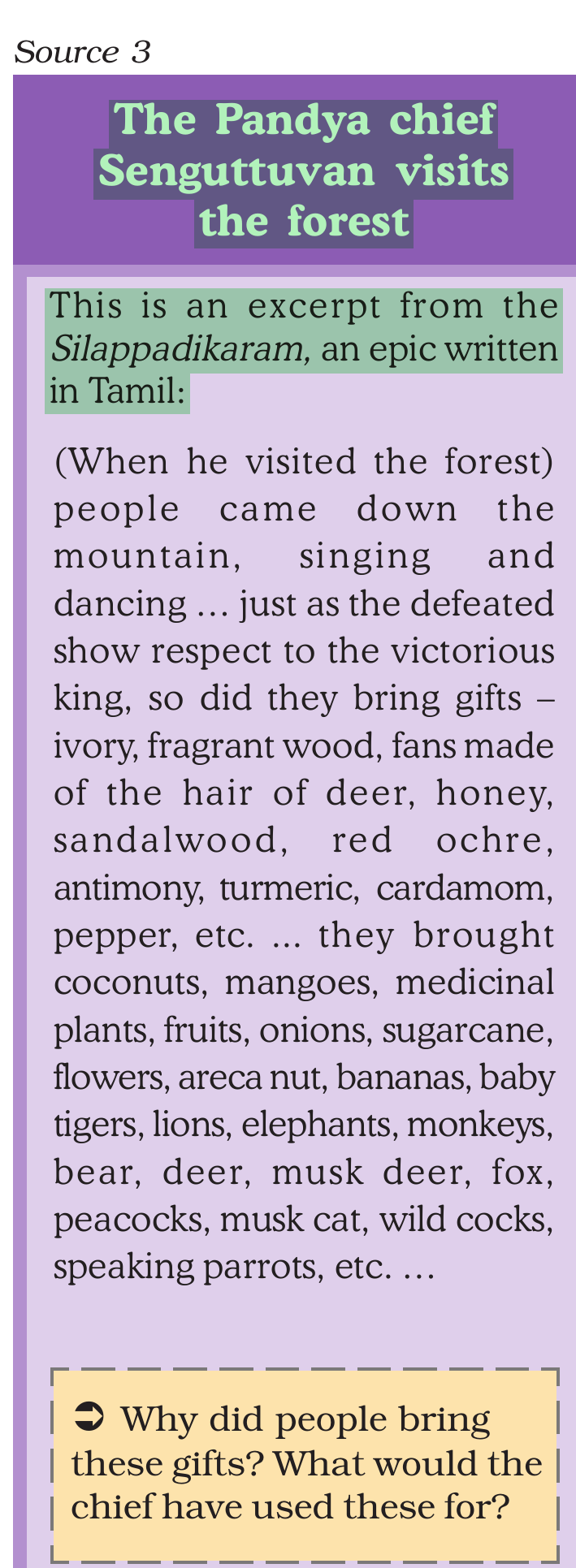
| (C) Informs about Sanguttuvan's visit to the forest | (III) Prayaga Prashasti |
| (D) Praises Samudra Gupta | (IV) Silappadikaram |
Choose the correct answer from the options given below:
Answer & explanation
Correct answer: option 1
The correct answer is Option (1) → (A)-(I), (B)-(II), (C)-(IV), (D)-(III)
(A) Silappadikaram — this matches (I) Tamil Epic. The Silappadikaram is an epic written in Tamil.
(B) Prayaga Prashasti — this matches (II) Written by Harishena. The Prayaga Prashasti (the Allahabad Pillar Inscription) was composed in Sanskrit by Harishena, the court poet of Samudragupta.
(C) Informs about Sanguttuvan’s visit to the forest — this matches (IV) Silappadikaram. The excerpt from the Silappadikaram describes how people came down the mountain with gifts when the Pandya chief Senguttuvan visited the forest.
(D) Praises Samudra Gupta — this matches (III) Prayaga Prashasti. Prashastis were composed in praise of kings, and the Prayaga Prashasti praises Samudragupta, arguably the most powerful of the Gupta rulers.
NCERT (2026-27): “4.2 Divine kings … Histories of the Gupta rulers have been reconstructed from literature, coins and inscriptions, including prashastis, composed in praise of kings in particular, and patrons in general, by poets.… 4.2 Divine kings … The Prayaga Prashasti (also known as the Allahabad Pillar Inscription) composed in Sanskrit by Harishena, the court poet of Samudragupta, arguably the most powerful of the Gupta rulers (c. fourth century CE), is a case in point.…”
|