CUETMOCK
  • Pricing
  • Mentors
Log inStart freeStart free mocks→

First test, then trust

Try a free CUET mock test.

Join 5,00,000+ students who rehearsed exam day on the exact NTA screen before sitting CUET. On the web and on Android.

Start free mocks →Get the Android app
CUETMOCK

India's #1 CUET Mock Test Platform. Original NCERT-based questions on the exact NTA exam screen — trusted by 5,00,000+ students since CUET 2022.

Get it onGoogle PlayScan to download the CUETMOCK app

Mock tests

  • CUET mock test series
  • Browse all papers
  • Commerce mocks
  • Humanities (Arts) mocks
  • Science mocks
  • Languages & GAT mocks
  • Free practice questions
  • Pricing

Resources

  • CUET exam guide
  • CUET syllabus
  • Universities accepting CUET
  • Expert blogs
  • News & notifications
  • Webinars & counselling
  • CUET score calculator
  • How we estimate your rank
  • FAQs

Company

  • About us
  • Our leadership & team
  • Our toppers
  • Mentors
  • For schools
  • Contact us
  • Terms
  • Privacy
  • Refund policy

Talk to us

+91 7696 6630 56info@cuetmock.comWhatsApp us

Our other platforms

  • JEE Mock — For IIT-JEE aspirants
  • NEET Mock — For NEET aspirants

Newsletter

Exam updates, study material and offers — no spam.

© 2026 NYC Ventures Pvt. Ltd.

701-702, Royal Business Park, Zirakpur, Punjab - 140603

  • Terms of use
  • Privacy policy
  • Refund policy
  • Contact us

iCUETMOCK is an independent preparation platform, not affiliated with the National Testing Agency (NTA). Always check exam details on the official NTA website.

  • Home
  • Mock tests
  • CUET guide
  • Pricing
  • Log in
Home/Practice questions/History
HistoryModern India: Framing the Constitution

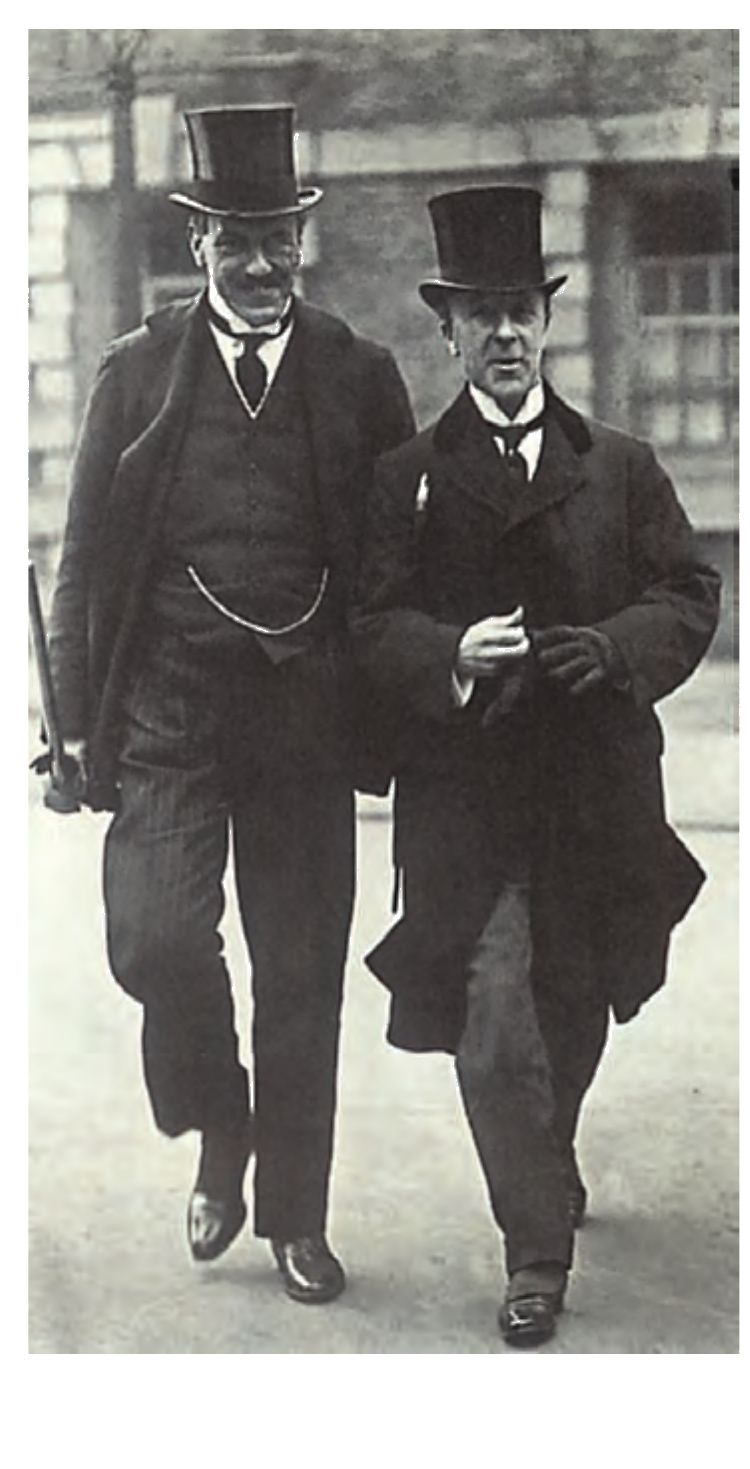
Who was the author of the Reforms of 1919 which allowed some form of…

Read the passage and answer the questions:

Vision of the Constitution

The Constituent Assembly was expected to express the aspirations of those who had participated in the movement for independence. Democracy, equality and justice were ideals that had become intimately associated with social struggles in India since the nineteenth century. When the social reformers in the nineteenth century opposed child marriage and demanded that widows be allowed to remarry, they were pleading for social justice. When Swami Vivekananda campaigned for a reform of Hinduism, he wanted religions to become more just. When Jyotiba Phule in Maharashtra pointed to the suffering of the depressed castes, organised workers and peasants, they were demanding economic and social justice. The national movement against a government that was seen as oppressive and illegitimate was inevitably a struggle for democracy and justice. In fact, as the demand for representation grew, the British had been forced to introduce a series of constitutional reforms. A number of Acts were passed, gradually enlarging the space for Indian participation in provincial governments. The executive was made partly responsible to the provincial legislature in 1919, and almost entirely so under the Government of India Act of 1935. When elections were held in 1937, under the 1935 Act, the Congress came to power in eight provinces. While the earlier constitutional experiments were in response to the growing demand for a representative government, the Acts were not directly debated and formulated by Indians. They were enacted by the colonial government. The electorate that elected the provincial bodies had expanded over the years, but even in 1935 it remained limited to no more than 10 to 15 per cent of the adult population: there was no universal adult franchise. The legislatures elected under the 1935 Act operated within the framework of colonial rule, and were responsible to the Governor appointed by the British. The vision was trying to outline on 13 December 1946 was of the Constitution of an independent, sovereign Republic of India.

Who was the author of the Reforms of 1919 which allowed some form of representation in provincial legislative assemblies?

Answer & explanation+

Correct answer: option 3

The correct answer is Option (3) → Edwin Montague

The reforms of 1919 are known as the Montague-Chelmsford Reforms, after Edwin Montague, the British minister for India, and Lord Chelmsford, the Viceroy. They allowed some form of representation in the provincial legislative assemblies. The passage mentions the step taken in 1919, when the executive was made partly responsible to the provincial legislature.

Note: This passage is taken from the NCERT chapter ‘Framing the Constitution’, almost word for word. Go through the photographs and their captions as carefully as the text; this question comes from one of them.


NCERT (2025-26): “2.1 The will of the people … In fact, as the demand for representation grew, the British had been forced to introduce a series of constitutional reforms. A number of Acts were passed (1909, 1919 and 1935), gradually enlarging the space for Indian participation in provincial governments. The executive was made partly responsible to the provincial legislature in 1919, and almost entirely so under the Government of India Act of 1935.…”

NCERT extract

Fig. 12.7 Edwin Montague (left) was the author of the Montague-Chelmsford Reforms of 1919 which allowed some form of representation in provincial legislative assemblies.

Advertisement

Practise more on Modern India: Framing the Constitution

Chapter-wise mocks on the real NTA exam screen, with solutions and your rank. Your first mocks are free.

Start free mocks →

Advertisement

Next questions

  1. Select the option in which the pair of letter-clusters share the same relationship as that shared by the given letter-clusters. FAIR : GYJPGeneral Aptitude Test · General Ability
  2. In a certain code language “NIGHT” is written as “ODDGM”. How is “DRINK” written in that code language?General Aptitude Test · Verbal Reasoning
  3. In a certain code language 'ROUBST' is coded as 61. How will 'FORTUNATE' be coded in that language ?General Aptitude Test · Verbal Reasoning
  4. Who among the following has been appointed as the 50th Chief Justice of India in 2022?General Aptitude Test · Current Affairs
  5. Many Business Organisations have set up their own consumer services and grievance cells so that the consumer can file a complaint in case o…Business Studies · Consumer Protection
  6. Two positions of a dice are shown below. When there are five dots at the top, how many dots will be at the bottom?General Aptitude Test · Verbal Reasoning
  7. Innovational opportunity is one of the reasons for the importance of packaging. Which of the following is NOT a point made under this reaso…Business Studies · Marketing
  8. The concepts representing the Unity of Direction are:A. Each group has one head and one planB. Prevents dual subordinationC. Affects the en…Business Studies · Principles of Management
  9. Article 25 guarantees to all persons equally:Legal Studies · Human Rights in India
  10. Let f : [0, 1] → [0, 1] be a continuous function. Then,Maths. Section B1 · Continuity and Differentiability