
What are the factors that determine an effective collision?
Answer & explanation
Correct answer: option 2
The correct answer is Option (2) → Threshold energy and proper orientation
By collision theory, molecules must collide to react, but not every collision forms products. A collision that does is called an effective collision. It needs two things together:
Enough energy: the colliding molecules must have at least the threshold energy, so that old bonds can break. Molecules with less energy just bounce apart.
Proper orientation: the molecules must meet with the right parts facing each other, so that the new bonds can form. A collision with the wrong orientation gives no product even when the energy is enough.
Why the other options are incorrect
Option (1) Translational collision and energy of activation — Incorrect. Energy is one condition, but orientation is missing, and a “translational collision” is not a condition for an effective collision.
Option (3) Proper orientation and steric bulk of the molecule — Incorrect. The energy condition is missing. The steric factor P in collision theory accounts for orientation, not for the bulk of the molecule.
Option (4) Collision frequency, threshold energy, and proper orientation — Incorrect. Collision frequency (Z) is the number of collisions per second. It affects the rate, but it does not decide whether a single collision is effective.
NCERT (2026-27 edition):
3.5 Collision Theory of Chemical Reactions – “… The reason could be that all collisions do not lead to the formation of products. The collisions in which molecules collide with sufficient kinetic energy (called threshold energy*) and proper orientation, so as to facilitate breaking of bonds between reacting species and formation of new bonds to form products are called as effective collisions.”
“* Threshold energy = Activation Energy + energy possessed by reacting species.”
3.5 Collision Theory of Chemical Reactions – “… Thus, in collision theory activation energy and proper orientation of the molecules together determine the criteria for an effective collision and hence the rate of a chemical reaction.”
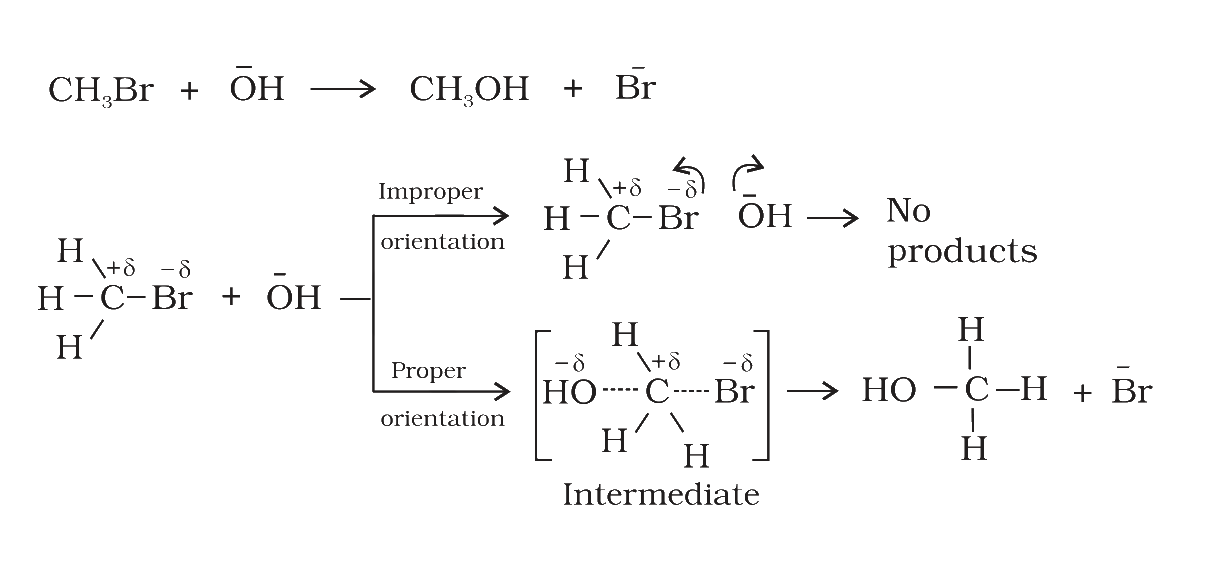
Fig. 3.12: Diagram showing molecules having proper and improper orientation