Which combination of statements is true about the fixed and fluctuating capital?
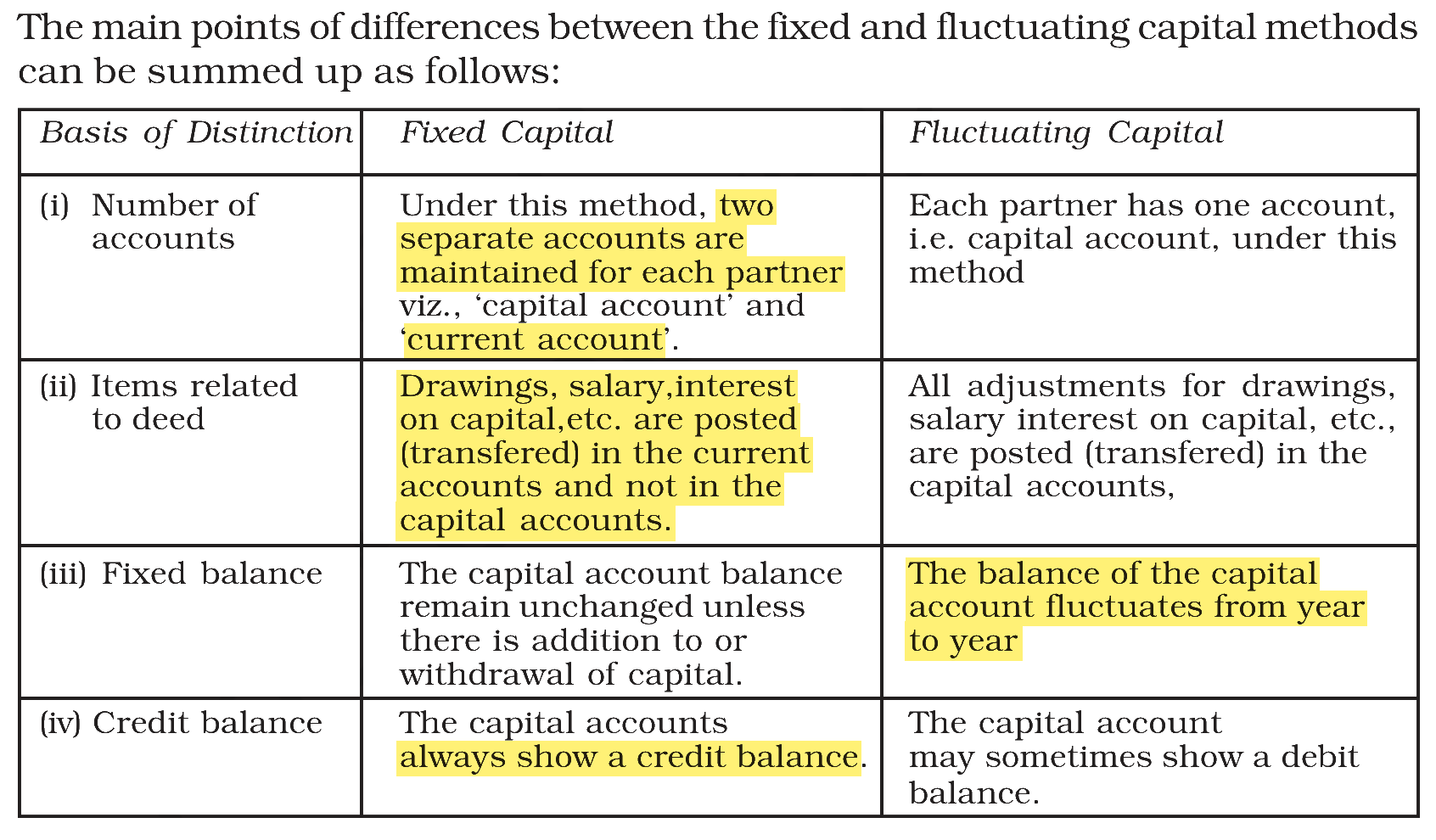
(A). Under the Fixed capital method, two separate accounts are maintained for each partner. viz, 'capital account' and 'current account.
(B). Under the Fluctuating capital method, the balance of the capital account fluctuates from year to year.
(C). Under the Fixed capital method, drawings, salary, interest on capital, etc. are posted (transferred) in the current accounts and not in the capital accounts.
(D). Under the Fixed capital method, the capital accounts always show a debit balance.
Choose the correct answer from the options given below:
Answer & explanation
Correct answer: option 2
The correct answer is Option (2) → (A), (B) and (C) only
Under the fixed capital method the capital account changes only when capital is added or withdrawn; every other item goes to a separate current account. Under the fluctuating capital method there is one account, and every item is posted to it.
(A). Under the Fixed capital method, two separate accounts are maintained for each partner. viz, 'capital account' and 'current account. Correct. Each partner has a capital account for the fixed amount and a current account for everything else.
(B). Under the Fluctuating capital method, the balance of the capital account fluctuates from year to year. Correct. Profit, interest, salary and drawings are all posted to the capital account, so its balance changes every year.
(C). Under the Fixed capital method, drawings, salary, interest on capital, etc. are posted (transferred) in the current accounts and not in the capital accounts. Correct. That is what keeps the capital account fixed.
(D). Under the Fixed capital method, the capital accounts always show a debit balance. Incorrect. Fixed capital accounts always show a credit balance; it is the current account (or a fluctuating capital account) that may sometimes show a debit balance.
NCERT (2026-27 edition):
|