Arrange the following values of elasticity in increasing order:
A. Infinity
B. Unitary elastic
C. Greater than unitary elastic
D. Less than unitary elastic
Choose the correct answer from the options given below:
Answer & explanation
Correct answer: option 1
The correct answer is Option (1) → D, B, C, A
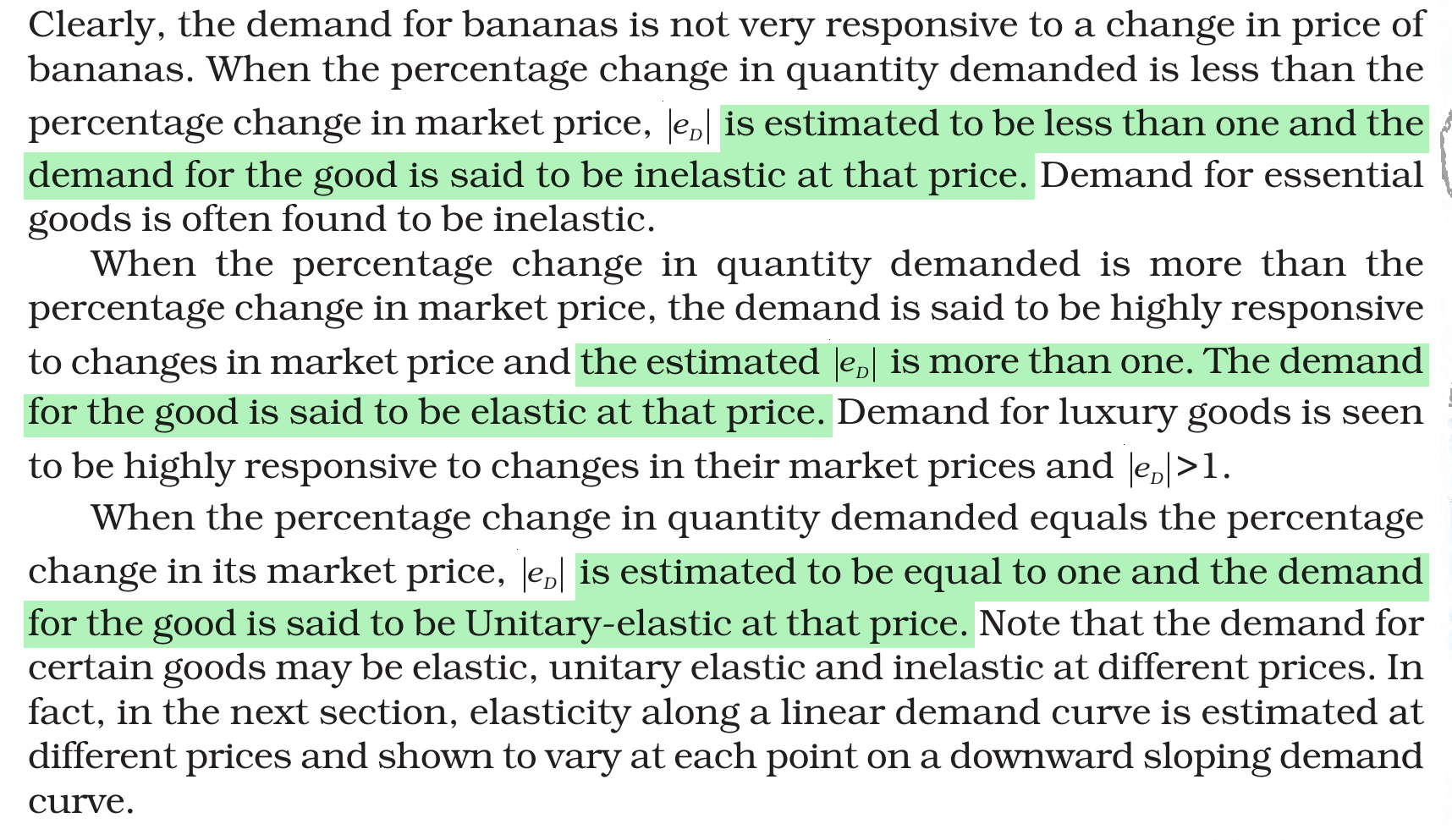
Price elasticity of demand tells how strongly buyers react to a price change: it compares the percentage change in quantity demanded with the percentage change in price. The weaker the reaction, the smaller the number; the stronger it is, the larger the number, until at the extreme the smallest rise in price wipes out demand altogether.
D. Less than unitary elastic — the quantity changes by a smaller percentage than the price, so eD is less than 1: demand is inelastic, as for most essential goods.
B. Unitary elastic — the quantity changes by the same percentage as the price, so eD = 1.
C. Greater than unitary elastic — the quantity changes by a larger percentage than the price, so eD is more than 1: demand is elastic, as for luxury goods.
A. Infinity — the largest value of all: on a horizontal demand curve the smallest rise in price makes demand fall to zero, so elasticity is infinite and demand is perfectly elastic.
NCERT: Introductory Microeconomics — Chapter 2: Theory of Consumer Behaviour (2025-26)
|