Read the passage and answer the question:
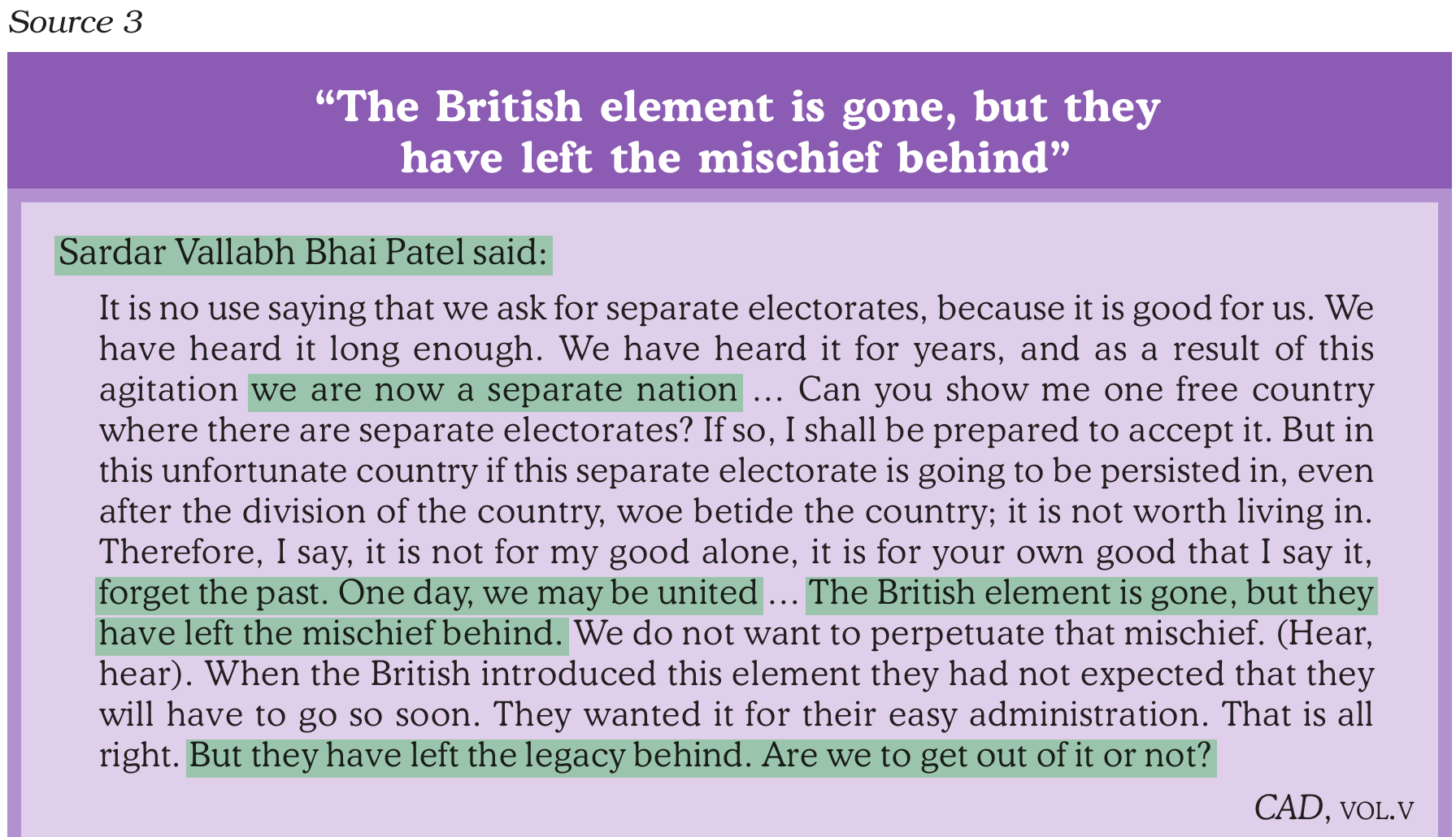
The British element is gone, but they have left the mischief behind. We do not want to perpetuate that mischief. (Hear, hear). When the British introduced this element they had not expected that they will have to go so soon. They wanted it for their easy administration. That is all right. But they have left the legacy behind. Are we to get out of it or not?
Match List I with List II:
| List I | List II | ||
| (A) | Vallabhbhai Patel | (I) | For the sake of unity of nation |
| (B) | Forget the past | (II) | British left mischief behind |
| (C) | Separate electorates | (III) | Need for Indians to get out of it |
| (D) | British legacy | (IV) | Creation of separate nation |
Choose the correct answer from the options given below:
Answer & explanation
Correct answer: option 2
The correct answer is Option (2) → A-II, B-I, C-IV, D-III
(A) Vallabhbhai Patel — this matches (II) British left mischief behind. The passage is from Sardar Patel’s speech against separate electorates in the Constituent Assembly, which says, “The British element is gone, but they have left the mischief behind.”
(B) Forget the past — this matches (I) For the sake of unity of nation. Patel told the members, “forget the past. One day, we may be united …”
(C) Separate electorates — this matches (IV) Creation of separate nation. Patel said that because of the long agitation for separate electorates, “we are now a separate nation”.
(D) British legacy — this matches (III) Need for Indians to get out of it. The British had introduced separate electorates for their easy administration and left the legacy behind; Patel asked, “Are we to get out of it or not?”
NCERT: Themes in Indian History Part III — Chapter 12: Framing the Constitution (2026-27)
|