Read the following passage and answer the question:
To fight the British, leadership and organisation were required. For these the rebels sometimes turned to those who had been leaders before the British conquest. One of the first acts of the sepoys of Meerut was to rush to Delhi and appeal to the old Mughal emperor to accept the leadership of the revolt. This acceptance of leadership took its time in coming. Bahadur Shah's first reaction was one of the horror and rejection. It was only when some sepoys had moved into the Mughal court within the Red Fort that the old emperor agreed to be the nominal leader of the rebellion.
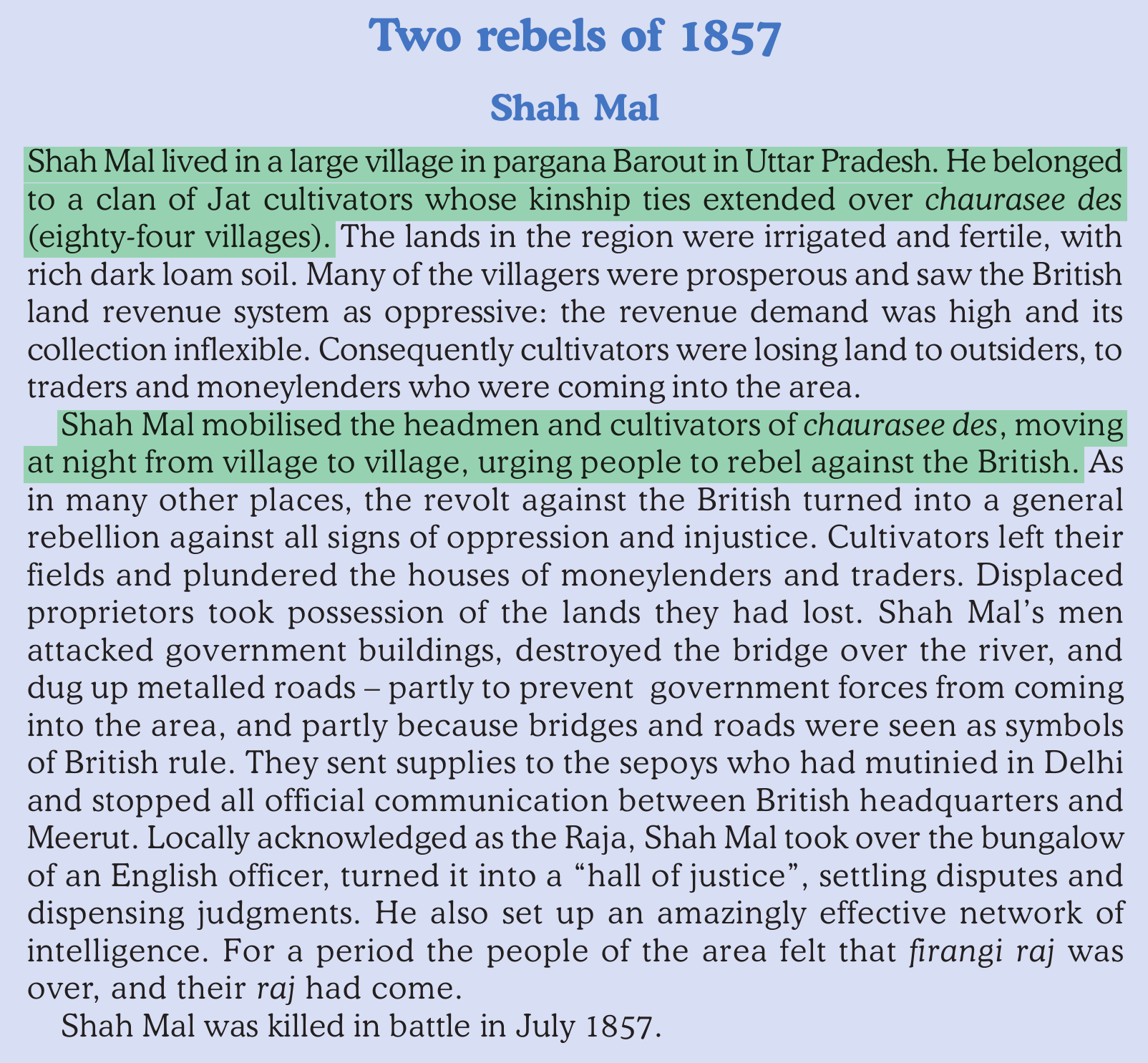
Who mobilised the headmen and cultivators of eighty-four villages of Barout during 1857?
Answer & explanation
Correct answer: option 3
The correct answer is Option (3) → Shah Mal
Shah Mal of pargana Barout in Uttar Pradesh mobilised the headmen and cultivators of chaurasee des (eighty-four villages), moving at night from village to village and urging people to rebel against the British.
NCERT (2026-27): “1.3 Leaders and followers … Not everywhere were the leaders people of the court – ranis, rajas, nawabs and taluqdars. Often the message of rebellion was carried by ordinary men and women and in places by religious men too. From Meerut, there were reports that a fakir had appeared riding on an elephant and that the sepoys were visiting him frequently. In Lucknow, after the annexation of Awadh, there were many religious leaders and self-styled prophets who preached the destruction of British rule. Elsewhere, local leaders emerged, urging peasants, zamindars and tribals to revolt. Shah Mal mobilised the villagers of pargana Barout in Uttar Pradesh; Gonoo, a tribal cultivator of Singhbhum in Chotanagpur, became a rebel leader of the Kol tribals of the region.”
|