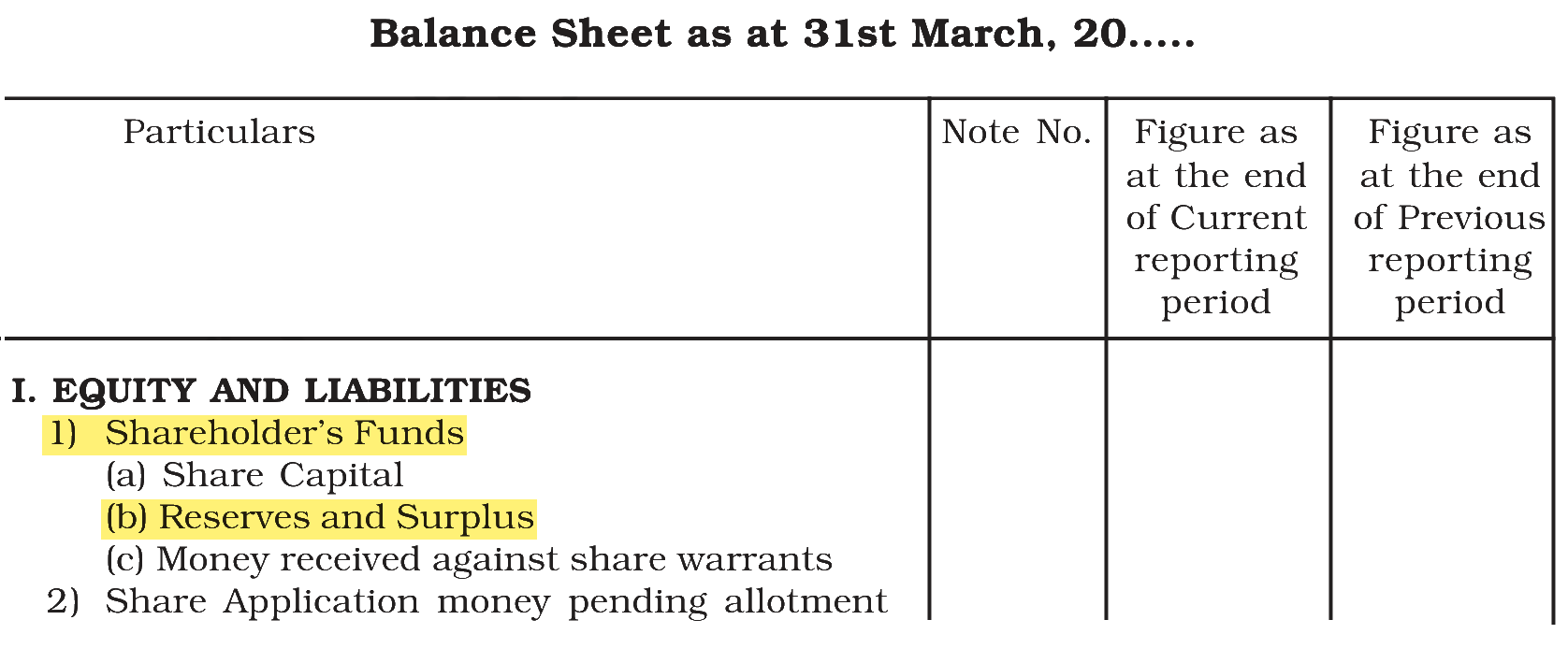
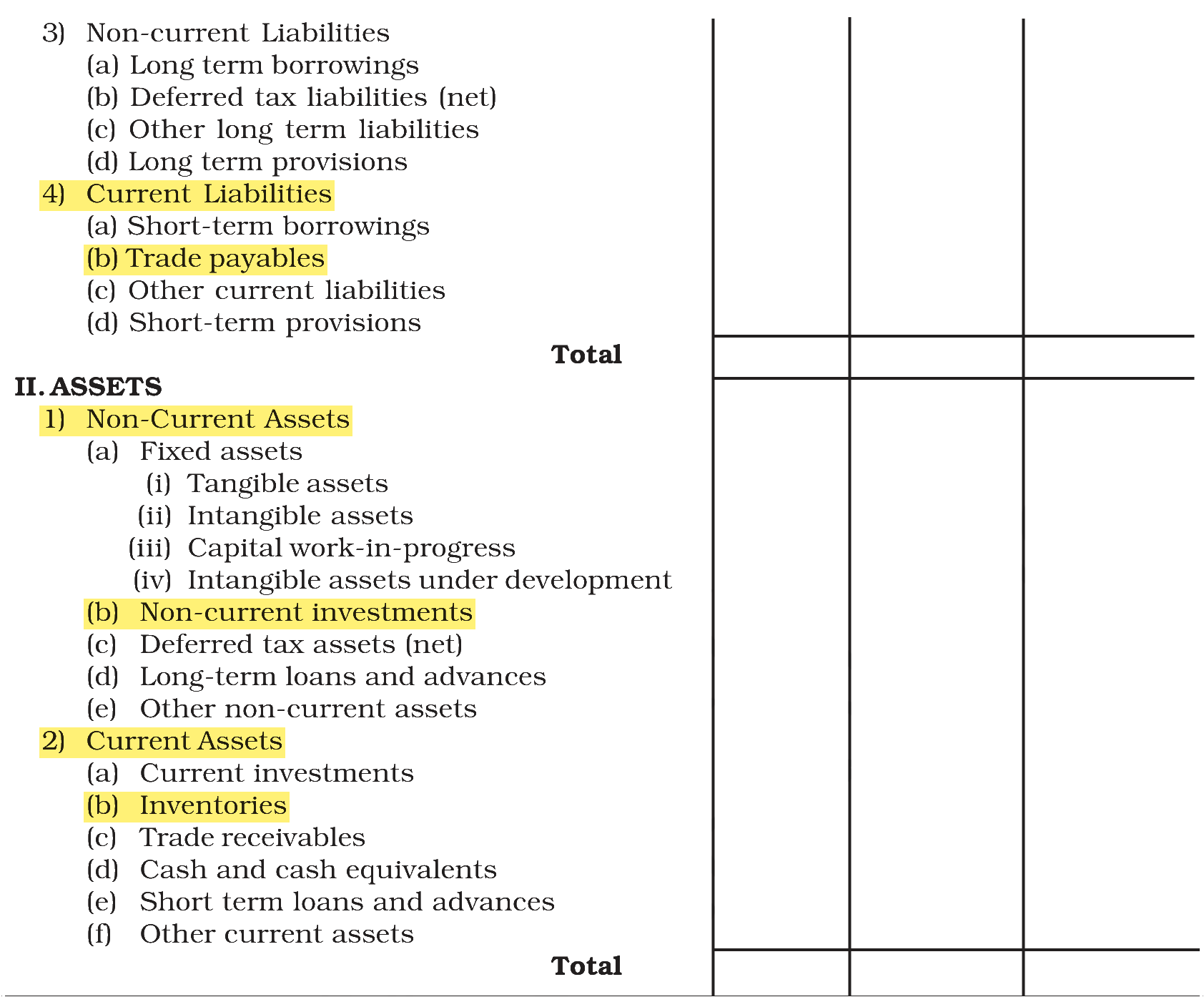
Match List-I with List-II.
| LIST I | LIST II |
| (A) Shareholders fund | (I) Non-current investments |
| (B) Current Liabilities | (II) Reserves and Surplus |
| (C) Current Asset | (III) Trade payables |
| (D) Fixed Asset | (IV) Inventories |
Choose the correct answer from the options given below:
Answer & explanation
Correct answer: option 4
The correct answer is Option (4) → (A)-(II), (B)-(III), (C)-(IV), (D)-(I)
(A) Shareholders’ fund — this matches (II) Reserves and Surplus. Shareholders’ funds are share capital plus reserves and surplus.
(B) Current Liabilities — this matches (III) Trade Payables. Creditors and bills payable are due within the operating cycle.
(C) Current Asset — this matches (IV) Inventories. Stock is held for sale in the normal course of business.
(D) Fixed Asset — this takes (I) Non-current investments, the only item left. Investments held for the long term are shown under non-current assets.
Note: It seems that there is a mistake in the original NTA paper, which prints “Fixed Asset” in (D) when it should read “Non-current Asset”: in Schedule III, fixed assets and non-current investments are two separate items under the head Non-current Assets. The question can still be solved, because (A), (B) and (C) take (II), (III) and (IV), which leaves only (I) for (D), and only Option (4) does that.
NCERT (2026-27 edition):
|