In which of the following, the demand for a good will be highly price elastic?
Answer & explanation
Correct answer: option 2
The correct answer is Option (2) → When the price of the good and total expenditure on it change in the opposite direction.
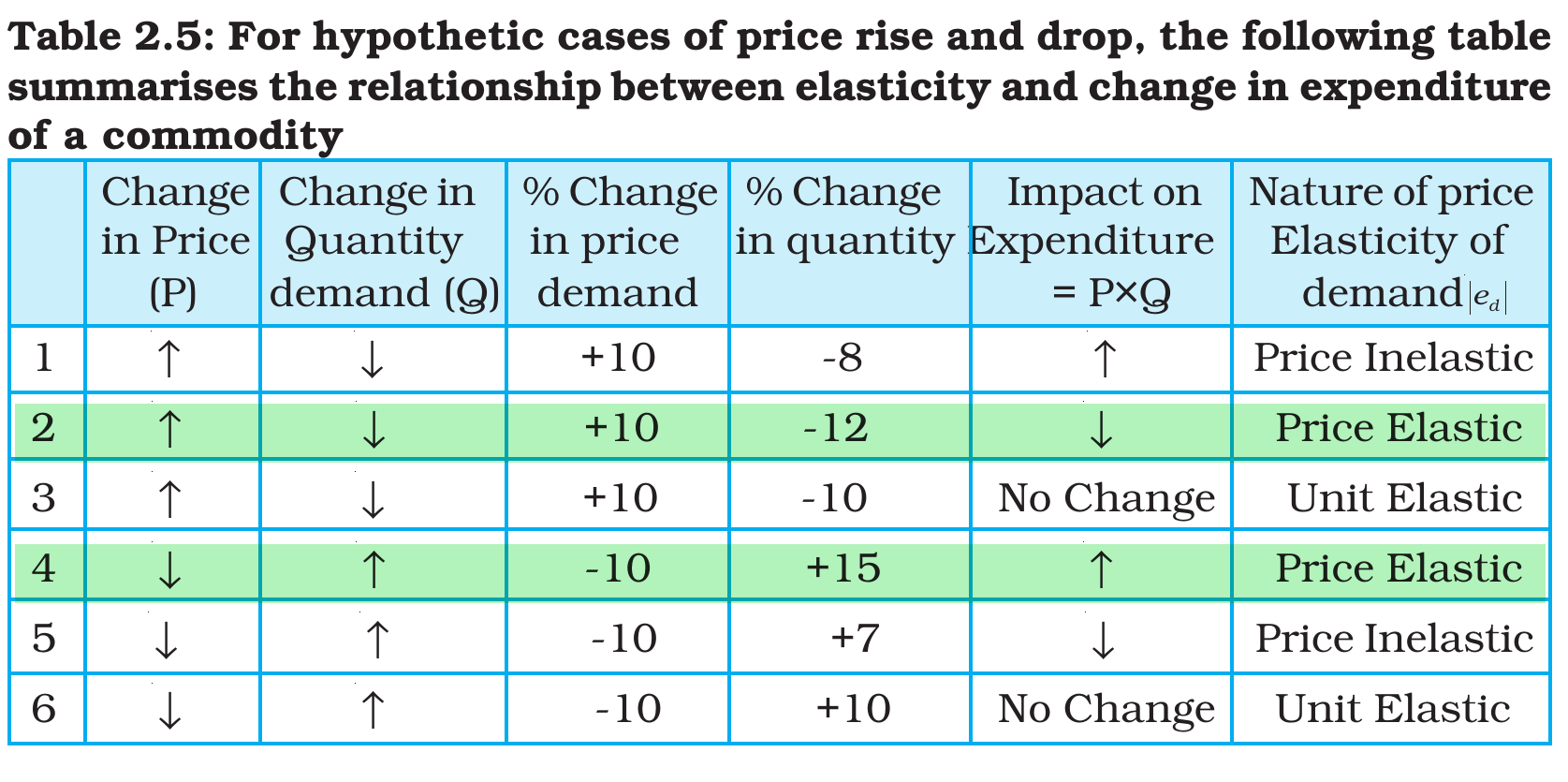
Demand is price elastic when the price and total expenditure move in opposite directions. Expenditure on a good is its price multiplied by the quantity demanded. When a price rises, quantity falls, so what happens to expenditure depends on which percentage change is larger.
Option (1) When the price of the good and total expenditure on it change in the same direction. — Incorrect. If a price rise also raises expenditure, quantity has fallen by a smaller percentage than the price rose. This is price inelastic demand.
Option (2) When the price of the good and total expenditure on it change in the opposite direction. — Correct. If a price rise lowers expenditure, quantity has fallen by a larger percentage than the price rose. This is price elastic demand.
Option (3) When the price of the good and does not affect the total expenditure. — Incorrect. If expenditure stays the same, the two percentage changes are equal. This is unit elastic demand.
Option (4) When the income of the consumer and total expenditure on it change in the same direction. — Incorrect. This links spending with income, as for a normal good. Price elasticity depends on how quantity responds to the price of the good.
NCERT (2026-27): “2.6.3 Elasticity and Expenditure The expenditure on a good is equal to the demand for the good times its price.… Consider an increase in the price of a good. If the percentage decline in quantity is greater than the percentage increase in the price, the expenditure on the good will go down.… The expenditure on the good would change in the opposite direction as the price change if and only if the percentage change in quantity is greater than the percentage change in price, ie if the good is price-elastic (see rows 2 and 4 in table 2.5). The expenditure on the good would change in the same direction as the price change if and only if the percentage change in quantity is less than the percentage change in price, i.e., if the good is price inelastic (see rows 1 and 5 in table 2.5). The expenditure on the good would remain unchanged if and only if the percentage change in quantity is equal to the percentage change in price, i.e., if the good is unit-elastic (see rows 3 and 6 in table 2.5).”
|