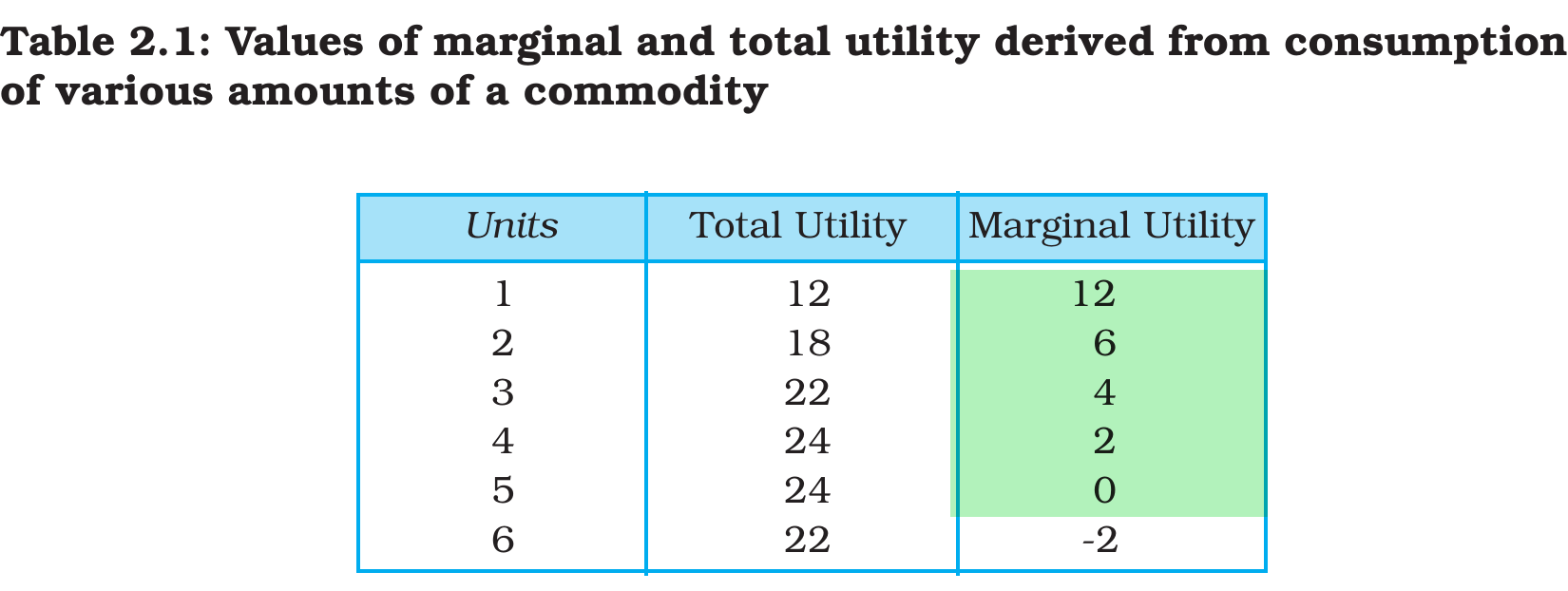
Consuming each additional unit of a commodity decline its ______________.
Answer & explanation
Correct answer: option 1
The correct answer is Option (1) → Marginal utility
Marginal utility (MU) is the extra satisfaction a consumer gets from one more unit of a commodity. The first glass of water on a hot day gives great satisfaction. The second gives less, and the third even less.
This is the law of diminishing marginal utility: each successive unit of a commodity gives lower marginal utility. So the consumer is willing to pay less for each extra unit, and the demand curve slopes downward.
NCERT (2026-27): “Measures of Utility …Notice that MU3 is less than MU2. You may also notice that total utility increases but at a diminishing rate: The rate of change in total utility due to change in quantity of commodity consumed is a measure of marginal utility. This marginal utility diminishes with increase in consumption of the commodity from 12 to 6, 6 to 4 and so on. This follows from the law of diminishing marginal utility. Law of Diminishing Marginal Utility states that marginal utility from consuming each additional unit of a commodity declines as its consumption increases, while keeping consumption of other commodities constant. MU becomes zero at a level when TU remains constant. In the example, TU does not change at 5th unit of consumption and therefore MU5= 0. Thereafter, TU starts falling and MU becomes negative.”
|