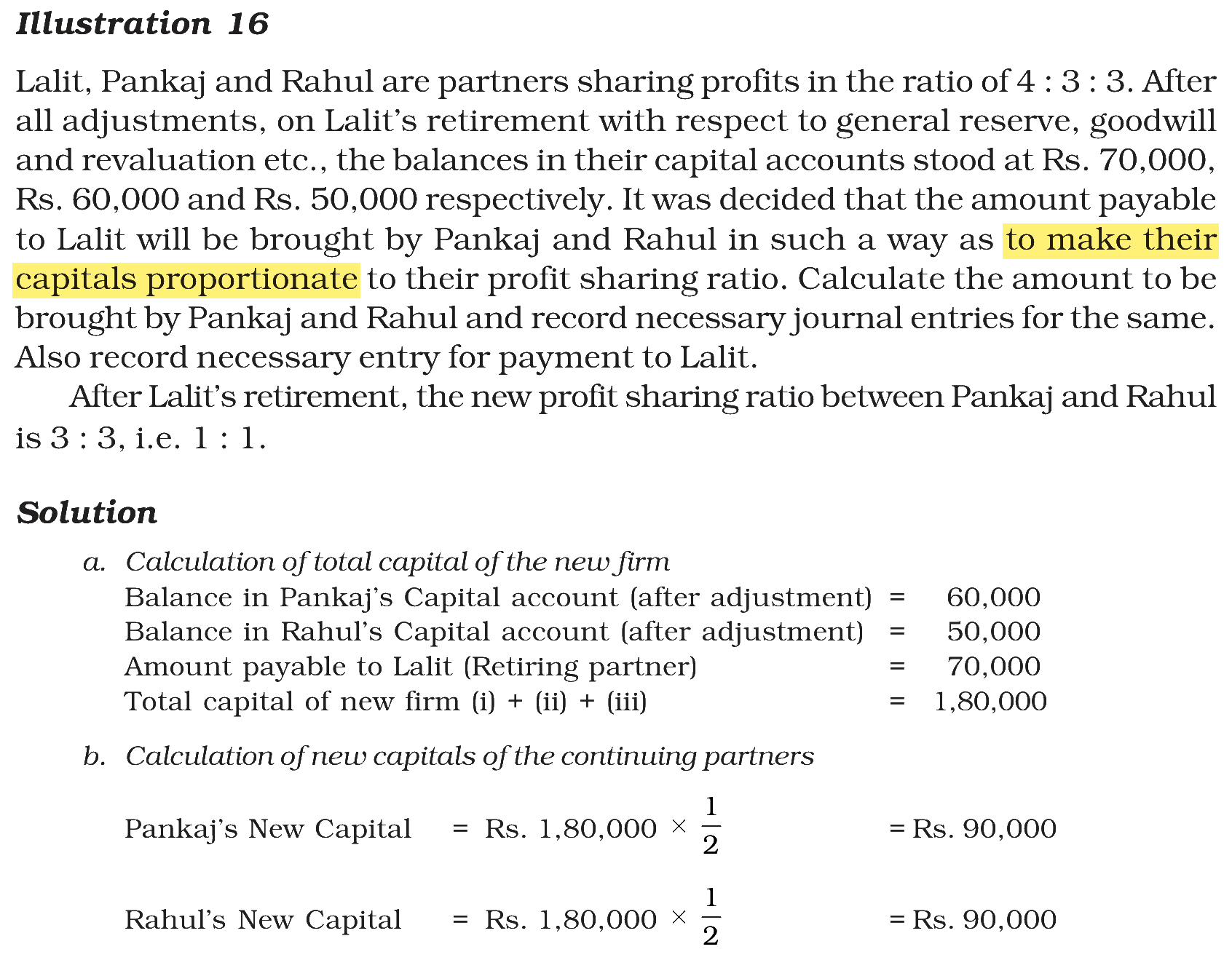
A, B and C are partners sharing profits in the ratio of 4 : 3 : 3. After all adjustments, on A's retirement with respect to general reserve, goodwill and revaluation etc., the balances in their capital accounts stood at Rs. 70,000, Rs. 60,000 and Rs. 50,000 respectively. It was decided that the amount payable to A would be brought by B and C in such a way as to make their capitals proportionate to their profit sharing ratio. After A's retirement, the new profit sharing ratio between B and C is 1 : 1. Calculate the amount to be brought by B and C respectively.
Answer & explanation
Correct answer: option 3
The correct answer is Option (3) → B-Rs. 30,000; C-Rs. 40,000
The amount payable to the retiring partner is met by the continuing partners, who bring in cash until their capitals stand in their new profit sharing ratio. So the total capital of the new firm is worked out first, and then each partner’s share of it.
Amount payable to A = his adjusted capital = Rs. 70,000
Total capital of the new firm = Rs. 60,000 (B) + Rs. 50,000 (C) + Rs. 70,000 = Rs. 1,80,000
New ratio of B and C = 1 : 1, so each new capital = Rs. 1,80,000 × 1/2 = Rs. 90,000
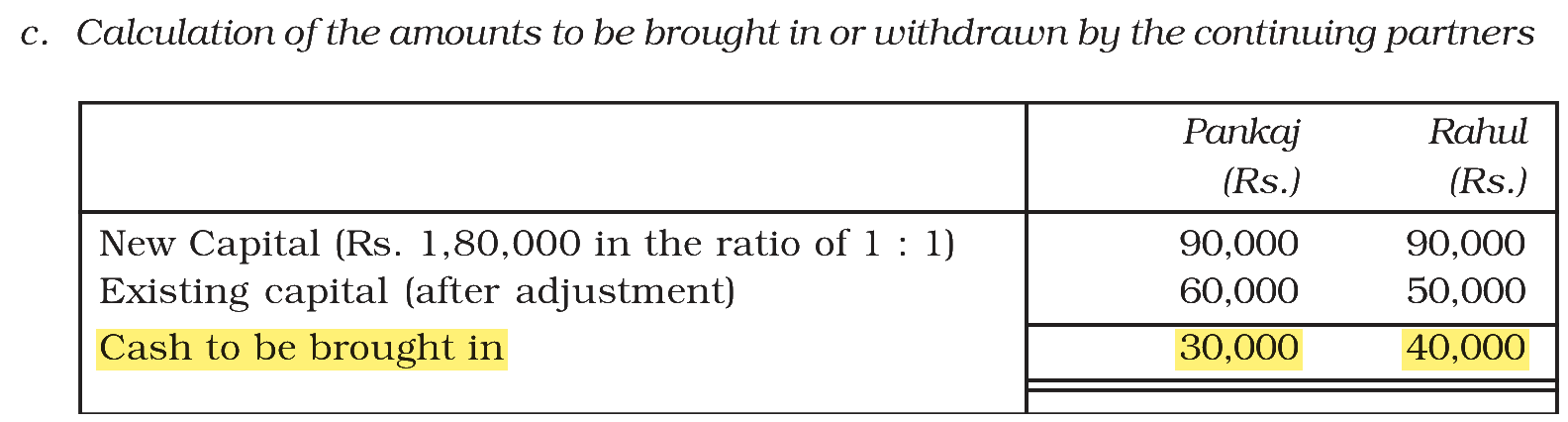
B brings Rs. 90,000 − Rs. 60,000 = Rs. 30,000
C brings Rs. 90,000 − Rs. 50,000 = Rs. 40,000
Together they bring Rs. 70,000, the very amount paid to A, so the firm’s cash is not reduced by his retirement.
Note: This question is from NCERT (2026-27). NTA sets numerical questions from NCERT too, so do not ignore NCERT while practising numericals.
NCERT (2026-27 edition):
|